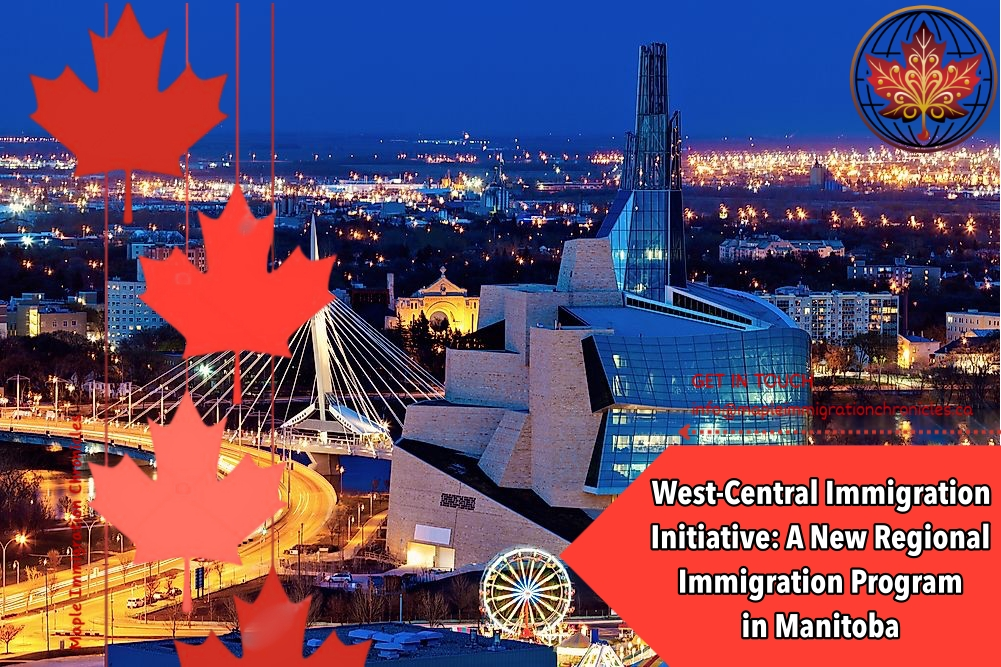
In November 2024, the Province of Manitoba announced the launch of a new regional-level immigration program — West-Central Immigration Initiative (WCII) — which will operate as a pilot program over a three-year period. The initiative was developed in response to pressing challenges related to chronic labour shortages, especially in agriculture, healthcare, and technical sectors, in the west-central region of the province.
The program’s purpose is to ensure the regulated attraction of skilled foreign workers to small communities experiencing high demographic decline, low labour market participation, and significant demand for specialists in sectors critical to local economies. WCII integrates elements of economic policy, labour regulation, immigration selection, and social integration of newcomers.
Legal Model of Program Implementation
From a legal perspective, WCII is not a separate immigration pathway under the Immigration and Refugee Protection Act (IRPA). Rather, it is a thematic initiative within the existing framework of the Manitoba Provincial Nominee Program (MPNP). All applicants will apply for nomination through the MPNP but will have access to a special selection category administered by municipal authorities authorized by the Ministry of Labour and Immigration of Manitoba.
The key distinction of WCII is its territorial specificity: it applies exclusively to eight designated communities located in Manitoba’s west-central region. To participate, an applicant must have a job offer from an employer based in one of these communities and actively involved in the program. It is the communities that initiate selection through cooperation with the provincial government, not vice versa.
Geographic Coverage and Municipal Partners
The participating municipal and administrative units in WCII are the following:
- Municipality of Russell–Binscarth,
- Rural Municipality of Yellowhead,
- Municipality of Roblin,
- Rural Municipality of Ellice–Archie,
- Rural Municipality of Riding Mountain West,
- Rossburn Municipality,
- Prairie View Municipality, and
- the Gambler First Nation.
These communities have expressed readiness to serve as “local coordinators of the immigration process,” providing support for newcomers, preparing infrastructure, engaging local employers, and participating in the definition of selection priorities. Their participation is formalized through memoranda of cooperation with the provincial government.
Objectives, Mechanisms, and Justification of the Program
The main objective of WCII is to create conditions for the long-term sustainable development of Manitoba’s rural regions by directly filling vacancies in critically important sectors. The strategy is based on data showing an increasing share of retirees in rural communities, youth outmigration, and a shortage of specialists in primary production, healthcare, and basic public services.
The initiative targets candidates with work experience in agriculture, construction, healthcare (especially caregiving), technical maintenance, and personal or social services. Employers involved in this program must hold a valid business license, operate for at least one year within the participating community, and confirm a long-term need to hire a foreign worker.
Applicants who meet the requirements may receive a provincial nomination from Manitoba, which provides the right to apply for permanent residency to IRCC. At the same time, WCII may also create conditions for temporary employment if the candidate has not yet obtained PR status but has already received an official job offer.
Government Position and Political Background
Manitoba’s Minister of Labour and Immigration, Malaya Marcelino, in her official statement emphasized that the province aims to be a leader in developing innovative regional immigration models. According to her, WCII not only meets the economic need for workers but also forms a new quality of immigrant integration — through connections with local communities, implementation of localized services, and promotion of social cohesion.
Selection Procedure and Next Steps for Applicants
Individuals who wish to participate in the program must first contact employers from the participating communities. Receiving a job offer is a mandatory condition for applying through WCII. After that, the applicant must meet the formal MPNP criteria, which include proof of qualifications, relevant work experience, language proficiency (usually at least CLB 4), and a declared intent to live in the specific nominating community.
The procedure includes the following stages:
- Finding and contacting an employer participating in WCII.
- Obtaining a written job offer that complies with MPNP requirements.
- Submitting a complete application package through the official MPNP portal.
- Provincial review with prioritization for WCII communities.
- In case of nomination — applying for PR to IRCC.
- Optionally — obtaining support for a temporary visa or work permit (if needed).
Socioeconomic Importance for Immigrants
For foreign nationals, including citizens of Ukraine, WCII is not only a legal channel to obtain permanent resident status in Canada but also a guarantee of favourable settlement conditions. Manitoba’s rural communities offer access to more affordable housing, lower competition in the labour market, direct exposure to Canadian traditions, and more cohesive social environments. These factors are particularly important for families with children and for individuals seeking not just status but stability and well-being.
Conclusion
The West-Central Immigration Initiative serves as a model of integrated immigration policy that addresses the needs of both the economy and the social capital of the province. It is an example of how provincial and local governments can join efforts to create a targeted, effective, and humane immigration model focused on long-term impact. The program not only fills jobs but transforms the quality of regional development, turning isolated communities into new growth hubs and centers of multicultural enrichment.
Interested individuals should monitor official updates at https://immigratemanitoba.com, prepare required documentation, and seek active engagement with local communities and employers. The program promises to become a key mechanism for individuals wishing not only to immigrate but to fully integrate into a new Canadian environment.