Canada, as one of the most developed immigration jurisdictions in the world, traditionally recognizes family reunification as one of the key tools for the successful integration of newcomers into society. Unlike purely economic streams, which are aimed at meeting the needs of the labor market, family immigration programs have a humanitarian nature. They are directed not only at economic benefit but also at preserving social stability, since family support allows immigrants to adapt more quickly, integrate into a new cultural and legal system, and avoid marginalization and psychological crises.
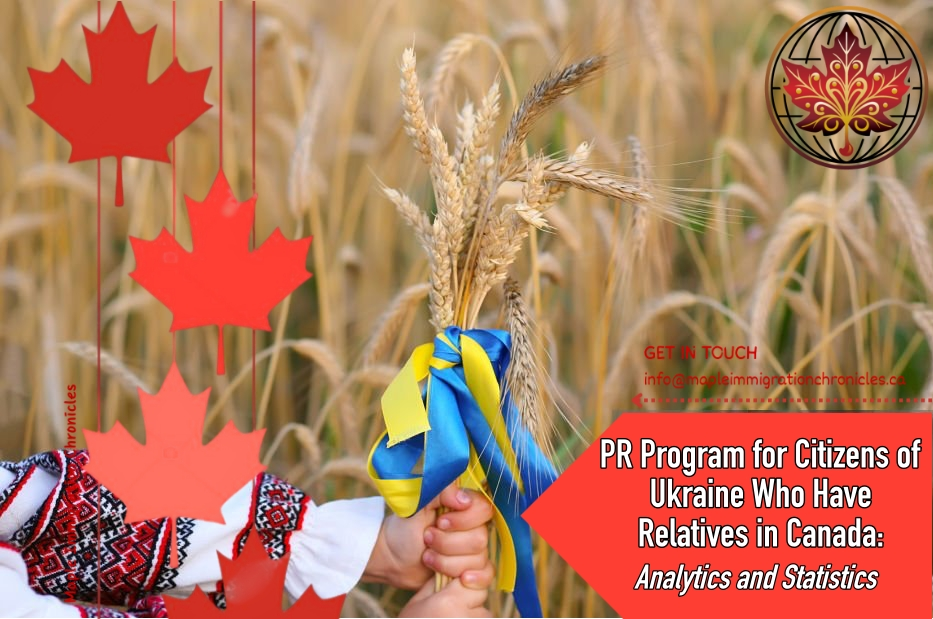
In connection with the war in Ukraine, the Government of Canada introduced a special procedure that grants Ukrainian citizens who have close relatives in Canada the right to apply for permanent resident status (Permanent Residence, PR) under a simplified mechanism. This program is unique, as it combines elements of the classical family reunification policy with extraordinary humanitarian measures caused by armed conflict.
Statistics on Application Processing
Official data from IRCC (Immigration, Refugees and Citizenship Canada) testify to an unprecedented level of support for Ukrainian applicants.
Period | Approved Applications | Refusals | Approval Rate |
2024 | 390 | 29 | ~93% |
1st Half of 2025 | 1,491 | 24 | ~98% |
Total (2024–2025) | 1,881 | 53 | ~97% |
Details:
- In 2024, the program functioned on a limited scale, as reflected in the number of decisions (419 cases). Despite this, the approval rate of 93% already demonstrated the government’s loyalty to Ukrainian applicants.
- In 2025, there was a significant increase in the administrative resources of IRCC, which made it possible to review in the first half of the year almost four times more applications than in the entire previous year.
- The rate of positive decisions increased to 98%, which is rare in Canadian immigration practice, where the average rate for economic and provincial streams usually ranges between 65–80%.
- Such statistics essentially turn the program into a “guaranteed” pathway to PR for most applicants, provided there are no serious inadmissibility grounds (criminality, misrepresentation, medical inadmissibility).
Number of Applications Submitted
Quantitative indicators of applications reflect both the scale of demand and the degree of administrative workload on IRCC.
Region | 2023 | 2024 | Total 2023–2024 |
Outside Quebec (Promoted) | 4,654 | 5,556 | 10,210 |
Outside Quebec (Prospective) | 7 | 11,732 | 11,739 |
Quebec | 1,187 | 1,298 | 2,485 |
Total Across Canada | 5,848 | 18,586 | 24,434 |
Details:
- The number of applications submitted in 2024 sharply increased — from 5.8k in 2023 to over 18.5k. This indicates an avalanche-like demand for the program.
- In the Prospective category in 2024, there was a dramatic increase (11,732), which demonstrates massive waiting for admission to review.
- A total of 24,434 registered applications create a significant backlog, since as of June 2025 only about 1,934 cases (8%) had been reviewed.
- This means that most Ukrainian families are awaiting a decision and may remain in a state of uncertainty for a long period.
Specifics of Quebec
Quebec is a unique jurisdiction within Canada, possessing its own immigration selection system, enshrined in agreements with the federal government (for example, the Canada–Quebec Accord of 1991).
Details:
- In 2023–2024, 2,485 applications were submitted in Quebec, which constitutes 10% of the total number nationwide.
- The process in Quebec is always multi-level: in addition to federal review, provincial approval is mandatory. This extends the overall processing time.
- Applicants should take into account that even with a high approval rate at the federal level, the provincial stage may require additional documents and procedures.
- At the same time, the level of positive decisions in Quebec remains correlated with the national indicators (95–98%), which indicates the absence of discriminatory barriers for Ukrainian applicants.
Analytics by MIC
The analysis of official data allows several key conclusions:
- Dynamics of Growth: in 2025, Canada significantly intensified application processing. If in 2024, 390 cases were approved, then in the first half of 2025 — already 1,491.
- Political Will: the approval rate of almost 98% indicates the targeted humanitarian policy of Canada.
- Scale of Backlog: of more than 24k applications, only about 1.9k have been processed. This indicates a high risk of delays, despite favorable approval conditions.
- International Significance: such statistics emphasize that Canada has effectively become a world leader in providing legalization pathways for Ukrainians, creating a precedent for other countries.
Factors Influencing Processing Speed
- Federal Quotas. The Government of Canada is reducing national immigration quotas for 2025–2027. This means that even with a high approval rate, processing times may remain long.
- Political Conjuncture. IRCC’s decisions depend on government priorities. If the Ukrainian program remains in focus, fast processing will continue. If priorities shift (for example, in favor of economic streams), the process may slow down.
- Administrative Resources. The expansion of IRCC officers and modernization of technical systems are key to maintaining high processing speeds.
Forecast for 2025–2026
- Processing speeds are likely to increase but will remain limited by quotas.
- Approval rate is expected to remain stable within 95–98%, effectively guaranteeing a positive outcome for most applicants.
- Waiting times will remain long — even with acceleration, processing over 24k applications may take several years.
- Political factor will remain decisive: it will determine whether Ukrainian cases continue to be prioritized or whether the workload will be redistributed.
Conclusion
The Permanent Residence Program for Ukrainian citizens with relatives in Canada is one of the most humanitarian-oriented instruments of modern immigration policy. It combines a high approval rate, rapid expansion of processing in 2025, and a clear political will to support Ukrainian families.
At the same time, applicants must consider objective limitations — quotas, political priorities, and the administrative backlog. This means that success is almost guaranteed, but waiting times will remain long.
Thus, the program is an example of balanced immigration policy, responding to humanitarian challenges while integrating into the national immigration management system. It may become the foundation for creating a permanent federal initiative in the field of family reunification.