
Health, education, and family life form the foundation of long-term stability and personal well-being in Canada. Understanding how to access quality healthcare, navigate the education system, and support your family’s social and emotional needs is essential for building a secure and fulfilling future. Whether you are arriving in Canada for the first time or preparing to establish permanent roots, this guide provides key insights into maintaining your health, supporting your children’s growth, fostering strong family relationships, and integrating confidently into the systems that shape everyday life in your new home.

Canada’s health system is publicly funded but provincially managed, meaning every province sets its own rules. Newcomers are often surprised that:
What IS covered everywhere:
What IS NOT covered for most adults:
This is why 90% of working Canadians rely on employer insurance (or buy private plans).
Ontario (OHIP):
No waiting period, but you must meet work eligibility (full-time work or 6 months contract).
BC (MSP):
3-month waiting period. Tip: Many newcomers purchase temporary private insurance such as GMS, SunLife, or BlueCross.
Alberta (AHCIP):
No waiting period — extremely newcomer-friendly.
Practical insider tip:
If you move provinces, your old health insurance often covers you for up to 90 days, depending on the province. Never stay uninsured during transitions: ask your old province to confirm temporary coverage.

Canada faces a family doctor shortage. Expect:
Tools to find a doctor:
Trick:
Join waitlists in multiple clinics. You can accept the first available spot.
Use for minor illnesses, prescriptions, infections.
Most walk-in clinics now offer online appointment booking:
Tip:
Walk-ins close early on weekends — go early in the day.
ER is for serious emergencies only.
Wait times vary dramatically:
Registering for a health card is the first step to accessing your province’s public healthcare system. While the process is similar across Canada, each province has its own rules, requirements, and processing timelines.
Proof of identity
A passport, travel document, PR card, or another official ID.
Proof of status in Canada
Acceptable documents include: a work permit, a study permit (with eligibility for full-time work), PR confirmation, or refugee documents.
Proof of residence in the province
Examples: a lease agreement, utility bills, bank statements, or official letters showing your address.
Ontario (OHIP):
ServiceOntario — online or in person by appointment.
British Columbia (MSP):
Through the Health Insurance BC online portal or by mail.
Alberta (AHCIP):
In person at a registry agent office (similar to Service Alberta).
You will receive a temporary confirmation or an application number.
The physical card will arrive by mail within 2–8 weeks, depending on the province.
In some provinces, the card may be digital.
If you move between provinces, check your coverage:
your previous province’s health insurance often remains valid for up to 90 days after you move.
This helps prevent gaps in coverage.
Always verify the rules for your specific province, as requirements are updated regularly.

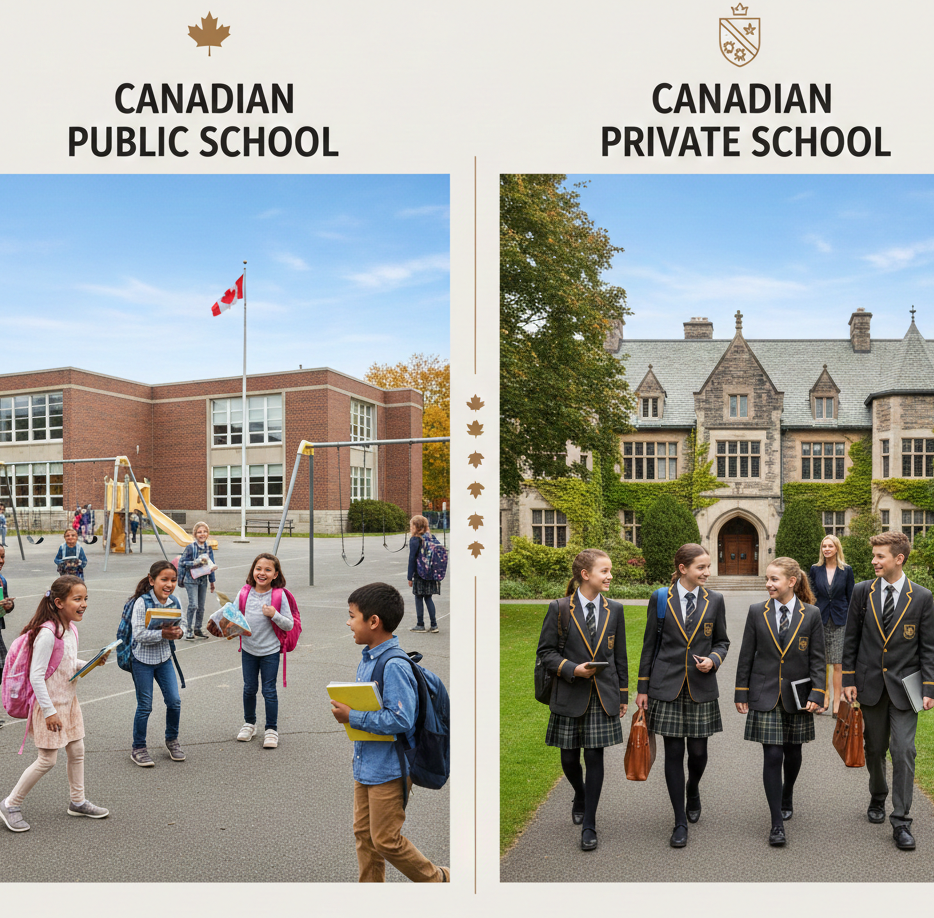
Education is free for K–12 for residents with valid permits.
Key realities:
Hidden tip:
Use community reports (Fraser Institute, EQAO, or local parent groups) to evaluate schools before renting a home.
Great for newcomers because teachers are trained in multicultural integration.
Important nuance:
Private schools do NOT automatically guarantee easier university admission — universities care about grades + extracurriculars.
ESL/FSL are built into the system.
Assessment happens in the first 1–2 weeks of school.
Useful realities:
Practical advantage:
Newcomers often catch up within 1–2 years due to immersion and structured support.
Students apply through:
Canadian universities prioritize:
Special advantages for newcomers:

Adjusting to Canada’s health and education systems is a gradual journey, and it is completely normal for everything to feel unfamiliar at first. Fortunately, newcomers can rely on a wide range of free resources — from community health centres and school orientation programs to family support services and newcomer workshops — all designed to help you understand how these essential systems work.
Attending school meetings, connecting with family doctors, joining parenting groups, or participating in health and wellness sessions can give you valuable insight into local expectations and the support available to your family. These experiences help you make informed decisions about your children’s education, your family’s well-being, and your overall settlement process.
By engaging with these services, asking questions, and exploring the resources offered in your community, you gain more than practical knowledge — you build confidence, strengthen your family’s foundation, and create a sense of stability that helps you feel truly at home in Canada.

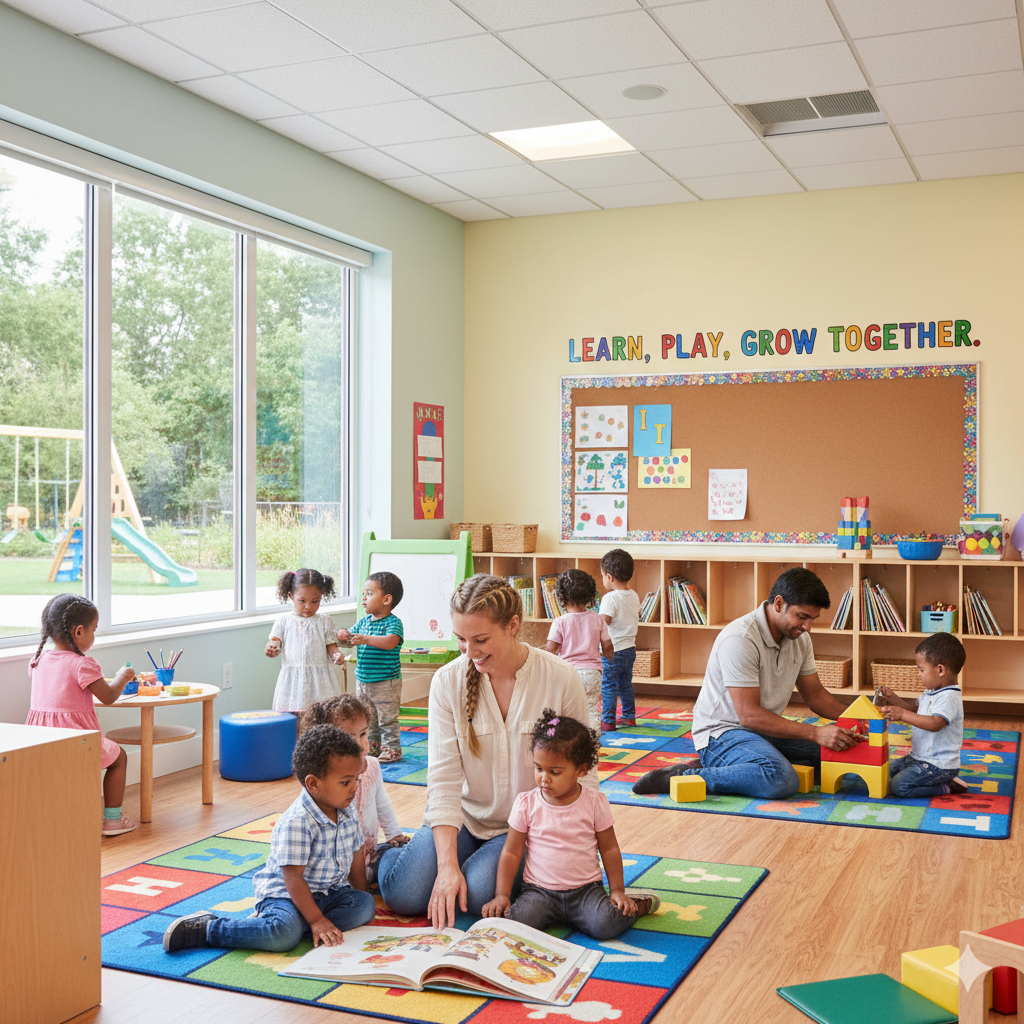
Canada’s childcare system is transforming with the $10-a-day initiative, but:
Power tip:
Register on daycare waitlists before you arrive in Canada — many do not require proof of residency.
Understanding daycare subsidies in Canada can feel overwhelming at first — especially when you are still learning how local systems work. It helps to approach the process gradually, beginning with small steps like exploring provincial websites, speaking with childcare centres, or reaching out to a settlement worker for guidance.
Apply through the city/municipality; funding depends on your income.
Affordable Child Care Benefit (ACCBC).
Income-tested; generous for low/mid-income families.
Subsidies for licensed centres + affordability grants.
Documents usually required:
As you learn more about eligibility, required documents, and the application process, you start to recognize how these programs can ease financial pressure and support your family’s daily life. Over time, becoming familiar with subsidies not only helps you access more affordable childcare, but also demonstrates your growing ability to navigate important services with confidence.
These early efforts create long-term advantages: stable routines for your children, greater flexibility for work or study, and a stronger sense of control over your family’s future in Canada.

Children who attend structured early programs gain:
• Faster English acquisition
• Better social skills
• Stronger school readiness
• Easier transition into French immersion or gifted programs
Real tip:
Daycare attendance often becomes a positive factor in future school placement decisions.
When you arrive in Canada, navigating government benefits may feel unfamiliar — and that is completely normal. The important thing is to begin learning about these supports gradually, whether it’s the Canada Child Benefit, GST/HST credits, or other financial programs available to newcomers.
As you take small steps — filing your first tax return, asking questions, or applying for eligible benefits — you start connecting with the systems designed to help you settle with confidence. Over time, these programs become reliable tools that ease financial pressures, support your family, and help you build a stable and informed life in your new home.
Power hack:
File taxes as soon as you are eligible — benefits begin only after CRA processes your return.
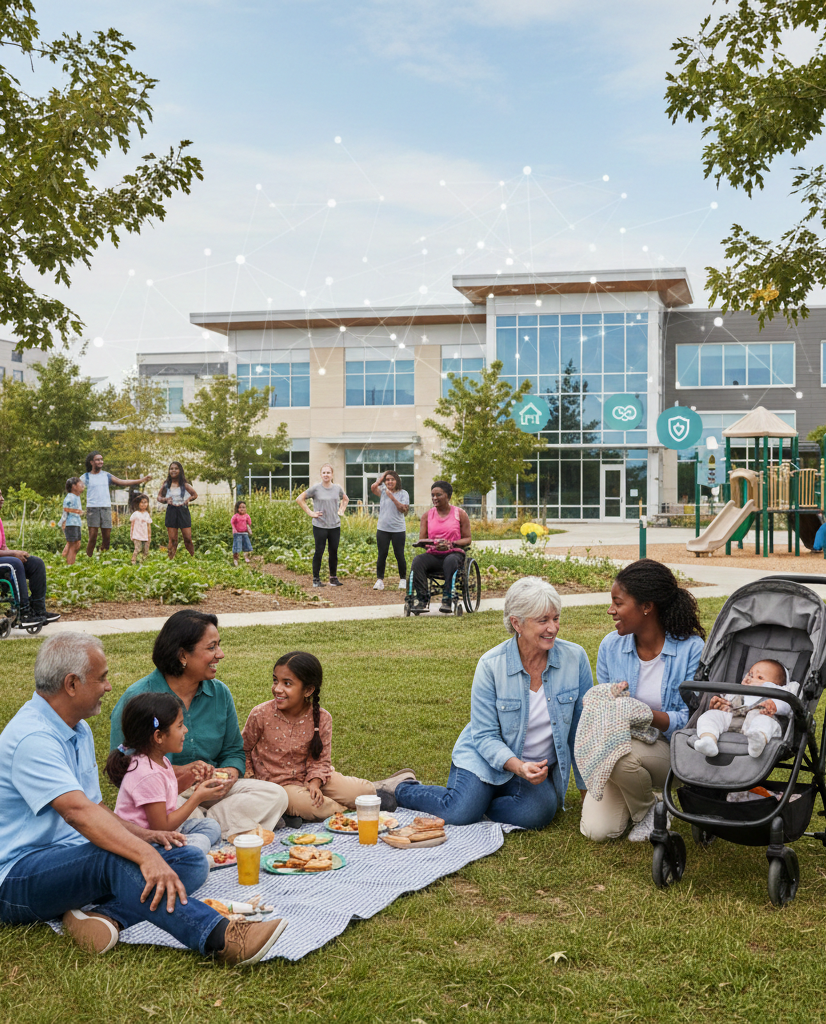
When you first settle in Canada, the network of family and social supports around you may feel new or unfamiliar — and that is entirely natural. The process begins slowly, by reaching out to the services available in your area: family resource centres, parenting programs, community health teams, and newcomer support organizations.
As you start exploring these spaces, even one visit at a time, you begin to discover the guidance, reassurance, and connection they provide. Over time, these supports become trusted places where you can ask questions, meet other families, and find encouragement. They help you feel understood, supported, and gradually more rooted in the community you now call home.
Major cities provide free supports through:
These programs provide:
Little-known benefit:
Many libraries loan free museum/cultural passes, saving families $50–$200 per visit.
Organizations such as COSTI, Polycultural, CCIS, and ISSofBC offer:
Tip:
If your child struggles with adjustment, ask for SWIS (Settlement Workers in Schools). They specialize in newcomer integration.
Engaging with family and social support services in Canada is about much more than receiving assistance — it reflects the foundation you are building for life in your new community. Each time you reach out to a family centre, attend a parenting workshop, or connect with a newcomer support worker, you show growing confidence in navigating your surroundings and understanding the systems designed to help you.
As these connections deepen, they gradually become part of the support network that strengthens your family’s stability and well-being. Over time, the relationships you build through these services can open doors to useful resources, meaningful friendships, and a stronger sense of belonging, all of which contribute to long-term success in your new home.

Newcomers integrate faster when they:
• Secure 1 stable job early
• Join parent groups at school
• Enrol kids in community sports
• Attend local festivals and events
• Learn the school calendar and plan activities around it
Important tip:
Schools expect parents to engage — attending parent-teacher interviews and volunteering improves teacher–student relationships.


Successful immigrant families typically:
Critical advice:
Choose your long-term province based not only on jobs, but also:
Municipal recreation centres offer:
Financial assistance programs:
Unknown opportunity:
Most public libraries provide free coding clubs, homework help, and robotics sessions for kids.

Navigating health, education, and family life in Canada is more than accessing services or completing formal processes — it is about creating stability, building trust, and shaping the foundations of your future. Understanding how the healthcare system works, how schools support your children, and how local family resources operate helps you make decisions that genuinely strengthen your well-being and long-term security.
Developing a healthy and fulfilling life here means taking small, intentional steps. Registering with a family doctor, learning how your provincial health coverage works, attending school orientations, or joining parent–teacher meetings are all ways of participating actively in the systems that support your family. These experiences help you understand expectations, build confidence, and feel empowered as you settle into a new country.
Family life grows stronger when you explore the opportunities around you — from public libraries and recreation centres to childcare programs, youth activities, and parenting workshops. These local services are not only practical resources; they are also places where you begin forming relationships, exchanging experiences, and discovering how Canadians support one another. Each interaction teaches you more about what it means to live, learn, and raise a family in a multicultural society.
Remember: every appointment you attend, every question you ask at your child’s school, and every moment you spend engaging with community services contributes to the life you are building here. These steps may seem small, but together they shape a rooted, informed, and confident future for you and your family — one where you feel connected, supported, and truly at home in Canada.

© 2023 – 2026 Maple Immigration Chronicles. All rights reserved.