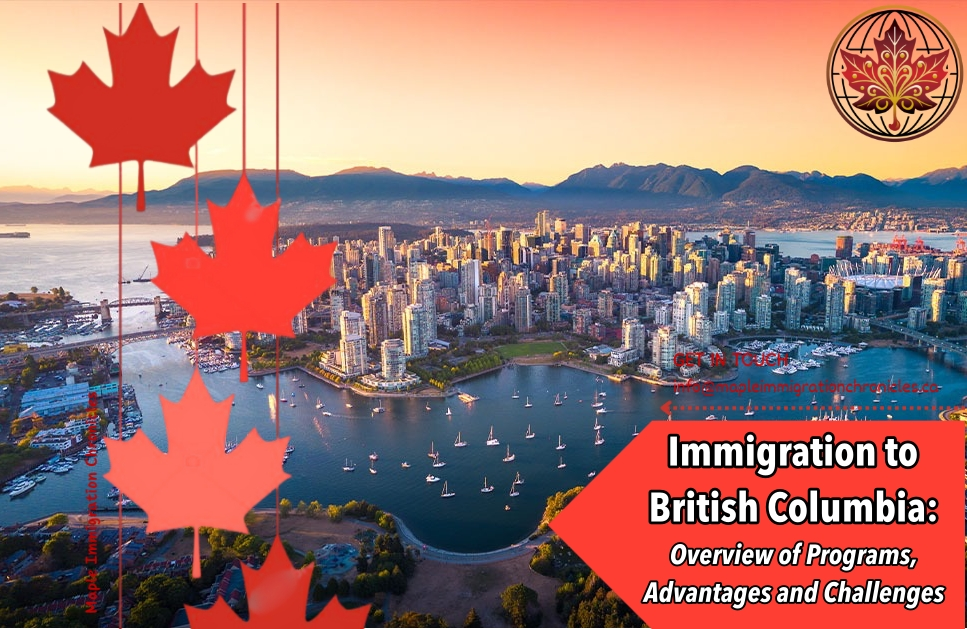
British Columbia is one of Canada’s leading provinces in terms of attractiveness for immigrants. Thanks to stable economic growth, environmental focus, multicultural environment, and numerous initiatives supporting newcomers, the province offers favorable conditions for long-term integration. This material presents an analysis of key immigration programs operating in the province, describing their requirements, submission procedures, processing times, and target audience.
Advantages of Living in British Columbia
- Stable Economic Growth and Demand for Skilled Labor
The province demonstrates consistent economic development, particularly in sectors such as technology, green energy, construction, and international trade. Vancouver is seeing a growing demand for IT professionals and engineers, opening new opportunities for labor immigration. - Infrastructure and Public Transport
British Columbia invests significant resources into the development of transport infrastructure. In particular, the metro network is expanding, and new transit lines are being constructed, which reduces residents’ dependence on private transport and promotes comfortable mobility. - Social Programs and Support for Immigrants
The province provides a high level of social services: free English language courses, adaptation programs, employment and integration support, all of which greatly facilitate the transition to life in a new environment. - Environmental Awareness and Quality of Life
Green initiatives, ecological standards in urban planning, waste management, and energy are actively implemented in British Columbia. The province ranks among the top in Canada in terms of environmental sustainability. - Inclusiveness and Multiculturalism
The province is marked by openness to newcomers, ethnic diversity, and tolerant attitudes toward immigrants, fostering a safe environment for all community members.
Key Challenges and Disadvantages
- Housing Affordability
Property prices, especially in Vancouver, are among the highest in Canada. The shortage of affordable housing remains a pressing issue for new immigrants. - Fiscal Burden
Compared to other provinces, British Columbia has higher taxes on real estate, consumer goods, and services, significantly affecting the overall cost of living. - Urban-Rural Labor Imbalance
While large cities offer numerous job opportunities for skilled workers, rural regions suffer from labor shortages, which may pose limitations for immigrants seeking alternatives to metropolises. - Climatic Risks
There is an increasing frequency of natural disasters, such as wildfires and floods, which may pose risks to safety and sustainable residence. - Remoteness of Certain Regions
Some areas of the province have limited access to medical, educational, and administrative services, requiring additional planning for residence outside urban centers.
Main Provincial Immigration Programs in British Columbia
- British Columbia Provincial Nominee Program (BC PNP)
Description and Purpose:
The program allows the province to nominate candidates for permanent residence in Canada based on their professional skills, experience, education, or entrepreneurial initiatives. The main goal is to meet labor market needs by attracting foreign workers and investors.
Subcategories:
• Skilled Worker Category:
Designed for applicants with work experience in in-demand occupations. A valid job offer from a British Columbia employer on a permanent or long-term basis is required.
• International Graduate Category:
For foreigners who completed studies at an accredited Canadian institution within the last three years. A job offer from an employer is also required.
• Entrepreneur Immigration Category:
For experienced businesspeople ready to invest in creating or purchasing a business in British Columbia. Requires a business plan, minimum investment, and job creation for Canadians or permanent residents.
Key Requirements:
• Language level: IELTS ≥ 6.0 (CLB 6)
• Work experience: at least 2 years in the relevant field (or 3–5 years for entrepreneurs)
• Job offer: mandatory (except for Entrepreneur Stream)
• Investment: at least 200,000 CAD (for entrepreneurs)
• Cost: 700–1,500 CAD
• Processing time: 2–6 months (up to 12 months for business category)
Application Procedure:
- Register in the BC PNP Online system
- Submit documents and obtain employer support
- Receive a nomination
- Submit application to IRCC for permanent residence
- Express Entry – British Columbia (EEBC)
Description and Purpose:
EEBC is a specialized stream under BC PNP that allows candidates registered in the federal Express Entry system to obtain an additional 600 CRS points and a faster pathway to permanent residence.
Target Audience:
• Professionals with post-secondary education (TEER 0–3)
• Canadian university graduates
• Workers with proven experience in eligible federal programs (FSW, CEC, FST)
Key Requirements:
• Registered Express Entry profile
• Language level: CLB 5–7 depending on occupation
• Experience: at least 1 year of relevant experience (in Canada or abroad)
• Job offer from an employer in British Columbia (with or without LMIA)
Application Procedure:
- Create a profile in Express Entry
- Register in BC PNP Online
- Submit nomination application
- Submit PR application through IRCC
Cost and Duration:
• Cost: 700 CAD nomination + 1,150 CAD federal application
• Processing time: 6–12 months
- BC Tech Stream / Tech Pilot
Description:
This is a pilot stream under BC PNP designed specifically to support tech sector employers and accelerate the recruitment of foreign professionals in IT, engineering, digital tech, and related fields.
Features:
• Job offer must be for a minimum of 12 months
• Applications are processed with priority (8 to 12 weeks)
• Specialists gain faster access to permanent residence compared to general stream
Basic Requirements:
• Post-secondary education in tech fields
• At least 2 years of work experience
• Language: IELTS ≥ 6.0 or CLB 6
• Employer in the tech sector
Procedure:
Submit application via BC PNP Online → nomination → PR application
- Entrepreneur Immigration Stream
Description:
Program for entrepreneurs intending to create or acquire a business in the province with a view to permanent residence. Includes both a standard stream and a regional pilot (for small communities).
Key Conditions:
• Minimum investment: 200,000 CAD
• Net worth: at least 600,000 CAD
• Experience: at least 3 years of management experience
• Language: IELTS ≥ 4.0 (CLB 4)
Features:
After approval, the applicant receives a work permit to launch the business. A PR application is submitted after confirming implementation of the business plan.
Procedure:
- Submit expression of interest
- Interview and plan assessment
- Obtain work permit
- Fulfill requirements and apply for PR
Cost and Timing:
• 3,500 CAD
• 12–24 months for the entire process
- Rural and Northern Immigration Pilot (RNIP)
Description:
A federal-provincial program allowing skilled workers to immigrate to less populated areas of the province with the support of the local community.
Requirements:
• Job offer in an RNIP-participating community
• Education: at least a post-secondary diploma
• Experience: minimum 1 year in the relevant field
• Language: IELTS ≥ 5.0 or CLB 5
Advantages:
More flexible education and experience requirements; support from local communities; lower competition.
Procedure:
Apply to participate in the community → community endorsement → submit application to IRCC
Conclusions
British Columbia offers one of the most comprehensive immigration systems in Canada. The BC PNP, EEBC, and RNIP programs cover a wide range of professional and personal profiles, including skilled workers, graduates, entrepreneurs, and small-town residents. At the same time, potential applicants must consider the high cost of living, housing market competition, climate risks, and language requirements. Choosing the appropriate path to permanent residence should be based on a realistic assessment of personal resources, strategic goals, and the ability to meet the specific conditions of the program.