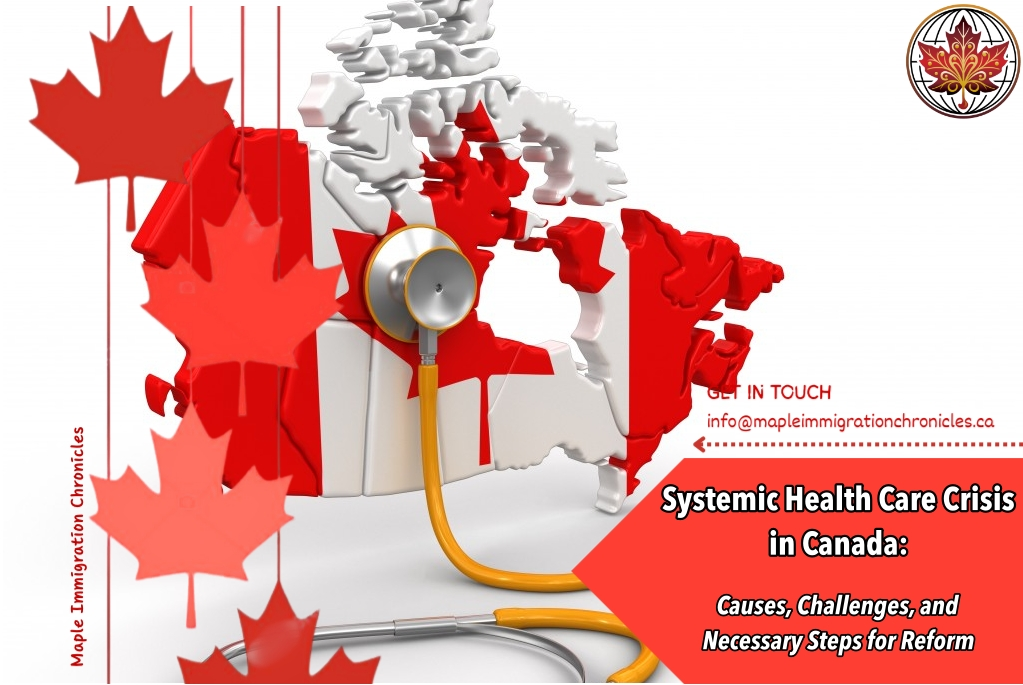
Canada remains one of the world leaders in life expectancy, the quality of evidence-based medicine, and access to innovative treatment methods. At the same time, numerous studies confirm that the Canadian health care system is undergoing a deep structural crisis, primarily related to the organization of medical services, staffing policies, financing, and management.
It is important to distinguish between the following terms:
- Medicine — diagnosis, treatment, disease prevention, and scientific component.
- Health Care — the system of managing access to medical services, resource allocation, regulation of medical professions, and ensuring efficiency of the system as a whole.
Despite the high quality of medical training, most Canadians already face difficulties accessing health care services. Today:
- Approximately 6 million Canadian residents do not have a permanent family doctor, which prevents timely access to primary care, diagnosis, and preventive medicine.
- A significant portion of the population turns to nurse practitioners, but these specialists do not always have sufficient authority or resources to fully replace a general practitioner.
These challenges indicate a complex crisis requiring immediate action at the legislative, administrative, and financial levels.
Main Structural Problems of the Canadian Health Care System
I. Insufficient Funding and Imbalance of Expenditures
- Chronic underfunding of medical infrastructure, modernization of facilities, and investment in innovation.
- Hospital overcrowding due to a lack of long-term care facilities — according to statistics, up to 20% of hospital beds are occupied by non-profile patients awaiting transfer to specialized institutions.
- Imbalance in the distribution of funds between hospitals, primary care, and preventive programs.
- Lack of sufficient emphasis on mental health initiatives, worsened after the COVID-19 pandemic.
Comparison:
Canada’s health care expenditures as a percentage of GDP are lower than those of comparable countries with similar models (such as Germany or France), limiting access to modern technologies and services.
II. Staffing Shortages and Barriers to Entering the Medical Profession
- High barriers to entering medical professions:
- Deficit of graduates from medical schools.
- Limited residency and specialization spots.
- Lack of fast-track programs for internationally educated health professionals.
- Complicated and prolonged recognition of foreign diplomas and licensing for international medical professionals:
- Document review — over 12 months.
- Waiting time for bridging programs — 2 to 3 years.
- Outflow of qualified staff to the USA due to higher salaries and better working conditions.
- Lack of systematic incentive programs for health care personnel in rural areas, the North, and small communities.
Example:
In some regions of Quebec and Northern Ontario, residents wait 4 to 9 months to see a family doctor, which is unacceptable for a country with a developed economy.
III. Bureaucratic Barriers and Administrative Inefficiencies
- No unified national electronic medical record system, which complicates information sharing between provinces.
- Uneven scope of authority and practice for nurse practitioners, physician assistants, and other health care professionals depending on the province.
- High administrative burden:
- Physicians spend up to 30% of their working time on documentation, reducing actual patient care time.
- Lack of nationwide licensing:
- Physicians relocating between provinces must undergo additional qualification recognition, leading to delays and extra expenses.
IV. Demographic and Social Changes
- The projected increase in the proportion of the population aged over 65 to 25% within the next 10 years.
- Immigration as the main source of population growth places additional pressure on the system, as many newcomers lack access to permanent health care providers.
- Growth in the number of patients with chronic illnesses requiring prolonged and complex care.
V. Professional Burnout and Moral Exhaustion of Health Workers
- Sharp rise in emotional burnout among doctors and nurses.
- Increased early retirement rates among family doctors.
- Consequences of the COVID-19 pandemic, which increased psychological pressure on the system.
- Insufficient mental health support programs for health care workers themselves.
Necessary Steps to Stabilize and Reform the System
Resolving the crisis requires a comprehensive approach at both federal and provincial levels:
- Financial Reforms:
- Revision of the state budget with a priority focus on medicine.
- Investment in long-term care facilities and preventive programs.
- Staffing Policy:
- Simplification of recognition procedures for foreign-trained professionals.
- Increase in residency positions.
- Introduction of incentive programs for staff in small towns and rural areas.
- Digitalization and Governance:
- Creation of a unified electronic medical system.
- Nationwide standardization of medical licensing.
- Social Support for Personnel:
- Development of mental health programs for health workers.
- Reduction of administrative burden and bureaucracy.
- Preparation for Demographic Changes:
- Expansion of geriatric services.
- Creation of specialized programs for elderly care.
Conclusions
Canada possesses all necessary resources to overcome the health care crisis — scientific potential, qualified personnel, and economic capabilities. However, without strategic reforms, modernization of management approaches, and decisive reduction of bureaucracy, the problems will only deepen.
The quality of life, social stability, and accessibility of medical services for millions of Canadians today and in the future directly depend on the effectiveness of decisions in this sector.