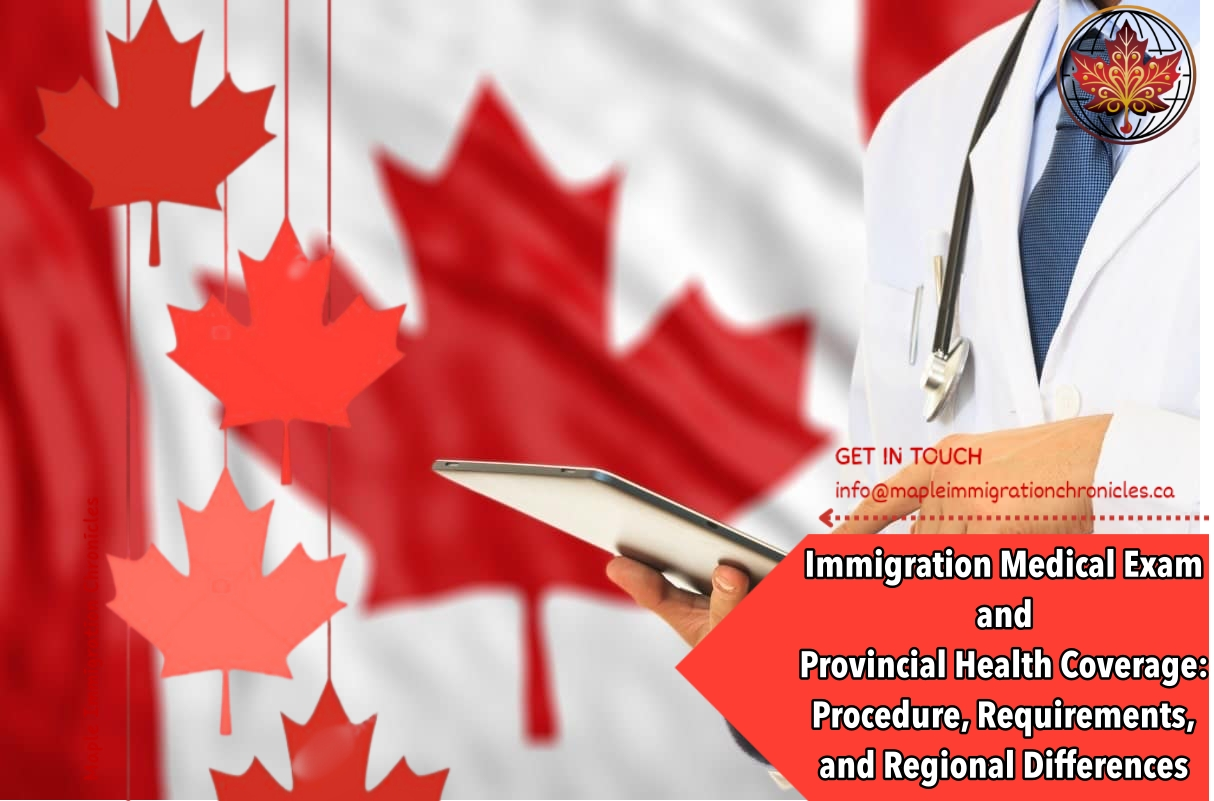
Under Canadian immigration law, undergoing a medical examination is a mandatory step for individuals applying for temporary or permanent resident status. The medical exam is essential not only for confirming that your health condition meets Canadian standards but also for:
- Removing work permit restrictions related to health-sensitive occupations;
- Obtaining legal authorization to work in public health, food processing, education, or other regulated sectors;
- Securing access to provincial public health insurance.
It is important to distinguish between the “immigration medical examination” and the procedures for accessing public health insurance in Canadian provinces. These are separate processes, although closely linked. Below, we explain the technical steps for completing the medical exam and provide an overview of provincial health coverage rules for new residents in Canada.
How the Immigration Medical Examination Works in Practice
The process follows a standardized procedure, which must be completed exclusively through IRCC-approved medical professionals known as Panel Physicians.
The applicant selects a clinic from the official list published by IRCC and schedules an appointment, either online or by phone. You must bring:
- A valid passport;
- A study or work permit if available;
- Passport-sized photographs (in some cases, the clinic will provide these on-site).
The cost of the medical exam is paid directly to the clinic and may vary depending on the province and the specific medical office.
The standard medical exam typically includes:
- A physical examination by a physician;
- Chest X-ray;
- Blood tests for infectious diseases.
For those applying to remove work permit restrictions or submitting a permanent residence (PR) application, the medical office uploads the results directly into the immigration system (GCMS). The applicant receives a confirmation document, such as the IMM 1017 form, as proof of completing the exam. However, the final decision regarding admissibility or work permit changes rests solely with IRCC.
It is crucial to understand that only IRCC can remove work restrictions or approve immigration applications based on medical results.
Access to Provincial Public Health Insurance: Key Differences Across Provinces
Canada operates a decentralized public healthcare system, where each province establishes its own rules for granting health coverage to newcomers, including temporary and permanent residents.
Quebec
Newcomers aged 18 and over are subject to a mandatory three-month waiting period before qualifying for public health insurance. Exceptions apply to citizens of countries with social security agreements with Quebec. Eligibility depends on two factors: your legal status (permanent or temporary resident) and your physical presence in Quebec for at least 183 days per calendar year.
Alberta
Permanent residents can apply for health coverage if they intend to reside in Alberta for at least 183 days within a 12-month period. Temporary foreign workers and students qualify only if their work or study permits are valid for more than six months. Students with permits shorter than 12 months may still qualify with an official letter from their educational institution confirming their intention to reside in Alberta for at least one year.
A standard three-month waiting period applies to all new arrivals before health coverage becomes active.
British Columbia (BC)
Public health insurance (MSP) is available to permanent and temporary residents with work or study permits valid for six months or more, provided they establish residence in BC. There is a “waiting period” consisting of the remainder of the month of arrival plus two additional months. During this period, newcomers are responsible for covering their own medical expenses.
Ontario
The rules in Ontario are more flexible. Eligible individuals may access public health insurance (OHIP) immediately upon meeting specific conditions, which include:
- Having PR status or being an accepted refugee;
- Holding a valid work or study permit for more than six months;
- Having an accepted PR application confirmed by IRCC;
- Residing primarily in Ontario.
Additionally, applicants must be physically present in Ontario for at least 153 days during the first six months of residency.
Conclusion
The immigration medical exam is a critical component of the legal process for obtaining status and work authorization in Canada. However, completing the medical exam does not automatically grant access to provincial health insurance—each province has distinct requirements for enrolling in public healthcare programs.
The rules differ significantly depending on your province of residence:
- Some provinces, like Quebec and Alberta, impose a mandatory waiting period before coverage begins;
- Others, such as Ontario, allow for more immediate access under certain conditions;
- Temporary workers and students must pay close attention to permit durations and supplemental documentation requirements.
In addition, lifting work permit restrictions requires a separate application process, which includes completing a medical exam and submitting supporting documents to IRCC.
Proper planning, timely medical examinations through authorized clinics, and a clear understanding of provincial health insurance rules will help ensure continuous medical coverage and avoid legal complications.