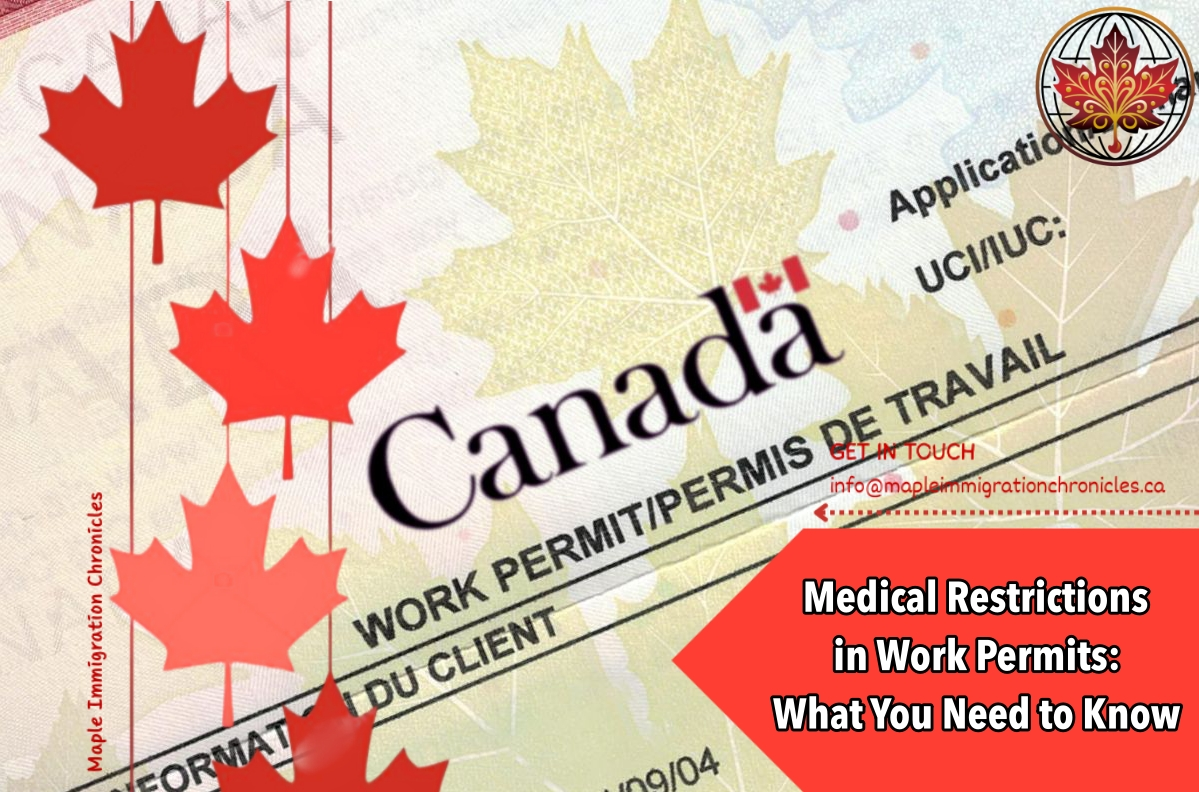
When applying for a Canadian Work Permit, certain categories of applicants may encounter medical restrictions, which are officially noted in the permit itself. For most applicants, it is clear that these restrictions apply to individuals intending to work with children in schools or daycare settings. However, one specific category often causes confusion, even among professionals — health service field occupations.
At first glance, this category appears vague: there is no publicly available, clearly defined list of professions or specific National Occupational Classification (NOC) codes that fall under this definition. Nevertheless, understanding who these restrictions apply to and when it is necessary to lift them through medical examinations is essential for anyone planning to work in Canada.
What Are Health Service Field Occupations and Who Is Affected
According to internal guidelines used by Canadian immigration officers, the category of health service field occupations includes professions that involve direct physical contact with people, particularly where there is a risk of exposure to bodily fluids.
Thus, the category is not limited strictly to medical professionals but also extends to a broader range of positions, specifically those involving:
- Care for children;
- Care for elderly individuals;
- Work with persons with disabilities;
- Laboratory or clinical settings where there is a risk of contact with biological materials.
It is important to emphasize that there is no comprehensive public list of specific professions or NOC codes, which creates challenges for applicants trying to independently assess their eligibility or obligations.
Practical Guidance for Applicants
In the absence of an official, publicly accessible list of occupations that unequivocally fall under the requirement to lift medical restrictions in a Work Permit, applicants are advised to apply the following approach:
- Assess the Nature of Your Job Duties:
- If your work involves physical contact with people who are considered vulnerable due to age, health, or other factors, it is likely that you will be required to undergo a medical examination to lift restrictions;
- If your duties include laboratory or clinical activities, particularly where contact with biological materials is possible, medical clearance is strongly recommended.
- Apply Common Sense Principles:
- If you are uncertain whether your position requires lifting medical restrictions, it is advisable to undergo the medical examination preemptively;
- Completing this step cannot negatively impact your application. On the contrary, it removes future limitations on changing employers or work environments within Canada.
- Rely on Official Guidelines and Professional Consultation:
- Use the instructions and resources provided by Immigration, Refugees and Citizenship Canada (IRCC);
- Where necessary, seek advice from qualified immigration professionals, especially if your intended employment falls within grey areas such as caregiving, healthcare, or laboratory settings.
Conclusions
The category of health service field occupations within Canada’s Work Permit system remains legally undefined for the general public. The absence of a detailed, official list of professions or NOC codes requires applicants to take an individualized, thoughtful approach to assessing their job responsibilities.
If your future work directly or indirectly involves caring for children, the elderly, persons with disabilities, or participating in laboratory or clinical environments with potential contact with bodily fluids — you are strongly encouraged to complete a medical examination to lift restrictions.
In situations of uncertainty, it is always preferable to act proactively and lift restrictions prior to beginning employment. Doing so minimizes legal risks and provides greater flexibility in pursuing various job opportunities within Canada.