
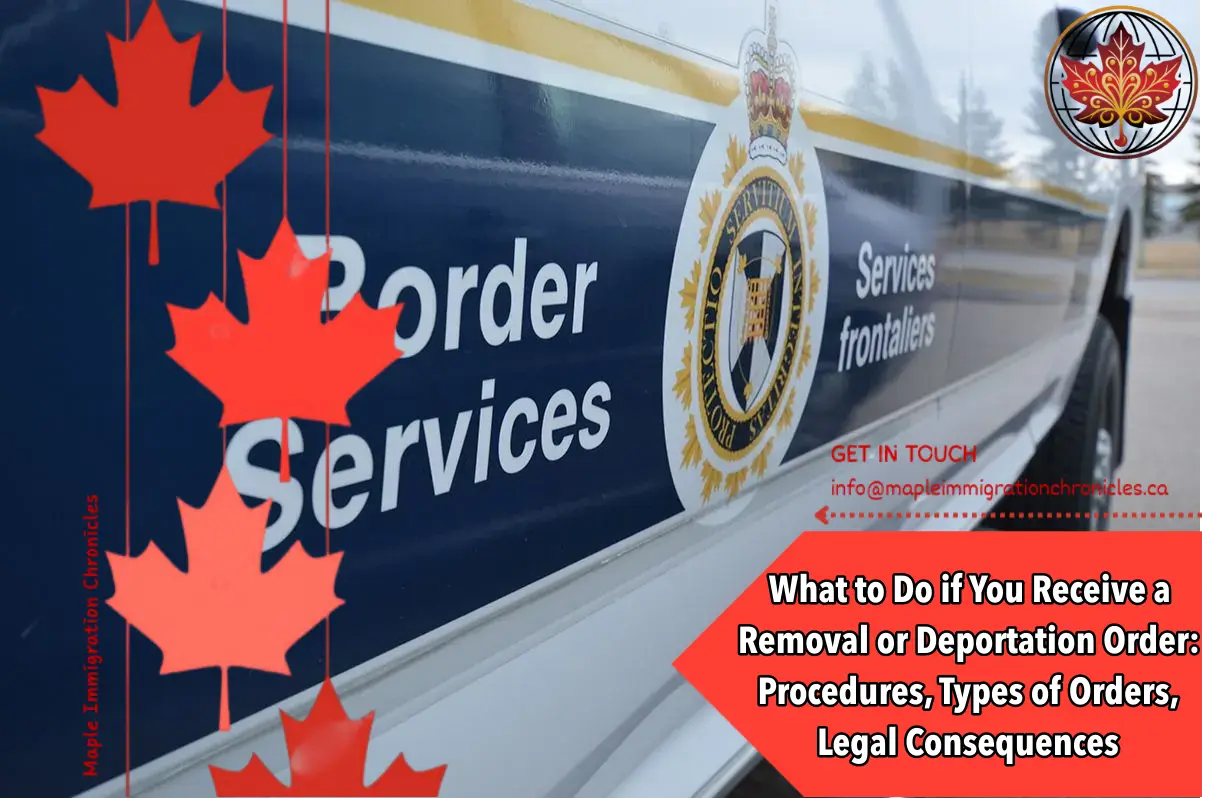
Removal and deportation orders are formal legal instruments issued by Canadian immigration authorities, often based on the Section 44 Report under the Immigration and Refugee Protection Act (IRPA). Such orders are applied to foreign nationals in cases of immigration violations or other grounds stipulated by federal law, and may include bans on future entry into Canada.
Understanding your legal position, the types of removal orders, and the available remedies is essential to protecting your rights and maintaining the possibility of legal return to Canada in the future.
In What Situations Can a Removal Order Be Issued
A removal order may be issued under the following circumstances:
- following a hearing before the Immigration Division (ID) or Immigration Appeal Division (IAD) of the Immigration and Refugee Board of Canada (IRB);
- directly by an officer of the Canada Border Services Agency (CBSA) if, during an investigation, sufficient grounds for removal are identified;
- automatically, for individuals applying for refugee status — a conditional Departure Order is issued upon application, which takes effect if the claim is refused or abandoned and no appeal is filed.
Types of Removal Orders and Their Legal Impact
1. Departure Order
- The least severe form of removal. The individual must leave Canada within 30 days and report their departure to CBSA.
- Refugee claimants typically receive a conditional Departure Order when applying for asylum, which becomes effective upon a final refusal.
- Important: Failure to leave within 30 days or failure to notify CBSA results in automatic conversion of the order into a Deportation Order.
2. Exclusion Order
- Requires the individual to leave Canada and imposes a ban on re-entry for 1 to 5 years, depending on the circumstances.
- Common grounds for issuance include:
- immigration violations (e.g., overstaying status, unauthorized work or study);
- misrepresentation, which results in an automatic 5-year re-entry ban.
- The period of inadmissibility begins:
- from the date of departure if the order is issued within Canada;
- from the date specified in the order if issued abroad.
- Early return to Canada requires an Authorization to Return to Canada (ARC) application.
3. Deportation Order
- The most serious form of removal.
- Typically issued when:
- the individual fails to comply with a Departure Order;
- the person does not report their departure to CBSA;
- there are serious immigration violations.
- A Deportation Order imposes an indefinite ban on re-entry to Canada.
- Return is only possible by successfully applying for ARC, a process that is discretionary and requires strong supporting reasons.
Additional Considerations
- An ARC (Authorization to Return to Canada) is not automatic. Applicants must present compelling reasons justifying their request to return.
- Failure to comply with a Departure Order or unresolved removal proceedings can make individuals ineligible for temporary visas (e.g., Study Permits, Work Permits), even when applying from outside Canada.
- Removal orders can affect accompanying family members, including dependents already residing in Canada or included in future applications.
- Appeal deadlines are extremely short — often as little as 15 days — making prompt legal action essential.
- If the order violates your rights, including the rights of a child, or was issued in error, you may appeal to the Federal Court of Canada or request a review under procedural fairness mechanisms.
Conclusion
Removal and deportation orders are serious legal decisions with significant consequences for your future in Canada. To protect your rights and maintain the possibility of legal return, it is essential to:
- act promptly and strategically;
- seek legal advice from an experienced immigration lawyer;
- monitor deadlines for appeal or applications for return authorization.
If you receive a removal or deportation order, or if you are uncertain about your current immigration status, immediate professional consultation is strongly recommended. Administrative decisions of this nature may have long-term implications for your ability to remain in or return to Canada.