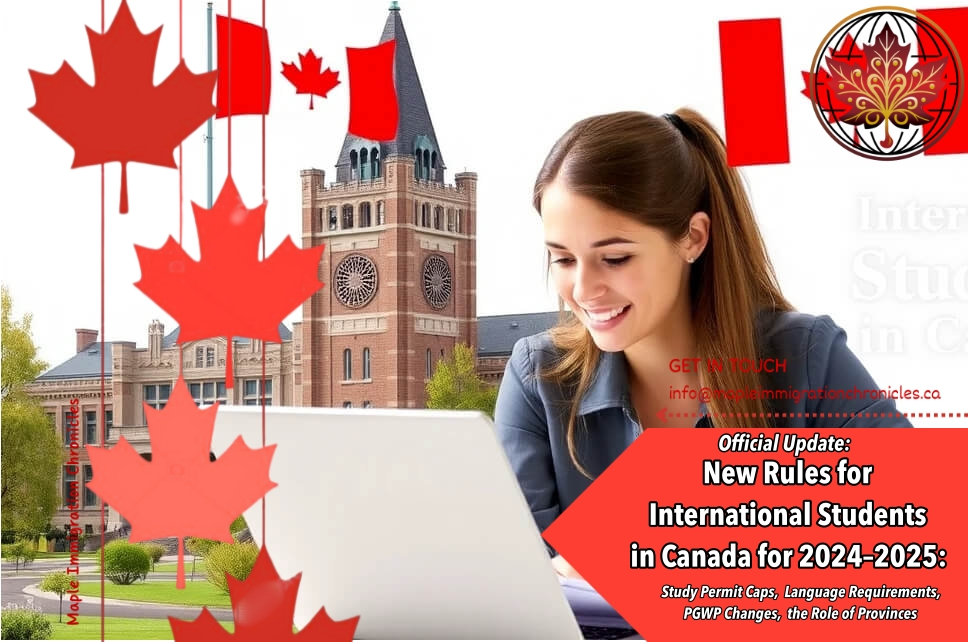
Starting in 2024, the Government of Canada has introduced significant changes to immigration policies concerning international students. These measures affect the issuance of study permits, post-graduation work opportunities, and work authorization for spouses of students. The new rules are designed to regulate the inflow of temporary residents, stabilize the labour market, and ensure that the education sector aligns with Canada’s economic priorities.
The restrictions are expected to remain in effect at least until the end of 2025, with an anticipated reduction of approximately 300,000 study permits over the next few years.
Key Changes for International Students in 2024–2025
The newly implemented restrictions affect multiple aspects of study and work rights for international students:
- Study Permit Quotas
As of 2024, Canada has introduced an overall cap on the number of study permits issued. Official data confirms a 10% reduction in issued permits compared to previous years. Priority is given to applicants enrolling in programs that meet Canada’s current economic needs.
- Post-Graduation Work Permit (PGWP) Reforms
Effective November 1, 2025, the PGWP will be granted only to graduates of programs identified as economically essential for Canada. Students completing programs outside the approved list will no longer be eligible for a PGWP.
- New Language Requirements
Also from November 1, 2025, applicants for the PGWP must demonstrate sufficient language proficiency in English or French:
- A minimum of CLB 7 for university graduates;
- A minimum of CLB 5 for college graduates.
These language requirements apply regardless of the institution or province of study.
- Restrictions on Spousal Work Permits
From the end of 2024, spouses of students enrolled in Master’s programs will only be eligible for an open work permit if the program duration is at least 16 months.
In addition, spousal work permits for temporary workers in certain critical economic sectors are now subject to stricter limitations.
- Introduction of the Provincial Attestation Letter (PAL)
Beginning in 2024, students applying for Master’s or Doctoral programs are required to submit a Provincial Attestation Letter (PAL). This document confirms that the applicant’s program aligns with provincial or territorial priorities and fits within regional quotas.
Purpose of the Policy Changes
According to official government statements, the updated rules aim to:
- Reduce the overall number of temporary residents;
- Prevent oversaturation of the Canadian labour market by temporary foreign workers;
- Prioritize job opportunities for Canadian citizens and permanent residents;
- Encourage international students to pursue programs in high-demand economic sectors;
- Strengthen oversight of education providers and ensure graduates’ successful integration.
Timeline for Implementation
- 2024: Introduction of study permit quotas; PAL requirements for Master’s and Doctoral students;
- End of 2024: Restrictions on work permits for spouses of students;
- November 1, 2025: New PGWP eligibility requirements and mandatory language standards for graduates.
Conclusion
If you intend to study in Canada during 2024–2025, it is essential to verify whether:
- Your program is on the approved list for PGWP eligibility;
- You meet the new language proficiency standards (CLB 5 or CLB 7, depending on the level of study);
- You understand the new restrictions concerning spousal work permits;
- You have obtained a Provincial Attestation Letter (PAL) if required for your program.
These regulatory changes are part of Canada’s national strategy to optimize immigration pathways and manage labour market pressures. Non-compliance or failure to meet the new criteria may result in refusal of a study permit or denial of post-graduation work authorization.
Given the substantial impact of these reforms, prospective students are strongly advised to consult qualified legal professionals and carefully review program conditions before applying to study or work in Canada.