A Practical Guide for Applicants under Express Entry, Super Visa, Sponsorship, and the Humanitarian & Compassionate (H&C) Mechanism
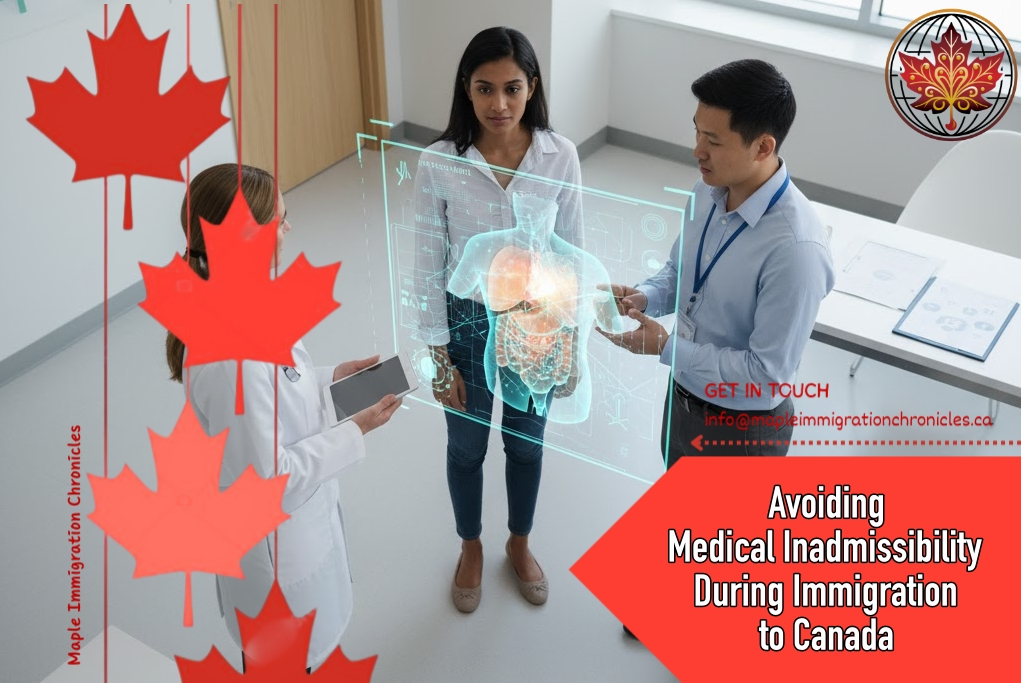
Medical inadmissibility is one of the most frequent reasons for refusal of permanent residence (PR) status in Canada. It may affect both economic immigrants applying through the Express Entry system and individuals seeking to reunite with their families under the Parents and Grandparents Program (PGP) or Super Visa.
The legislative foundation is defined in section 38(1) of the Immigration and Refugee Protection Act (IRPA). According to it, a person may be found inadmissible if their health condition:
- poses a danger to public health;
- creates a risk to public safety; or
- may cause excessive demand on Canada’s health care or social services system.
Despite the strict criteria, Immigration, Refugees and Citizenship Canada (IRCC) allows applicants to provide medical evidence, financial guarantees, and legal reasoning that may remove the risk of refusal.
1. Grounds for Finding Medical Inadmissibility
1.1. Risk to Public Health
This most often concerns infectious diseases that can spread among the population, such as tuberculosis, hepatitis B and C, or other infections under medical surveillance.
IRCC evaluates the following factors:
- results of the Immigration Medical Exam (IME);
- data on current treatment;
- the degree of disease control;
- the likelihood of transmission to others.
If the disease is under medical control and does not pose an epidemic threat, refusal is usually not issued.
1.2. Risk to Public Safety
Inadmissibility may be determined when a person has illnesses or conditions that can cause sudden loss of consciousness, seizures, or unpredictable behaviour. This includes, for example, epilepsy or certain mental disorders.
Assessment includes:
- treatment history and stability of condition;
- symptom control;
- behavioural characteristics;
- risk of harm to others.
Regular medical support, psychotherapy, and behavioural stability are key pieces of evidence of admissibility.
1.3. Excessive Demand on the Health Care System
This is the most common ground for refusal. In 2025, the excessive demand threshold is CAD 27,162 per year or CAD 135,810 over five years. If projected expenses exceed this level, the applicant may be found inadmissible.
Risk categories include:
- chronic diseases (diabetes, heart disease, kidney failure);
- oncological diagnoses;
- serious mental or neurological disorders;
- disabilities requiring long-term social services.
However, IRCC considers the possibility of private funding for treatment, the presence of insurance, or proven stability of condition.
2. Preparation and Risk Prevention
2.1. For Express Entry Candidates
Since August 2025, all applicants are required to undergo an upfront medical examination. To minimize risks, one should:
- provide detailed medical reports confirming stability;
- show treatment dynamics and effectiveness of therapy;
- demonstrate that costs do not exceed the established threshold;
- submit copies of insurance policies if privately insured.
2.2. For Sponsors under PGP
If the sponsored relative has a chronic or age-related condition, it is necessary to:
- provide detailed medical reports regarding prognosis;
- submit financial guarantees or private insurance;
- explain how expenses will be covered without using public resources.
2.3. For Super Visa Holders
A Super Visa requires mandatory medical insurance covering at least CAD 100,000 per year. This significantly reduces the risk of inadmissibility. Additionally, IRCC considers the sponsor’s financial stability and the applicant’s health outlook.
3. If IRCC Identifies a Risk of Medical Inadmissibility
3.1. Procedural Fairness Letter (PFL)
If, after the medical examination, the officer sees potential risks, they send the applicant a Procedural Fairness Letter. In response, within 90 days, the applicant must submit:
- updated medical reports;
- expert letters from specialists;
- cost calculations for treatment;
- documents proving financial capacity.
3.2. Mitigation Plan
In cases where refusal may be related to “excessive demand,” IRCC allows submission of a Mitigation Plan.
The document must include:
- a list of services that will be privately funded;
- proof of insurance coverage;
- financial statements or a Declaration of Ability and Willingness to pay for treatment independently.
3.3. Temporary Resident Permit (TRP)
In exceptional circumstances, even when a decision of inadmissibility is issued, an applicant may receive a Temporary Resident Permit (TRP) valid for up to three years if they do not pose a threat to the public.
4. Acting Proactively: Strategic Preparation
Preparation for medical assessment should begin in advance. For Express Entry — a comprehensive medical file; for PGP — financial guarantees and medical opinions; for Super Visa — insurance and confirmation of good health.
Consulting an immigration professional or medical lawyer can help build the right evidentiary strategy before submitting the application.
5. Humanitarian & Compassionate (H&C): The Path to PR Despite Medical Inadmissibility
H&C (Humanitarian and Compassionate Grounds) is a discretionary mechanism that allows obtaining permanent residence even when a person does not meet standard criteria or is medically inadmissible.
IRCC applies H&C when refusal of PR would result in undue hardship or breach of humanitarian principles.
5.1. When H&C Is Applied
IRCC considers:
- the person’s integration into Canadian society (employment, education, volunteering);
- the best interests of the child;
- humanitarian circumstances making return impossible;
- medical factors when treatment is available only in Canada.
5.2. Medical Inadmissibility and H&C
An H&C application allows one to demonstrate that refusal on medical grounds would contradict fairness principles. The evidence package should include:
- medical certificates with treatment prognosis;
- letters from doctors, social workers, or community members;
- documents proving financial independence;
- proof of social integration and family support.
In such cases, the IRCC officer has discretionary authority to depart from general admissibility criteria if justified by humanitarian considerations.
Conclusions
Medical inadmissibility does not mean automatic refusal. It is a warning that requires a proper strategy, documentation, and professional support.
- For Express Entry — prove the stability of your condition and moderate costs.
- For PGP — prepare medical reports and financial guarantees.
- For Super Visa — ensure insurance coverage and confirm absence of risks.
- For those already in Canada but found medically inadmissible — consider applying for H&C as a humanitarian exemption.
Thorough preparation, medical transparency, and professional legal assistance are the most effective path toward a favourable IRCC decision and a fair immigration outcome in Canada.