
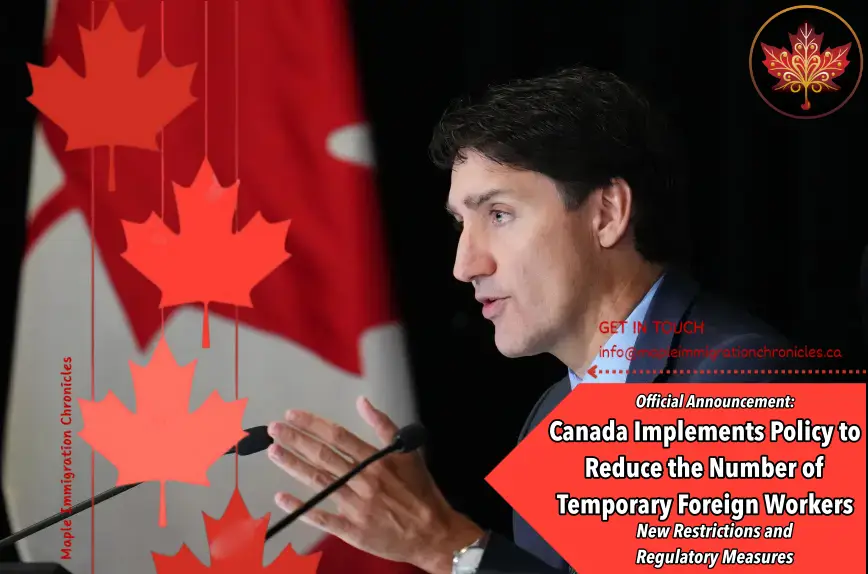
On August 26, 2024, the Government of Canada, in coordination with Employment and Social Development Canada (ESDC), announced a series of significant measures aimed at substantially reducing the number of Temporary Foreign Workers (TFWs) in the country.
The changes affect the Temporary Foreign Worker Program (TFWP) and the use of Labour Market Impact Assessments (LMIA), which are required for employers to hire foreign nationals. The new policy responds to evolving labour market conditions, increasing public concerns regarding the availability of affordable housing, and the economic impact of high levels of temporary immigration.
Key Regulatory Changes and Restrictions
The Government of Canada is introducing the following measures:
- Reduction of the Workforce Quota for Temporary Foreign Workers
Employers are now restricted to hiring no more than 10% of their workforce through the TFWP. The previous cap was set at 20%, allowing greater reliance on foreign labour for low-wage positions. The new limit is intended to reduce dependency on temporary foreign workers and promote the employment of Canadian citizens and permanent residents. - Shortened Maximum Employment Duration for Low-Wage Positions
The maximum duration of employment for foreign nationals in low-wage occupations is being reduced from two years to one year. This measure is designed to encourage local workforce participation and minimize the long-term use of temporary labour in sectors that require entry-level or low-skilled positions. - Suspension of LMIA Processing for Low-Wage Positions in Regions with High Unemployment
The Government will no longer process LMIA applications for low-wage occupations in regions where the unemployment rate exceeds 6%, except for specific, essential sectors, including:- Healthcare and medical services;
- Construction and infrastructure development;
- Other strategic sectors to be determined based on national priorities.
Economic and Social Justification
These measures form part of Canada’s broader socio-economic response to challenges such as:
- A growing shortage of affordable housing in major cities and rural areas;
- Rising competition for jobs among Canadians and permanent residents;
- The need to recalibrate the balance between temporary and permanent immigration streams;
- Adjusting immigration policies to reflect current economic priorities and regional workforce needs.
While Canada remains committed to attracting highly skilled foreign talent, the reduction of low-wage temporary labour is viewed as a necessary strategy to stabilize the domestic labour market, address housing pressures, and ensure the long-term sustainability of social programs.
Conclusion
Effective August 2024, stricter rules apply to the recruitment and employment of temporary foreign workers in Canada. Employers, recruiters, and prospective applicants must carefully review the new restrictions regarding LMIA applications, work permit durations, and overall workforce quotas.
Individuals seeking employment in Canada, as well as organizations managing labour migration, are expected to adapt their strategies in strict compliance with the updated regulatory framework.
Official Source:
Government of Canada – Reducing the Number of Temporary Foreign Workers in Canada