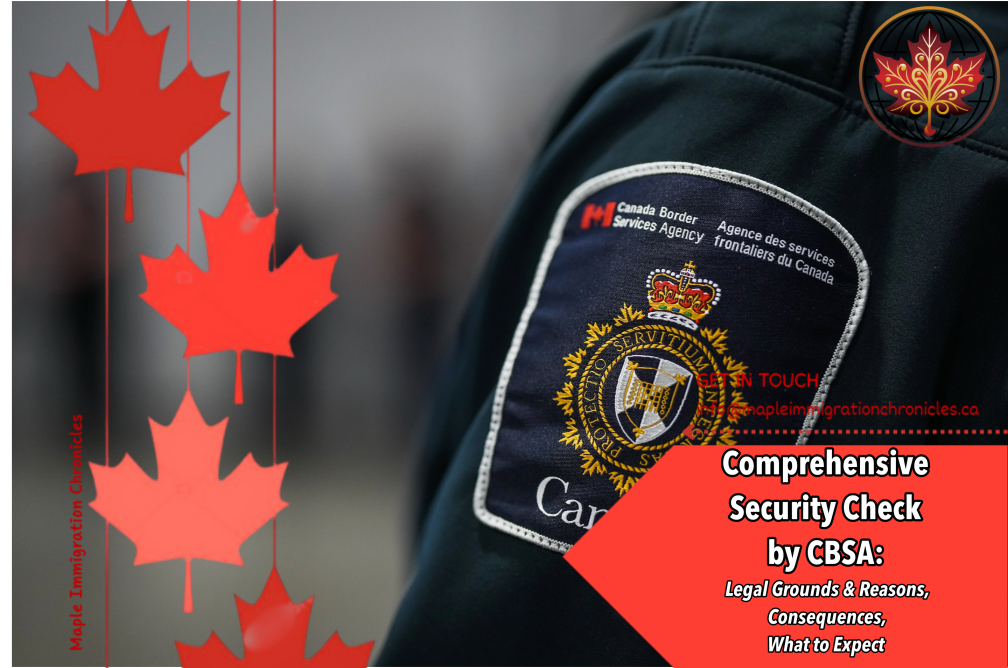
The process of obtaining permanent resident status in Canada is a complex, multi-stage procedure that involves not only standard application processing but, in certain cases, specialized security checks. One of the most significant yet often misunderstood stages is when an applicant’s file is transferred for a Comprehensive Security Check, conducted by the Canada Border Services Agency (CBSA).
For many applicants, this comes as a surprise, especially when the processing of their application is delayed and their GCMS notes reveal a security screening in progress. It is essential to understand that such a check is a legally mandated stage designed to safeguard Canada’s national security and ensure the integrity of its immigration system.
CBSA and Its Role in the Canadian Immigration System
The Canada Border Services Agency (CBSA) is a federal law enforcement agency responsible for border protection, customs enforcement, and ensuring that individuals entering or intending to immigrate to Canada meet the country’s legal, criminal, and security standards. While Immigration, Refugees and Citizenship Canada (IRCC) is responsible for the administrative processing of immigration applications, CBSA conducts specialized background checks focusing on security threats, organized crime, document fraud, and compliance with Canadian law.
When IRCC transfers your application to CBSA, it means that specific circumstances or concerns have been identified that require further investigation beyond routine administrative review.
Reasons for Comprehensive Security Check
A decision to initiate an in-depth security check is based on the presence of individual factors or a combination of circumstances that may indicate potential security risks, inconsistencies in the information provided, or violations of Canadian or international law. Common reasons include:
- Concerns regarding a potential threat to Canada’s national security. CBSA is authorized to assess possible links to terrorist groups, extremist organizations, or criminal networks, as well as any activities by the applicant that could be contrary to Canada’s security interests or international obligations.
- Service in foreign military, law enforcement, government, or intelligence agencies. Such professional history is subject to particular scrutiny if it relates to countries with high levels of geopolitical instability, sanctioned regimes, ongoing armed conflicts, or documented human rights abuses.
- Residence or long-term stays in countries with unstable political environments, active armed conflicts, or high levels of organized crime. Practice shows that CBSA pays increased attention to applicants who have lived or worked in regions such as the Middle East, parts of Africa, China, Russia, and, since 2022, Ukraine, due to the ongoing military conflict and the resulting security implications.
- In most cases, the combination of these factors automatically triggers a more thorough investigation. For example, applicants with both military or government service and residence in politically unstable or high-risk regions are highly likely to undergo a Comprehensive Security Check.
In addition to the above, a security check may be initiated if there is evidence or reasonable suspicion of:
- submission of falsified, altered, or fraudulent documents;
- discrepancies in the applicant’s biographical information;
- inconsistencies between declared intentions and actual travel or immigration plans;
- concealed criminal history, deportations, or other legal violations;
- involvement in questionable financial activities, such as money laundering, illegal financing, or organized economic crimes.
Scope and Components of the Comprehensive Security Check
The security check conducted by CBSA is a complex, multi-faceted process that examines all aspects of the applicant’s personal, professional, financial, and immigration history.
The first step is to verify the authenticity of all submitted documents, including passports, visas, diplomas, certificates, and official statements.
CBSA conducts a thorough criminal background check, analyzing any records of arrests, convictions, or involvement in criminal proceedings, as well as possible alerts in international databases such as Interpol.
The applicant’s full immigration history is reviewed, including past visa refusals, deportations, immigration violations, or breaches of residency regulations in Canada or other countries.
Financial audits may be conducted to assess the legality of income sources, financial stability, and whether the applicant’s economic activities comply with Canadian standards of integrity.
Where necessary, CBSA may initiate additional medical assessments, particularly if there is reason to believe that the applicant may pose a public health risk or has submitted false medical documentation.
A critical component of the security check is analyzing potential links to terrorist organizations, extremist groups, or organized criminal networks, which may be based on confirmed intelligence or indirect indicators requiring further examination.
Lastly, CBSA evaluates the applicant’s stated purpose of travel or immigration, determining whether the declared intentions align with actual plans and whether there are hidden motives that contradict Canadian immigration law.
Processing Time and Practical Implications for the Applicant
The duration of a Comprehensive Security Check is not fixed by Canadian legislation. The timeframe depends on the complexity of the case, international cooperation requirements, the availability of reliable information, and the technical capabilities of involved agencies.
In practice, such security checks may take several months to over a year. Applicants should understand that once a file is transferred to CBSA, IRCC no longer controls the processing timeline. The application status remains unchanged until CBSA completes its investigation and provides the required security clearance or recommendations.
Although applicants have the right to request updates from IRCC or access their GCMS notes, such inquiries do not expedite the process. These tools provide general status updates but have no legal impact on accelerating the security screening.
The final decision regarding the approval or refusal of permanent residence is made by IRCC only after receiving CBSA’s conclusions and security recommendations.
Conclusion
A Comprehensive Security Check by CBSA is a legally established and necessary component of Canada’s immigration process when there are security, criminal, or legal concerns regarding the applicant. The initiation of such a check does not automatically indicate wrongdoing by the applicant; however, it signals the need for additional, thorough assessment to protect Canada’s national security and the integrity of its immigration system.
Applicants whose files are under review by CBSA must exercise patience, ensure full transparency, and provide accurate, verifiable documentation. Seeking professional legal assistance can significantly reduce the risk of complications and improve the applicant’s chances of a favorable outcome after all required checks are completed.
Comprehensive Security Check is not merely a formality but a robust mechanism that upholds Canada’s international obligations, safeguards its borders, and ensures that only individuals who meet the highest legal and security standards are granted the privilege of residing in the country.