
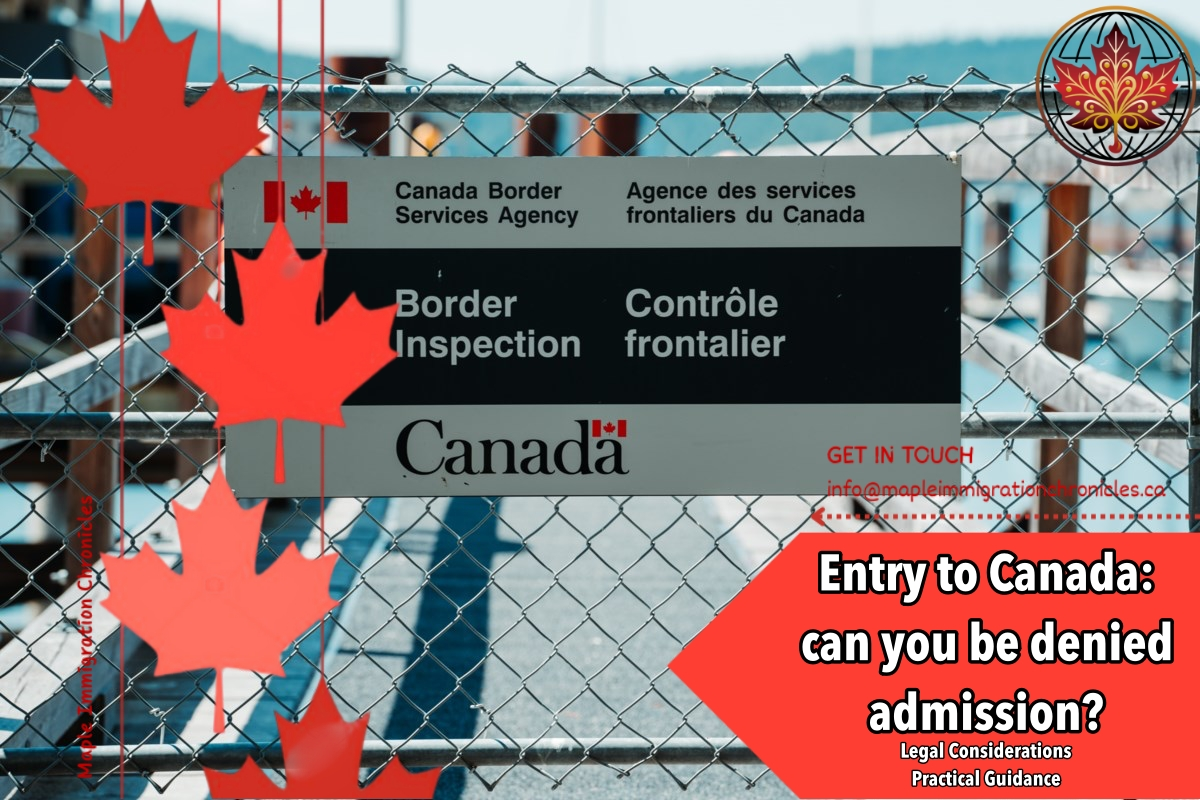
Many temporary residents or applicants often wonder: “Can I be denied entry to Canada even if I have a valid visa?” The short answer is — Yes, you can.
It is a common misconception that holding a visa, an electronic travel authorization (eTA), a work or study permit, or other supporting immigration documents guarantees unrestricted entry into Canada. In reality, only two categories of individuals have unconditional right of entry:
- Canadian citizens, and
- Permanent residents (PR holders) of Canada.
For all others — including those with visas, permits, or other travel documents — entry is subject to the discretion of Canada Border Services Agency (CBSA) officers at the port of entry.
Legal Basis: Can You Be Denied Entry?
Yes, even with valid documentation, entry to Canada is not automatic. Immigration legislation clearly distinguishes between:
- The right to travel to a Canadian port of entry, and
- The right to physically enter Canada, which is determined by a CBSA officer during border inspection.
This applies regardless of whether you hold:
- A valid tourist, work, or study visa;
- An eTA (Electronic Travel Authorization);
- A Letter of Introduction (LOI) or Letter of Acceptance (LOA);
- Labour Market Impact Assessment (LMIA) approval;
- A Work Permit or Study Permit.
All of these documents allow you to approach the Canadian border but do not guarantee you will be admitted into the country.
Key Factors Affecting Entry Decisions
CBSA officers assess various factors when determining whether to admit a traveler:
- Purpose of visit: Is it consistent with the visa category and your declared intentions?
- Immigration history: Any previous violations of Canadian immigration rules?
- Medical concerns: Do you pose a risk to public health or safety?
- Financial situation: Do you have sufficient funds to support yourself?
- Criminal or security issues: Any convictions or pending investigations?
- Consistency of information: Are your answers to officers’ questions clear, consistent, and truthful?
- Behaviour at the border: Nervousness, contradictions, or evasiveness raise red flags;
- Biometric or database results: Negative findings based on fingerprints or records;
- Possessions and luggage: Unauthorized items or prohibited goods.
Any of these elements may influence the officer’s decision to refuse entry, even if you possess valid documents.
Practical Considerations Before Leaving and Returning to Canada
If you are in Canada with temporary status (visitor, worker, student) and are considering a short-term departure, keep in mind:
- Review the validity of your passport, visa, eTA, or permits before leaving;
- Understand that re-entry is not guaranteed — each border crossing is subject to a new assessment;
- Do not rely solely on anecdotal experiences from others — what worked for one person may not apply to your situation;
- Avoid unnecessary travel if your immigration status is unstable or raises concerns;
- Be prepared to clearly articulate your purpose of travel, ties to Canada, and intention to comply with Canadian laws.
Remember: Even brief trips abroad (including to the United States) require careful evaluation if you do not hold PR or citizenship.
Conclusions
Entry to Canada is never unconditional for foreign nationals without Canadian citizenship or PR status. A valid visa, permit, or eTA grants permission to approach the border but does not automatically entitle you to cross it.
CBSA officers have full legal authority to deny entry based on their assessment of your documents, purpose of travel, personal history, and conduct during inspection.
To safeguard your immigration position:
- Comply with all immigration regulations;
- Be honest and consistent when communicating with border officials;
- Avoid risky travel if your status is not secure.
Proper preparation and awareness of your rights and obligations are essential to minimize the risk of complications at the Canadian border.