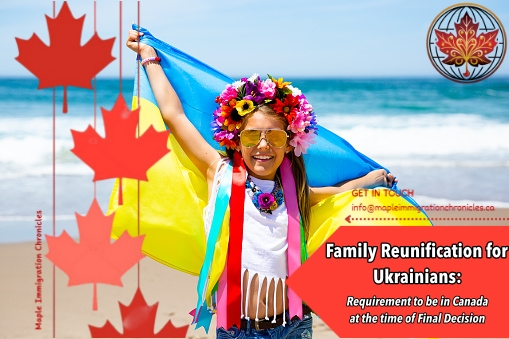
One of the key conditions for participating in the Family Reunification Program for Ukrainian citizens is the requirement that the principal applicant must be physically present in Canada at the time permanent resident status is granted. This post clarifies the legal nature of this requirement and outlines the step-by-step process following the Acknowledgment of Receipt (AoR).
1. Legal Requirement of the Program
According to official criteria, you must be in Canada when you are granted permanent residence. This requirement:
- Applies only to the principal applicant, not to family members;
- Is part of the broader immigration framework aimed at ensuring that applicants genuinely intend to settle in Canada and integrate into Canadian society.
This also allows immigration officers to more effectively verify the applicant’s eligibility and uphold the integrity of the process.
2. What Happens After AoR: Logic and Risks of the Final Stage
After AoR, your application is under review, and a final decision can be made at any time—without additional warning. Permanent resident status is granted at the Confirmation of Permanent Residence (CoPR) stage through the PR Portal. At that moment, your previous visa becomes invalid, and you will no longer be able to re-enter Canada without a PR card.
It is impossible to predict the exact timing of this transition, but there is a two-step notification system that allows you to prepare.
3. Portal 1 Stage: Finalization Notification
The first signal of a pending final decision is the Portal 1 email, which contains the following:
“Your application for permanent residence is now ready for finalization… pending the confirmation of your permanent residence status. You’ll complete this process through the Permanent Resident Portal (PR Confirmation). Please provide the requested information within 7 calendar days to ensure there are no undue delays.”
This email requests that you confirm your presence in Canada within 7 calendar days. If you are temporarily outside of Canada, it is recommended that you:
- Either return to Canada and respond within the deadline;
- Or send an official letter requesting a deferral.
In general programs, this practice is allowed. However, in our program, there is a direct requirement to be in Canada, so any deviation from this rule may pose risks for the applicant.
4. Portal 2 Stage: Portal Login and CoPR
After your confirmation in Portal 1, you will receive Portal 2—an email with login credentials to access the PR Portal. Through this portal, you:
- Confirm your Canadian address for PR card delivery;
- Receive your CoPR, the official document confirming your new status.
From this moment, your immigration status is officially changed, but your PR card has not yet arrived by mail. Your previous visa is no longer valid, and the PR card becomes the only document that allows re-entry to Canada.
5. Remaining in Canada Until the PR Card is Received
From the moment of Portal 1 until you physically receive the PR card, the applicant must remain in Canada. This is because:
- The visa under which you were staying in Canada becomes invalid;
- Without a valid PR card, you cannot legally return to Canada.
In theory, family members in Canada can receive the PR card by mail and send it to you abroad, but this option must be carefully evaluated in terms of legal and procedural risks.
6. Why This Requirement Is Critically Important
- Legal obligation to Canada: Physical presence confirms your intent to settle and integrate into Canadian society and reunite with your family.
- Procedural efficiency: Being in Canada allows you to respond promptly to additional requests from IRCC and avoid delays in finalization.
- Avoiding refusal risks: Failure to comply with this requirement may result in processing delays or even refusal of the application—especially if the officer is unable to verify your presence in Canada at the time of final decision.
Conclusion
If you are applying under the Family Reunification Program as a Ukrainian national, you must be in Canada at the time the final decision is made on your application. After AoR, expect Portal 1 and plan to be present in Canada accordingly. This will help you avoid critical procedural risks and ensure successful acquisition of permanent resident status.