
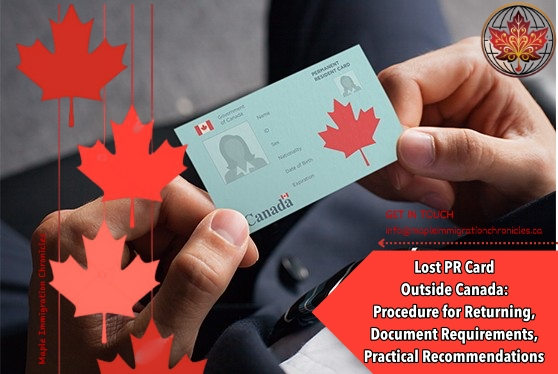
Canadian permanent resident (PR) status grants you the right to live, work, study, and freely re-enter Canada. However, in practice, exercising that right is directly linked to possession of a valid PR Card, which serves as the primary proof of your permanent resident status when traveling internationally.
Losing your PR Card or allowing it to expire while outside Canada creates significant legal challenges, especially regarding return by air, bus, or rail. Nonetheless, the situation is entirely manageable if addressed promptly and according to the established legal procedure.
This guide provides step-by-step instructions on:
- What to do if you lose your PR Card or it expires while abroad;
- What a PRTD is, who requires it, and how to apply;
- Alternative options for entering Canada via a land border without a PR Card;
- How to replace a lost PR Card if you are already inside Canada;
- Practical tips to avoid such situations in the future.
What is a PRTD and When is it Required
The PRTD (Permanent Resident Travel Document) is a one-time travel document that allows Canadian permanent residents to return to Canada when abroad without a valid PR Card.
The PRTD:
- Does not replace your PR Card;
- Is valid for a single entry to Canada only;
- Is required to board a flight, bus, or train to Canada;
- Can only be obtained from outside Canada upon proving your PR status.
Airlines and transportation companies are legally obligated to deny boarding to individuals unable to present valid PR Cards or PRTDs as proof of their status.
How to Apply for a PRTD: Step-by-Step Process
To apply for a PRTD, follow this legal procedure:
- Prepare the Required Forms:
- IMM 5444 — Application for a Travel Document (Permanent Resident Abroad);
- IMM 5529 — Official instruction guide;
- IMM 5644 — Document checklist.
- Gather Supporting Documents:
- Copy of your valid passport;
- Evidence of your permanent resident status;
- Proof of residency ties to Canada (tax documents, utility bills, rental agreements, employment letters);
- A compliant photograph;
- Proof of payment — $50 CAD (official fee paid via the IRCC portal).
- Submit Your Application:
- Online through the IRCC Secure Account, or
- In person via a Visa Application Centre (VAC) outside Canada, such as VFS Global.
- Urgent Situations:
If your return is related to work, urgent medical treatment, or a family emergency (e.g., death of a close relative), indicate the urgency in your application and include supporting documentation (medical certificates, employer letters, tickets, etc.).
Note: Even with an urgent request, IRCC does not guarantee expedited processing.
What Happens After Submitting the Application
After submitting your application:
- IRCC may request additional documentation or schedule an interview;
- If approved, you will be asked to submit your passport for the PRTD to be affixed;
- If refused, you will receive a written explanation with potential options for appeal.
Land Border Return to Canada: Alternative Scenario
For permanent residents returning to Canada via a land border (e.g., from the United States), a PRTD is not strictly required. Instead, you should present sufficient evidence of your permanent resident status, such as:
- COPR (Confirmation of Permanent Residence);
- Canadian-issued documents: SIN, health card, driver’s license;
- Previous PR Cards, if available;
- Employment letters, tax documents;
- Vehicle registration, insurance policies, utility bills.
The Canada Border Services Agency (CBSA) has access to electronic databases and can verify your status on-site. It is crucial to provide truthful, consistent information and explain your circumstances clearly.
Lost PR Card While Inside Canada: How to Replace
If your PR Card is lost while you are still in Canada:
- Submit an application for a new PR Card through the IRCC Portal;
- The processing fee is $50 CAD;
- PR Cards can only be delivered to a valid Canadian address;
- Expedited processing is available for urgent, documented reasons (employment, medical needs, death of a close relative).
Practical Recommendations to Avoid Future Issues
- Always create digital and printed copies of your PR Card before traveling;
- Regularly check the expiry date of your PR Card well in advance of any international trips;
- Apply to renew your PR Card ahead of time — avoid last-minute renewals before travel.
Conclusion
Losing your PR Card while abroad is inconvenient but legally manageable. The PRTD remains the only legitimate method for returning to Canada by commercial transportation without a valid PR Card.
Returning via a land border offers more flexibility, provided you carry sufficient supporting documents and your status can be verified.
Advance preparation, organized documentation, and awareness of your legal rights will ensure a smooth return to Canada and help avoid unnecessary complications or delays.