Officially Announced by IRCC on January 30, 2025
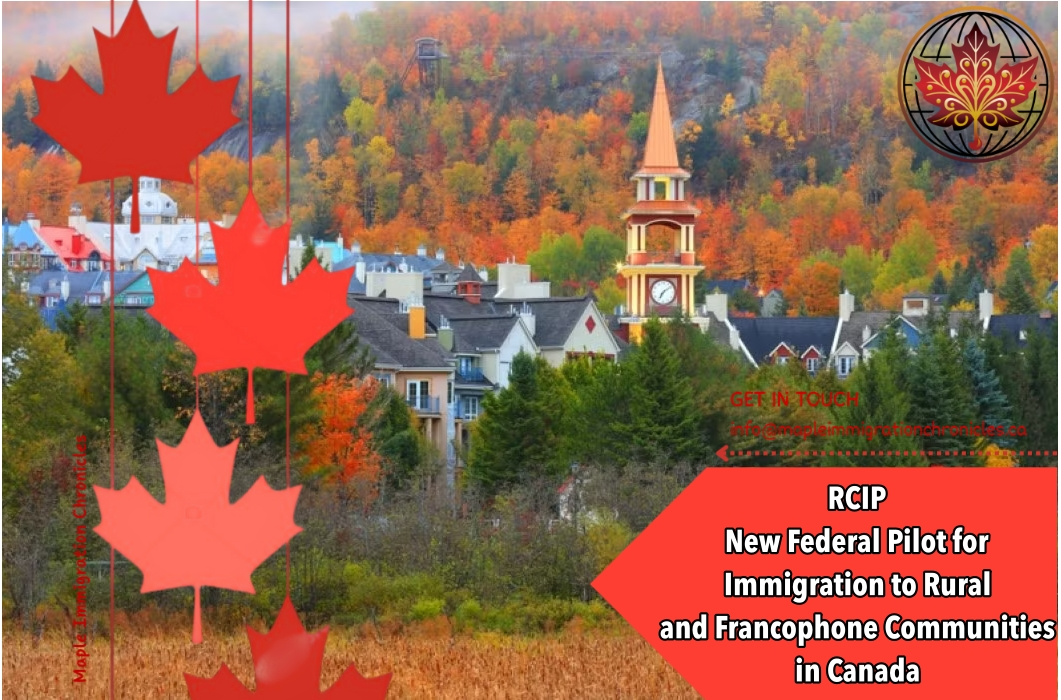
In January 2025, Immigration, Refugees and Citizenship Canada (IRCC) launched a new federal immigration initiative — the Rural Community Immigration Pilot (RCIP). This pilot was designed to address ongoing labour shortages in smaller and francophone communities across Canada, many of which have not previously had consistent access to federal immigration channels.
The RCIP offers a streamlined and accelerated pathway to permanent residence (PR) for eligible candidates who are willing to live and work in designated rural municipalities.
Official Sources
- Official platform: Canada.ca
- Full list of participating communities available via federal portal
- Localized program rules are administered by municipalities and employers
List of Participating Communities (as of 2025)
Nova Scotia
- Pictou County
Ontario
- North Bay
- Sudbury
- Timmins
- Sault Ste. Marie
- Thunder Bay
Manitoba
- Steinbach
- Altona/Rhineland
- Brandon
Saskatchewan
- Moose Jaw
Alberta
- Claresholm
British Columbia
- West Kootenay
- North Okanagan Shuswap
- Peace Liard
Most of these communities have already participated in prior pilots (such as RNIP), and possess the necessary infrastructure and experience to support newcomer integration.
Core Eligibility Requirements under RCIP
1. Employer Designation Requirement
In order to hire a foreign worker through RCIP, the employer must:
- Apply for designation through their local municipality
- Complete a certified training program on hiring foreign nationals
- Provide documented evidence of labour shortages (e.g., unsuccessful local recruitment attempts)
- Commit to fair, safe, and stable employment conditions
- Be officially endorsed by the local community coordination board
2. Work Experience
- Minimum of 1 year of relevant work experience in the same or related occupation
- Experience in a different NOC or TEER may be accepted if functional equivalency can be demonstrated
- If the candidate lacks qualifying experience, they must work locally for 1 year before becoming eligible to apply for PR
Note: Even if the candidate does not meet experience requirements upfront, RCIP allows PR application after one full year of local employment in the designated community.
3. Language Requirements (CLB/TEF)
- TEER 4–5 → Minimum CLB 4
- TEER 2–3 → Minimum CLB 5
- TEER 0–1 → Minimum CLB 6
Accepted tests include IELTS, CELPIP (for English) and TEF, TCF (for French).
4. Education Requirements
- Minimum requirement: high school diploma (Grade 12) or 1 year of post-secondary education
- Mandatory: Educational Credential Assessment (ECA) via WES, ICAS, IQAS, CES, or another recognized provider
- Certain regulated professions may require licensure compliance (e.g., healthcare, trades)
Step-by-Step RCIP Application Process
- Assess eligibility against federal and community-specific criteria
- Find an eligible employer in a participating RCIP community
- Obtain a job offer and complete all pre-application requirements
- Apply for community support (municipal endorsement)
- Submit a PR application directly to IRCC under the RCIP stream
- Await final decision and receive CoPR → PR card
Why Consider RCIP Over Other Programs?
- Direct application for PR without provincial nomination or Express Entry
- Faster processing — approximately 8–12 months from submission to PR
- Lower entry threshold — no CRS score or ranking system
- Accessible for lower- and medium-skilled occupations (NOC C, D)
- Formal support from the community, including integration and settlement services
- French-language opportunities — the pilot includes francophone regions for dual-language accessibility
Who Should Consider RCIP?
- Candidates with experience or willingness to work in agriculture, logistics, trade, food processing, retail, or services
- Applicants who do not score high enough in Express Entry, but have work readiness, basic English or French, and job offers
- Those already in Canada on open work permits or CUAET, seeking a structured transition to PR
- Families or individuals looking for affordable, safe, and stable communities with long-term settlement opportunities
Conclusion
RCIP represents a new wave in Canada’s immigration strategy — providing fair access to PR for workers who were previously excluded from high-barrier programs. With clear eligibility rules, employer-backed jobs, and a federally supported PR route, RCIP is one of the most practical immigration solutions available in 2025.
If you are looking for a legal, structured, and community-driven pathway to permanent residence, RCIP should be a key part of your immigration plan.