Federal Stage: Comprehensive Security Screening

Trends  2025:
  • Broader Application
    Security screening is now applied to a wider range of immigration cases—not only high-risk profiles, but also more Express Entry and family sponsorship files. This reflects an overall tightening of review protocols.
  • Deeper Analysis
    Screening relies heavily on classified sources, intelligence-sharing with foreign partners, and complex assessments of applicants’ histories, affiliations, and international travel. Files flagged under s.34–37 of IRPA undergo the most rigorous review.
  • Delays Are the New Norm
    While the official standard is 110 days, many cases extend far beyond that—10 to 18 months or longer is increasingly common, particularly when CSIS or CBSA requires additional verification.
  • Disproportionate Impact by Country of Origin
    Applicants from Iran, China, Russia, several African nations, and in some cases Ukraine, are more frequently subject to extended and intensive screening.
  • Opaque Process and Limited Recourse
    GCMS notes often show redacted sections under the Access to Information Act, and IRCC offers no specific explanation for delays. As a result, more applicants are exploring remedies like Mandamus or H&C-based expedited requests.

Understand the differences…


When a case officer has a security concern under Section 34 (see above but essentially terrorism and subversion) they then have to make the following choice:

  • Send the application for a security screening via a Record Check, OR
  • Send the application for a security screening via a Comprehensive Check

A Record Check in Canada


A Record Check is a routine component of security screening conducted by the Canadian Security Intelligence Service (CSIS) for most inland permanent residence (PR) applications—that is, for applicants who are already in Canada with valid temporary status.

In most cases, the IRCC officer at a Canadian Case Processing Centre (CPC) is required to refer inland PR applications to CSIS for this screening.

The Record Check specifically evaluates whether the applicant poses any current or future national security threats under:

  • Section 34(1) (a), (c), (d), and (f) of the Immigration and Refugee Protection Act (IRPA), and

  • Section 2 of the Canadian Security Intelligence Service Act.

Importantly, a Record Check does not assess medical or criminal inadmissibility. Those aspects are handled separately—medical issues by health authorities and criminality by law enforcement agencies.

Comprehensive Check in Canada


A comprehensive check is an in-depth form of security screening conducted by all screening partners, most notably the CBSA, but it may also involve other intelligence agencies.


When Is It Requested?

If a case officer at a Case Processing Centre (CPC) in Canada—or an Immigration Program Manager at a Canadian mission abroad—suspects that the applicant may be inadmissible, they are required to request a comprehensive check.

This type of screening is also the preferred method for assessing permanent residence applications submitted from outside Canada, although in some circumstances a simpler record check may be deemed sufficient.


Why Does It Take Longer?

A comprehensive check involves inter-agency information sharing, making it more time-consuming than a standard record check.

If your application passed its eligibility review more than two months ago but is still under security screening, it is likely undergoing a comprehensive check due to admissibility concerns.


Who Initiates the Check?
  • For applications submitted within Canada, the request typically comes from an IRCC officer at a CPC.

  • For applications originating abroad, the request is made by an Immigration Program Manager at a Canadian embassy, consulate, or high commission.

Criminality and Security Risks

Applicants undergo detailed checks for serious criminality, organized crime affiliations, and activities such as terrorism, espionage, or subversion. These screenings rely on information from IRCC, CBSA, CSIS, RCMP, Interpol, and international law enforcement partners, and are assessed under IRPA sections 34 to 37.

Threats to National Security and Public Policy

As part of security screening, CSIS and CBSA assess whether an applicant poses a risk to Canada’s safety or sovereignty. This includes reviewing political affiliations, military or government roles—especially from high-risk regions—and, where applicable, analyzing digital footprints such as social media or public activity. These assessments help identify ties to terrorism, espionage, or subversive actions under IRPA sections 34–37.

Misrepresentation and Identity Integrity

A critical aspect of comprehensive security screening is the detection of forged, altered, or counterfeit documents—such as passports, educational diplomas, national ID cards, or civil status records. Immigration authorities cross-check declared identity details against biometric and facial recognition databases to confirm authenticity. Officers also examine an applicant’s history for any attempts to conceal prior immigration violations, use of multiple identities, or deliberate misrepresentation, which may trigger inadmissibility under IRPA sections 40 and 41. This step ensures the integrity of Canada’s immigration system and protects national security.

Not tracker, but Notes..
Don’t rely solely on the IRCC online portal—it often doesn’t reflect the true status of your file, especially during background or security screening. For a clearer view, request your GCMS notes (from IRCC), CBSA notes, or CSIS notes if applicable. These internal records provide more accurate information about the current stage of processing and which agency is handling your case. You can order them online through an Access to Information (ATIP) request.

Track your application properly...

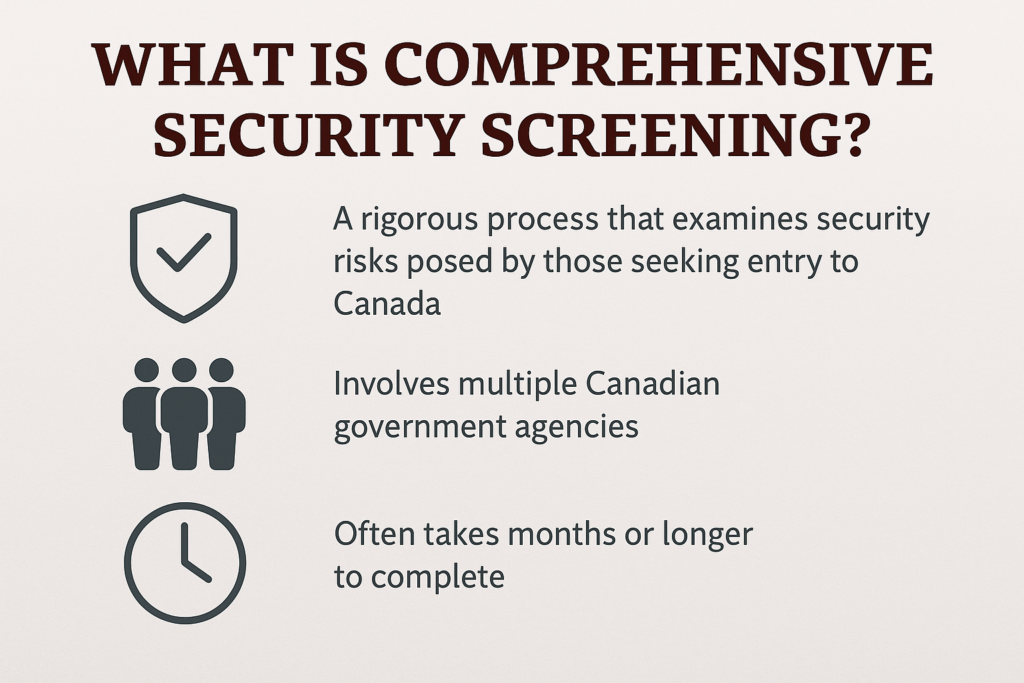
What is Comprehensive Security Screening?

Any foreign national seeking to enter Canada, whether on a permanent or temporary basis, must obtain the appropriate Canadian visa, unless they are a citizen of a visa-exempt country. To be granted a visa, the applicant must meet all the eligibility criteria under the Immigration and Refugee Protection Act (IRPA) relevant to their immigration category and must be deemed admissible to Canada.

The assessment of admissibility involves a coordinated effort between three key federal agencies:

  • Immigration, Refugees and Citizenship Canada (IRCC)

  • Canada Border Services Agency (CBSA)

  • Canadian Security Intelligence Service (CSIS)

The primary responsibility for determining admissibility rests with IRCC, supported operationally by CBSA. These agencies ensure that applicants do not pose a risk to the health, safety, or security of Canadian society. CSIS and the Royal Canadian Mounted Police (RCMP) contribute intelligence and security assessments to assist CBSA and IRCC in their decision-making processes.

While CSIS and CBSA do not make final decisions on immigration or citizenship applications, they provide vital security-related information to IRCC. Based on this input, IRCC makes the final determination on whether to approve an application for:

  • Canadian citizenship

  • Permanent residence

  • Refugee protection (from outside Canada)

  • A visitor visa

  • An Electronic Travel Authorization (eTA)

  • A study permit

  • A work permit

  • A temporary resident permit

A security screening is typically triggered when an IRCC officer has reason to believe that an applicant may be inadmissible to Canada under certain provisions of the Immigration and Refugee Protection Act (IRPA). These concerns often arise from evidence or suspicion linked to the following sections of IRPA:


Section 34 – Security Grounds

A person may be found inadmissible for:

  • (a) Engaging in espionage against Canada or its interests;

  • (b) Instigating or participating in the subversion of any government by force;

  • (b.1) Subverting a democratic institution or process;

  • (c) Participating in terrorism;

  • (d) Posing a threat to Canada’s national security;

  • (e) Committing acts of violence that may endanger lives in Canada;

  • (f) Being a member of an organization that engages in any of the above activities.


Section 35 – Human and International Rights Violations

This section applies to those who:

  • (a) Have committed crimes against humanity or war crimes outside Canada;

  • (b) Held senior positions in governments responsible for terrorism, human rights abuses, or genocide;

  • (c) Are subject to sanctions imposed by international organizations Canada is part of;

  • (d) Are under sanctions under the Special Economic Measures Act;

  • (e) Are listed under the Justice for Victims of Corrupt Foreign Officials Act (Magnitsky Law).

Note: Inadmissibility under some subsections of s.35 may cease once the person is no longer subject to a listed sanction.


Section 37 – Organized Criminality

Grounds include:

  • (a) Membership in an organization engaged in a pattern of serious criminal activity;

  • (b) Participation in transnational crimes like people smuggling, human trafficking, or money laundering.

Note: A person is not automatically inadmissible merely for having used the services of a smuggler to enter Canada.


What Happens When Concerns Arise?

If concerns under sections 34, 35, or 37 arise during the assessment of an immigration application, the IRCC officer refers the case for security screening via IRCC’s Global Case Management System (GCMS).

Screening partners include:

  • Canada Border Services Agency (CBSA)

  • Canadian Security Intelligence Service (CSIS)

  • Law enforcement and intelligence agencies in allied countries, especially the Five Eyes Alliance: Canada, USA, UK, Australia, and New Zealand.

The officer flags the relevant category (e.g., Security, HIRV, or Organized Crime) within GCMS, and case notes, supporting documents, and red flags are shared with all partners involved in the background check.


Instead of Conclusions

Security screening is not arbitrary. It is initiated when there are suspicions of inadmissibility related to national security, war crimes, organized crime, or serious human rights violations. These assessments are grounded in Canadian law (IRPA) and supported by intelligence-sharing mechanisms involving both domestic and international partners. Once triggered, the screening process becomes a coordinated effort among federal and international agencies to assess whether the applicant poses any threat to Canada.

Security screening is not the first step in the processing of a Canadian immigration or visa application—it is only initiated after an IRCC officer completes a preliminary review of eligibility. This applies to all types of applications, including temporary visas (such as work permits, study permits, visitor visas, and temporary resident permits) and permanent residence.

Step 1: Eligibility Review Comes First

Before any security screening is initiated, an IRCC officer must complete a full review of your eligibility. If your application does not meet the basic eligibility criteria, your file will typically be refused or returned without moving forward to the security stage.

Only when an officer determines that you are eligible and you have passed the initial stages of assessment—including criminality and often medical checks—will your application proceed to the security screening phase. This means that by the time the security review begins, IRCC has already verified that your application meets basic program requirements and does not raise immediate criminal or health-related concerns.

Step 2: Security Screening Begins After Eligibility Is Confirmed

Security screening is usually the final stage in the processing of an immigration or visa application. Once you’ve passed eligibility, criminality, and usually medical assessments, your profile is forwarded for a more in-depth background check. This review is coordinated with partner agencies such as the Canada Border Services Agency (CBSA) and the Canadian Security Intelligence Service (CSIS), who evaluate whether there are any potential threats to Canada’s national security.


What Is “Admissibility” and Why Does It Matter?

To receive a temporary or permanent visa, an applicant must be found admissible under Canadian immigration law. Admissibility assessments are conducted by IRCC officers and are based on several potential grounds for refusal, as outlined under the Immigration and Refugee Protection Act (IRPA).

An applicant may be found inadmissible for one or more of the following reasons:

1. Security Reasons
  • Espionage

  • Subversion against any government (including democratic institutions)

  • Terrorism or inciting terrorism

  • Being a danger to Canada’s national security

  • Acts of violence that could endanger public safety

  • Membership in an organization believed to be involved in any of the above activities

2. Human Rights Violations
  • War crimes

  • Crimes against humanity

  • Participation in or support of regimes under international sanctions

3. Criminality
  • Criminal convictions inside or outside Canada, including for impaired driving (DUI)

4. Organized Crime
  • Membership in criminal organizations involved in people smuggling, drug trafficking, money laundering, etc.

5. Medical Grounds
  • Conditions that threaten public health or safety

  • Conditions that are likely to place excessive demand on Canada’s health or social services

6. Financial Grounds
  • Inability or unwillingness to support yourself or your family members

7. Misrepresentation
  • Providing false documents or withholding relevant information

  • This includes omissions or inaccuracies under the IRPA

8. Inadmissible Family Members
  • A family member’s inadmissibility may affect your own, even if your personal record is clear

9. Non-Compliance
  • Violating any requirement or provision of the IRPA or its associated regulations


Final Note: Why This Matters for You

The decision to initiate a security screening is not random—it reflects that your application has advanced past initial checks and is now undergoing final, deeper review. Although this process may extend timelines, it is a necessary part of safeguarding Canada’s borders and institutions.

Understanding how and when security screening is triggered, and what it involves, can help you better track the status of your application and know what to expect if your file enters this stage.

If your application remains in security screening for an unusually long period, consider requesting your GCMS notes or seeking professional legal advice to assess your options.
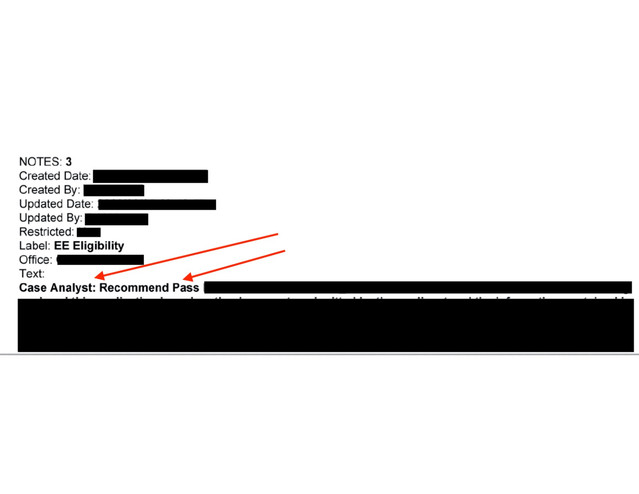
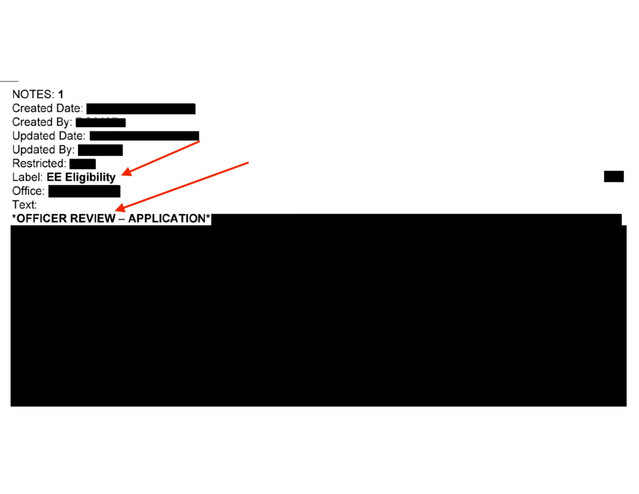
Applications for entry to Canada are assessed at different levels of scrutiny depending on the program. In the Express Entry system, security screening is not initiated immediately but begins only after an officer has reviewed the file and determined that the applicant meets the program’s eligibility requirements. This determination may be marked as either “recommended passed” or “conclusively passed,” at which point the file proceeds to the security screening stage.

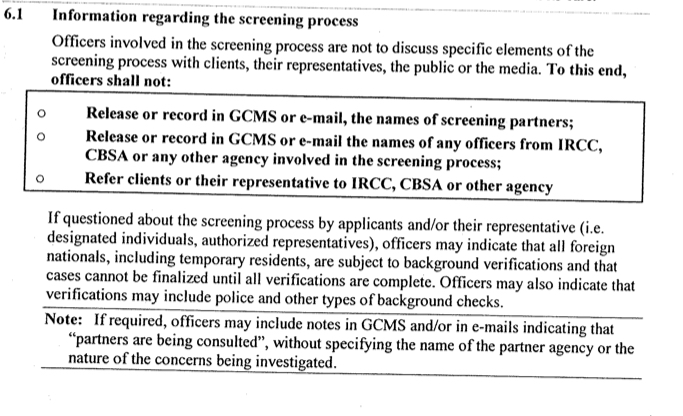
Security-related information remains redacted in official records even after an application has been approved. According to the Immigration Control Manual, officers involved in the security screening process are prohibited from disclosing or discussing any specific details related to how the screening is conducted.

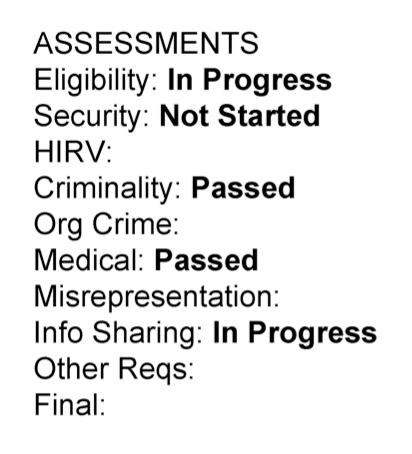
One common indicator that security screening has been initiated is found in the “Assessments” section on page 2 of the GCMS notes. When this process is underway, the security field is typically blanked out, and the top right corner of the page references a specific section of the Access to Information Act, indicating that the content has been redacted for confidentiality reasons.

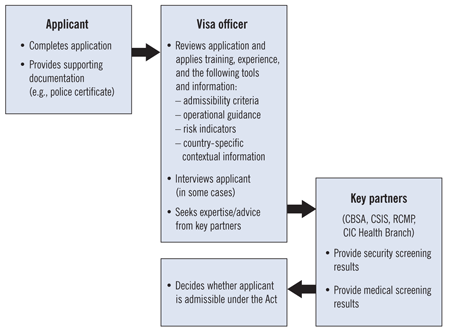
The security screening process is initiated by IRCC and carried out in collaboration with partner agencies. IRCC officers review the information submitted by the applicant, request additional details when necessary, and consult federal partners for input on health and security concerns. The final decision is made by the officer, based on their professional judgment, available tools, and the guidance received from relevant agencies.

Security screening procedures are designed to identify individuals who may be, or have been, involved in activities such as espionage, terrorism, subversion, organized crime, war crimes, or crimes against humanity. This process involves gathering information from various sources, including open-source intelligence and classified databases. Once compiled, the information is analyzed to assess whether it supports a recommendation of inadmissibility under sections 34, 35, or 37 of the Immigration and Refugee Protection Act (IRPA).

When an officer has reasonable grounds to suspect that an applicant may be inadmissible under one of these provisions but lacks sufficient evidence to make a final decision, they refer the case to the National Security Screening Division (NSSD). The NSSD, part of the Intelligence and Enforcement Branch at CBSA headquarters, is responsible for screening applicants for temporary or permanent residence, as well as refugee claimants, for potential involvement in serious crimes and threats to national security. The NSSD prepares assessments and provides formal recommendations to IRCC and CBSA officers, both in Canada and at international missions.

1 Security Screening Request

A security screening request is a message transmitted to NSSD and screening partners to request in-depth screening of a person’s background.

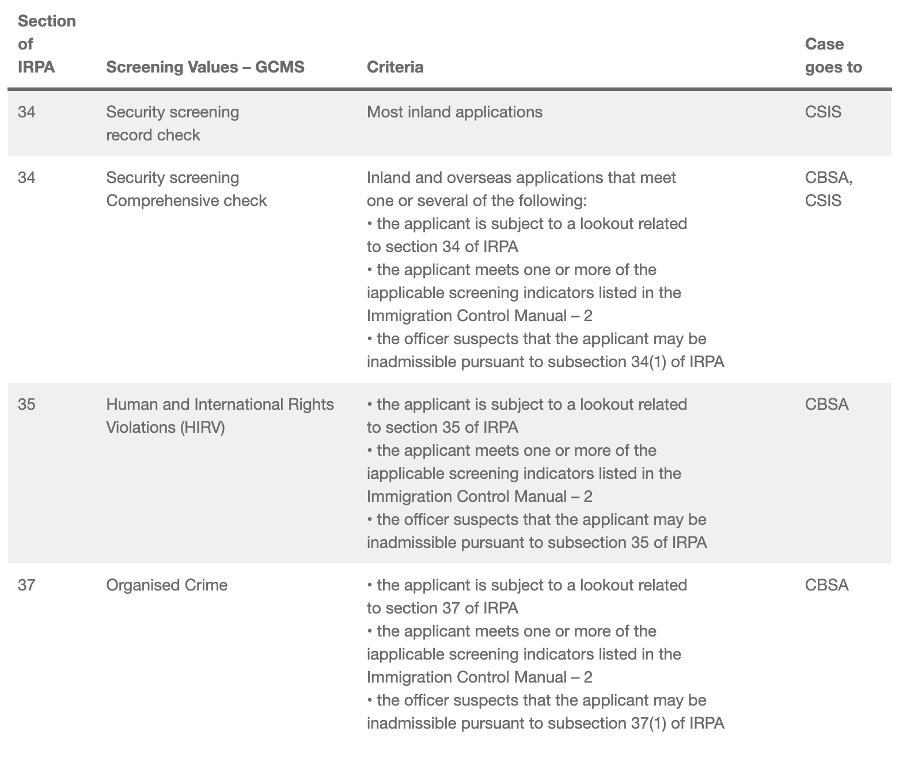
The various types of requests and the security screening partners to whom the request for permanent resident applications are sent is as follows:

Sending a Security Screening request to NSSD and screening partners

2 Record Check vs. Comprehensive Check

Officers have an option to send applications for security screening via a ‘record check’ or a ‘comprehensive check’.

2.1 Record Check

A record check is a standard check that is conducted by CSIS for most inland applications for permanent residence.

2.2 Comprehensive check

A comprehensive check is conducted by all security screening partners, including the CBSA.

3 Inland vs. Outland applications

IRCC officers are required to refer most inland permanent residence applications (those submitted from within Canada) to the Canadian Security Intelligence Service (CSIS) for a standard record check. This screening is conducted by CSIS solely to assess potential current or future threats to Canada under paragraphs 34(1)(a), (c), (d), and (f) of the Immigration and Refugee Protection Act (IRPA).

Before initiating a record check, officers must consult the IC-2 indicator manual to determine whether the application matches any known risk indicators. If an application triggers one of these indicators or if the officer has concerns about possible inadmissibility, the case should be referred to CSIS through a comprehensive check rather than a basic record check.

For outland applications—including those processed at the Case Processing Centre in Ottawa (CPC-O)—a comprehensive check is the preferred method of screening. In such cases, the Canada Border Services Agency (CBSA) is responsible for screening applications that match specific indicators listed in Section 3 of the IC-2 manual. Cases involving potential inadmissibility under sections 35 (human rights violations or war crimes) and 37 (organized crime) are referred directly to CBSA for further assessment.

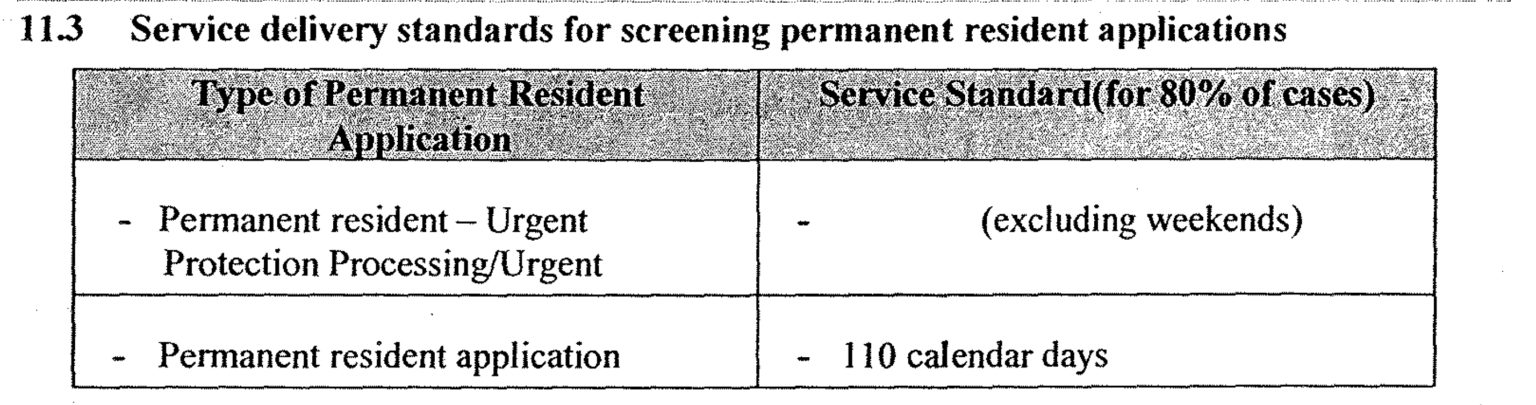
According to the Security Screening Process Manual, the official service delivery standard for completing security screening of permanent residence applications is 110 calendar days, within which 80% of cases are expected to be finalized. However, in practice, security screening—particularly when referred for comprehensive checks or involving multiple agencies—often exceeds this timeframe significantly, with many applicants experiencing delays of 10 months or longer before completion.

For many permanent residence applicants, security screening can take far longer than expected, often leading to frustration and uncertainty. If you’ve found yourself wondering whether something is wrong or missing from your application, you’re not alone—this is a common concern among those awaiting final decisions after passing the eligibility stage.

The most recent publicly available data regarding the processing of security screenings comes from the 2011 Fall Report of the Auditor General of Canada, which audited the performance of immigration security procedures. According to that report, a 2006 memorandum of understanding between IRCC and CBSA set the expected timeframe for CBSA to provide security advice on permanent residence applications at 9 to 18 months.

Here are some key findings from that audit:

  • In 67% of cases, CBSA completed its analysis in under 9 months.
  • In 19% of cases, CBSA exceeded the 18-month service standard.
  • In some files where CSIS had to investigate more deeply, it took an average of 34 months for CSIS to complete its review. CBSA, in turn, took an additional 9 months on average to pass on the results to visa officers—even though it did not add any new substantive information.
  • Nearly half of Canada-based visa officers (46%) expressed concern about the length of time it takes to receive advice or information from security partners.

The report also noted that temporary residence applications were typically screened more quickly, with CBSA responding within 10 working days in 80% of cases. However, it was also observed that in about a quarter of those cases, CBSA issued security results before receiving input from CSIS—due to automated system responses—raising concerns that important intelligence could be missed or delayed.

Security screening delays do not affect all applicants equally. According to a 2017 report by The Toronto Star, individuals from countries such as Iran and China were subject to disproportionately high levels of screening. In the first eight months of that year, nearly 11,000 Iranian nationals—including 825 permanent residence applicants—underwent security screening. In comparison, approximately 13,300 Chinese nationals were screened during the same period, despite the overall higher volume of applications from China.

Similar patterns of prolonged screening have been observed among applicants from certain regions of Africa (notably Eritrea, Nigeria, and Somalia), as well as from Russia and, in some cases, Ukraine, especially when an applicant’s travel or residency history includes politically sensitive or conflict-affected zones. These extended delays often occur without clear communication or explanation, leaving applicants in prolonged uncertainty.

Concerns about such unequal processing timelines were formally raised by the Iranian Canadian Congress to the Minister of Immigration at the time, The Honourable Ahmed Hussen, who issued a public response. While that engagement led to some limited improvements, systemic delays and regional disparities in security screening continue to affect thousands of applicants to this day.

Types of CSIS Security Screening Recommendations to IRCC

When CSIS completes its security screening of an immigration applicant, it submits one of the following four types of recommendations to IRCC:


1. No Reportable Trace (NRT)

This outcome is issued when CSIS finds no adverse information about the individual being screened. In such cases, there are no security concerns on file.


2. Inadmissible Brief

This recommendation is made when CSIS concludes, based on available intelligence, that the applicant meets the inadmissibility criteria outlined in section 19 of the Immigration and Refugee Protection Act (IRPA).

Section 19 provides for the right of entry for Canadian citizens and persons registered as Indians under the Indian Act. If CSIS finds that the person does not have that right, and concerns under IRPA are substantiated, they may be deemed inadmissible.


3. Information Brief (Section 34 – Terrorism/Subversion)

This type of brief is issued when CSIS has credible information suggesting that the individual has engaged in activities listed under section 34 of IRPA (e.g., terrorism, subversion, espionage), but concludes that the person is still admissible to Canada.

However, an Information Brief does not guarantee admissibility. IRCC ultimately decides whether to allow or deny the application, and may still find the individual inadmissible despite CSIS’s assessment.

This may become a relevant factor in the appeal of an inadmissibility decision.


4. Incidental Letter (Section 35 or 37 – HIRV or Organized Crime)

This letter is sent when CSIS has information suggesting the individual may have been involved in:

  • Human rights violations or war crimes (IRPA s.35), or

  • Organized crime or transnational criminality (IRPA s.37).

Even if these concerns are incidental, they are reported to IRCC for consideration in the final decision.


CSIS Screening Outcome Classifications

CSIS results may also be summarized using one of the following classifications:

  • Favourable

  • Non-favourable

  • Inconclusive / No findings


What Happens After CSIS Submits a Result?

Once CSIS completes its assessment, the results are sent to the CBSA’s Intelligence and Enforcement Branch (IEB). The IEB then forwards the findings to IRCC visa officers.


Role of the CBSA Intelligence and Enforcement Branch (IEB)

The IEB plays a critical role in admissibility determinations and enforcement under IRPA. Their responsibilities include:

  • Providing threat intelligence to support decision-making at IRCC and CBSA

  • Identifying high-risk individuals

  • Offering recommendations on admissibility

  • Investigating and arresting inadmissible foreign nationals and permanent residents

  • Representing the federal government before the Immigration and Refugee Board (IRB)

  • Monitoring and detaining individuals who are a security threat, flight risk, or inadmissible

  • Carrying out removal (deportation) orders

  • Investigating violations of Canada’s border laws, including those committed by citizens, residents, and travellers


Key Considerations for Permanent Residents

Even after obtaining permanent resident status, individuals may still be subject to removal proceedings if security concerns arise under sections 34, 35, or 37 of IRPA.

If your case is brought before the IRB, the IEB will act as the government’s representative, effectively serving as the federal prosecutor in proceedings against your legal counsel.

Comprehensive Security Screening is a confidential process used by Canadian authorities to assess whether an applicant poses any national security risk. It involves intelligence checks for links to terrorism, espionage, or organized crime. Many fear it due to its secrecy, long delays, and lack of clear updates.

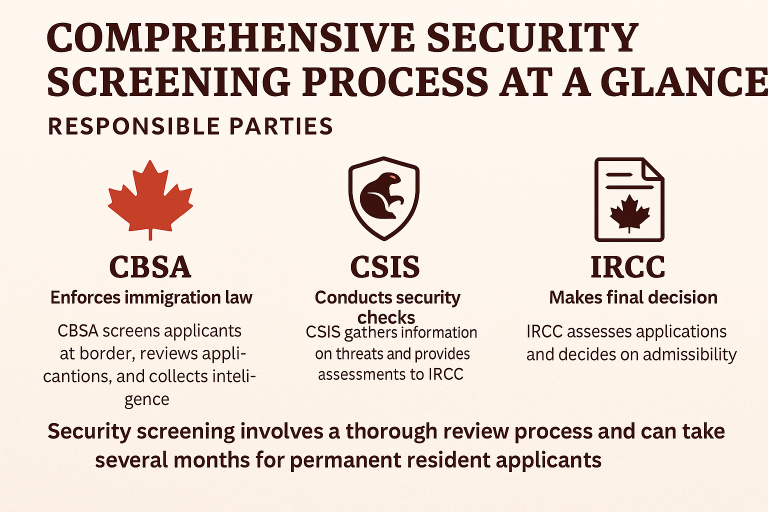
Comprehensive Security Screening Process at a Glance: Responsible Parties

Security screening is a critical component of the Canadian immigration process, designed to ensure that individuals seeking entry do not pose a risk to national security, public safety, or the integrity of the immigration system. This process is initiated by Immigration, Refugees and Citizenship Canada (IRCC) and involves several federal partners.

  • IRCC oversees the application process and makes the final decision on admissibility based on input from security agencies.

  • CBSA (Canada Border Services Agency) reviews flagged cases and conducts in-depth screening for potential inadmissibility under sections 34 (security), 35 (human rights violations), and 37 (organized crime) of the Immigration and Refugee Protection Act (IRPA).

  • CSIS (Canadian Security Intelligence Service) provides intelligence-based assessments for national security threats, such as terrorism or espionage.

  • RCMP may be involved in conducting criminal background checks and accessing law enforcement databases.

  • NSSD (National Security Screening Division) within CBSA coordinates comprehensive screenings and prepares formal security assessments for complex or high-risk files.

Each agency plays a distinct role in protecting Canada while ensuring that qualified applicants are processed fairly and in accordance with the law.

The Canada Border Services Agency (CBSA) is tasked with enforcing and administering the Immigration and Refugee Protection Act (IRPA). CBSA officers operate on the front lines, screening individuals who seek to enter Canada, identifying and removing those without legal status, and contributing significantly to the assessment of both temporary and permanent immigration applications.

CBSA also manages a comprehensive intelligence program, mandated to provide timely, accurate, and actionable intelligence to support operational decision-making across the agency. Information is collected lawfully from a broad range of sources, including:

  • Open-source and classified materials;

  • Domestic and international intelligence partners;

  • Joint operations with law enforcement agencies;

  • Advanced technical surveillance tools;

  • Covert operations and human intelligence (HUMINT).

CBSA intelligence officers and analysts are strategically deployed at border points, within Canada, and at international posts.

The agency transforms raw information into intelligence using automated risk analysis, analytical technologies, and risk management systems. This intelligence supports the CBSA’s mandate to balance national security with the need to facilitate the lawful movement of people and goods. Risk is managed through a combination of methods:

  • Intelligence gathering and analysis;

  • Use of detection and screening technologies;

  • Application of risk indicators and officer judgment;

  • Randomized screening and enforcement actions.

Beyond routine border and port operations, CBSA’s Intelligence Directorate delivers regular briefings—daily, weekly, and monthly—on emerging threats and patterns of unlawful activity. Intelligence personnel are actively involved in operational law enforcement work, including:

  • Executing search warrants;

  • Participating in arrests and surveillance operations;

  • Interviewing detainees;

  • Managing and working with confidential informants;

  • Analyzing seized goods and evidence.

Through these activities, CBSA plays a central role in protecting Canada’s borders while upholding the integrity of the immigration system.

The Canadian Security Intelligence Service (CSIS) plays a pivotal role in safeguarding national security through its involvement in the screening of immigration, refugee, and citizenship applicants. As outlined in its own public materials, CSIS emphasizes the need to prevent the importation of foreign conflicts into Canadian communities—especially in an era marked by escalating global instability and transnational threats.

Mandate and Legislative Framework

The mandate of CSIS in the immigration process is defined in the Canadian Security Intelligence Service Act (CSIS Act) and the Immigration and Refugee Protection Act (IRPA).

  • Sections 14 and 15 of the CSIS Act authorize CSIS to provide security assessments for IRCC’s consideration in immigration matters.

  • These assessments are conducted in relation to inadmissibility grounds under section 34 of the IRPA, but final decisions on admissibility remain with Immigration, Refugees and Citizenship Canada (IRCC) or the Minister of Immigration.

Scope of Security Screening

Unlike traditional law enforcement, CSIS focuses on identifying threats to Canada’s national security, which include individuals who may have engaged in:

  • Espionage

  • Subversion against democratic institutions

  • Terrorism

  • Acts of violence or membership in violent organizations

  • Any conduct that poses a risk to the security of Canada

Section 34(1) of the IRPA outlines these grounds in detail. CSIS applies this section when conducting security clearance checks, typically for applicants between the ages of 18 and 65. These checks are distinct from police clearance certificates and involve separate intelligence-based investigations.

International and Domestic Role

Historically, CSIS operated only within Canada, focusing on internal threats. However, with the evolution of global terrorism and organized crime, its mandate has expanded to include overseas intelligence gathering. Today, CSIS screens all applicants seeking admission into Canada—whether for permanent residence, citizenship, refugee status, or temporary entry—using both domestic and international intelligence channels.

Advisory, Not Decisional

CSIS does not make final immigration decisions. Instead, it provides security risk assessments under the Immigration and Citizenship Screening (ICS) program, offering intelligence-based advice to:

  • IRCC

  • Canada Border Services Agency (CBSA)

These assessments assist immigration officers in identifying applicants who may be inadmissible on security grounds under Division 4 of the IRPA. Final decisions regarding the granting or refusal of visas, permits, citizenship, or refugee protection remain with IRCC.

Targeted Risk Management Approach

In practice, CSIS applies a risk management model, focusing its resources on applicants who are more likely—based on intelligence, profiling indicators, or background circumstances—to pose a potential security risk. These profiles may be based on geopolitical trends, affiliations, travel history, or other red flags identified through international intelligence cooperation and classified information.


This strategic, intelligence-driven approach supports Canada’s dual commitment to national security and the integrity of its immigration system, ensuring that the country remains both open and protected.

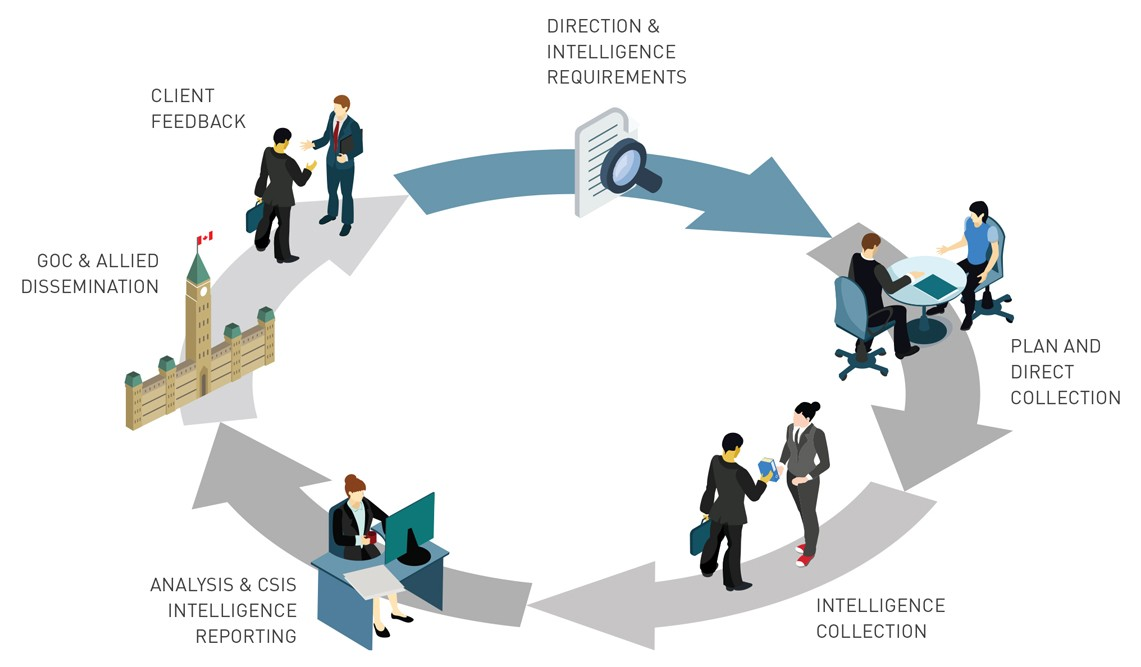
Security screening involves the systematic collection and analysis of information about the applicant.
To support this process, CSIS operates under a structured five-stage framework called the “intelligence cycle,” through which it gathers intelligence and shares relevant assessments with authorized government agencies.

Mandate and Strategic Direction

Under the authority of the Canadian Security Intelligence Service Act (CSIS Act), CSIS is empowered to investigate activities that may pose a threat to Canada’s national security. These threats include espionage, sabotage, terrorism, foreign-influenced operations that harm Canadian interests, and attempts to subvert democratic institutions through violence.

CSIS receives strategic direction from the Government of Canada through several key channels:

  • Government Intelligence Priorities, established by Cabinet in consultation with relevant Ministers and the broader security and intelligence community.

  • Ministerial Direction on Intelligence Priorities, which translates overarching government priorities into specific intelligence collection tasks for CSIS.

  • Ongoing coordination with domestic partners, including the Communications Security Establishment (CSE), the Royal Canadian Mounted Police (RCMP), and other federal agencies that consume intelligence products.


Strategic Planning

When developing its annual intelligence collection strategy, CSIS aligns its activities with:

  • The Government and Ministerial directives;

  • Legislative authority under the CSIS Act;

  • Operational needs of domestic intelligence and law enforcement partners.

These considerations inform the creation of internal collection priorities and operational plans to ensure timely and relevant intelligence support to Canadian government departments and agencies.


Intelligence Collection

To gather intelligence on individuals or entities suspected of posing a threat to national security, CSIS employs a wide range of collection techniques. These include:

  • Open-source intelligence: Newspapers, academic publications, broadcasts, and publicly available government or institutional documents.

  • Human and partner-based sources: Input from the public, confidential informants, foreign and domestic partners, and cooperating government agencies.

  • Technical surveillance and interception: Where necessary and legally justified, CSIS may conduct intrusive surveillance, including communication interception—requiring a judicial warrant authorized by the Federal Court and approved by the Minister.


 Intelligence Analysis

CSIS analysts assess collected information within regional, national, and international contexts. Using both qualitative and quantitative methods, they:

  • Evaluate the reliability and significance of data obtained from open sources, partner agencies, human intelligence, and investigative activities;

  • Synthesize this information into actionable intelligence;

  • Produce classified reports and threat assessments for governmental and law enforcement clients.


Dissemination and Feedback

CSIS disseminates its intelligence products primarily to:

  • Canadian government departments and law enforcement agencies;

  • International allies, especially members of the Five Eyes intelligence alliance (Canada, the United States, the United Kingdom, Australia, and New Zealand);

  • Other trusted foreign partners, as appropriate.

Feedback is a core element of the intelligence cycle. CSIS actively gathers input from its partners to evaluate the utility of its products and continuously adjusts its collection and analytical strategies based on evolving requirements and operational feedback.

The process depends – among other things – on which section of IRPA the case officer or the immigration program manager overseas have concerns with regarding the application. Recall from Chapter 2 that the relevant IRPA sections are:

  • Section 34 – terrorism and subversion
  • Section 35 – human and international rights violations
  • Section 37 – organized crime

Look at the following chart:

Section of IRPAGCMS Screening ValuesCriteriaCase gets sent to
Section 34 – IRPARecord CheckMost inland PR applicationsCSIS
Section 34 – IRPAComprehensive CheckInland or Overseas applications that meet one or more of the following:


  • Applicant subject to review due to section 34 of IRPA
  • Applicant meets 1 or more indicators listed in IC 2
  • Officer suspects applicant inadmissible under Section 34(1) – IRPA
CBSA, CSIS
Section 35 – IRPAHIRV – (Human & International Rights Violations)


(comprehensive check)

One or more of the following issues are raised:


  • Applicant subject to review due to section 35 of IRPA
  • Applicant meets 1 or more indicators listed in IC 2
  • Officer suspects applicant inadmissible under section 35 of IRPA


CBSA
Section 37 – IRPAOrganized Crime


(comprehensive check)

One or more of the following issues are raised:


  • Applicant subject to review due to section 37 of IRPA
  • Applicant meets 1 or more indicators listed in IC 2
  • Officer suspects applicant inadmissible under section 37 of IRPA


CBSA

There are a few things to understand when looking at this table:

  • IC 2 refers to a section of the Immigration Control Manual from which this chart was taken.
  • Although this table lists very specifically to whom the screening request is sent (either CSIS, or CBSA, or both agencies) – information sharing between CSIS & CBSA means the request will almost always be dealt with by both agencies.
  • The CBSA (and CSIS) will screen all cases for the other two concerns. In other words, all cases will be screened for section 34, section 35, and section 37 concerns (terrorism, subversion, human & international rights violations, and organized crime) regardless of under what concern the screening was initiated.

The actual division of the CBSA that does this screening is the NSSD or National Security Screening Division of the CBSA (Canadian Border Services Agency). Let’s take a moment and see the divisions or programs within both the CBSA and CSIS:

AgencyDivision or Program
CBSA – Canadian Border Services AgencyNSSD – National Security Screening Division


  • Handles formal security screenings
  • NST – National Targeting Centre
  • Handles open-source security screenings for cases requiring expedited processing
  • Security Screening Program
  • Investigates foreign nationals as requested by IRCC visa officials. Includes 15 programs, databases, & divisions
CSIS – Canadian Security Intelligence ServiceGSS – Government Security Screening Program


  • Investigates and provides security assessments to address threats to national security
  • Government agencies (NOT CSIS) then decide whether to grant, deny, or revoke security clearances
  • Screens foreign participants in major events in Canada like conferences by working with RCMP
  • Provides security assessments regarding Canadians seeking jobs abroad that involve sensitive information
  • All individuals must provide consent to being screened by GSS
  • Protects sensitive sites from security threats including:
    • Airports
    • Marine facilities (ports etc.)
    • Nuclear facilities


ICS – Immigration & Citizenship Screening Program  

  • Conduct investigations and provide security assessments to CBSA & IRCC regarding persons who might represent a threat to security in Canada
  • ICS is the program used by CSIS to screen and advise on:
    • Permanent residence applicants
    • Citizenship applicants
    • Persons applying for Temporary Resident Visas
    • Persons applying for Refugee Status in Canada
  

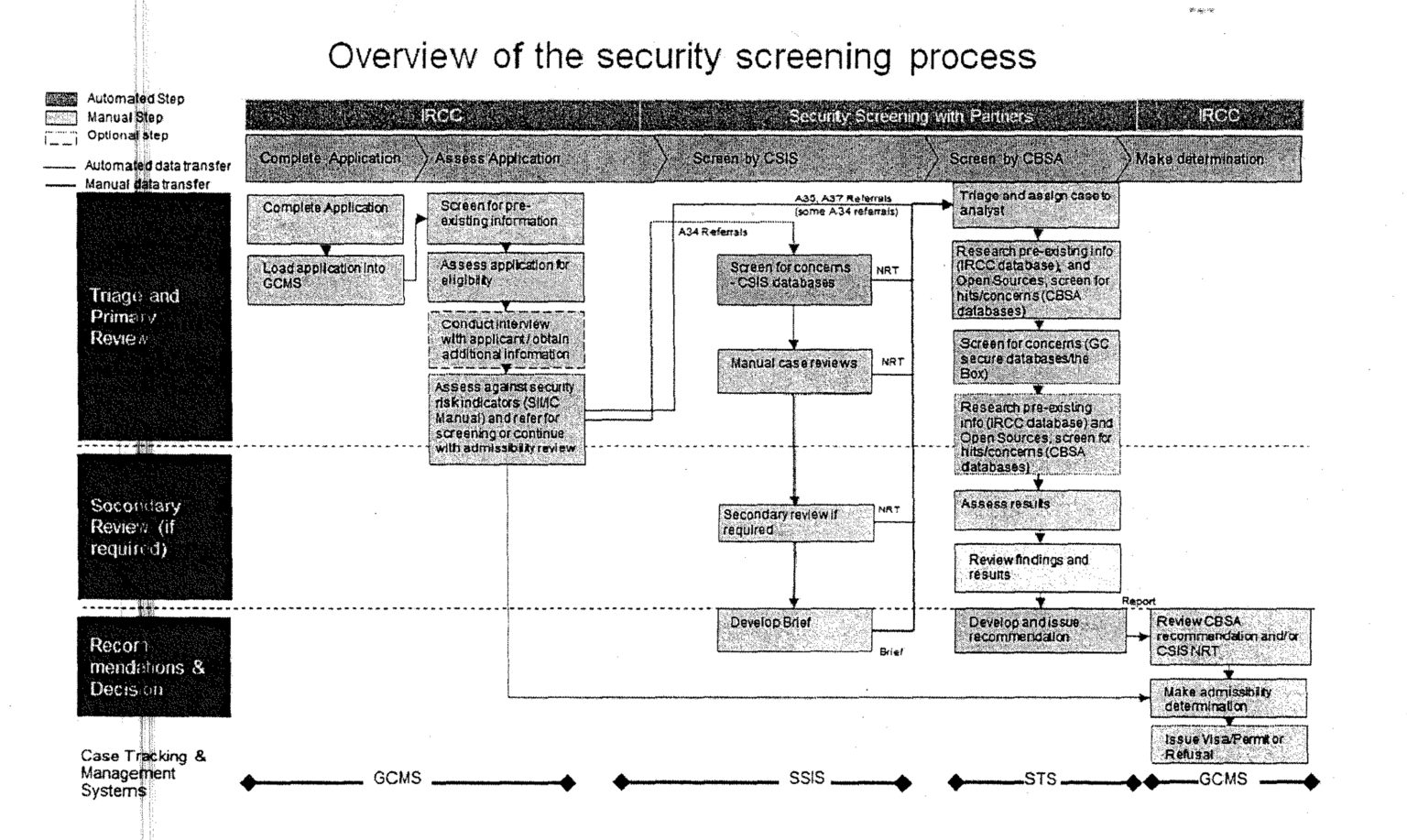
The following Flow Chart shows how a case works its way through the Security Screening Process:

As can be clearly seen, the process begins and ends at IRCC. CSIS & CBSA provide the analytical reviews based on their research and make recommendations, but IRCC officers make the final decision on admissibility.

As can be seen from this chart, CSIS tends to handle terrorism & subversion concerns (section 34 of IRPA) while CBSA works with CSIS to handle human and international rights or HIRV concerns (section 35) as well as organized crime (section 37 of IRPA).

The Comprehensive Security Screening process is a multi-agency effort led by IRCC, in coordination with CBSA, CSIS, and the RCMP. IRCC initiates the process; CBSA assesses risks and enforces immigration laws; CSIS evaluates threats to national security; and RCMP provides criminal intelligence. While the official service standard for security screening is 110 calendar days, in practice, processing may take 10 months or longer, especially for applicants flagged for detailed reviews. These timelines reflect the complexity and seriousness of ensuring that no individual poses a risk to the safety, security, or integrity of Canadian society.

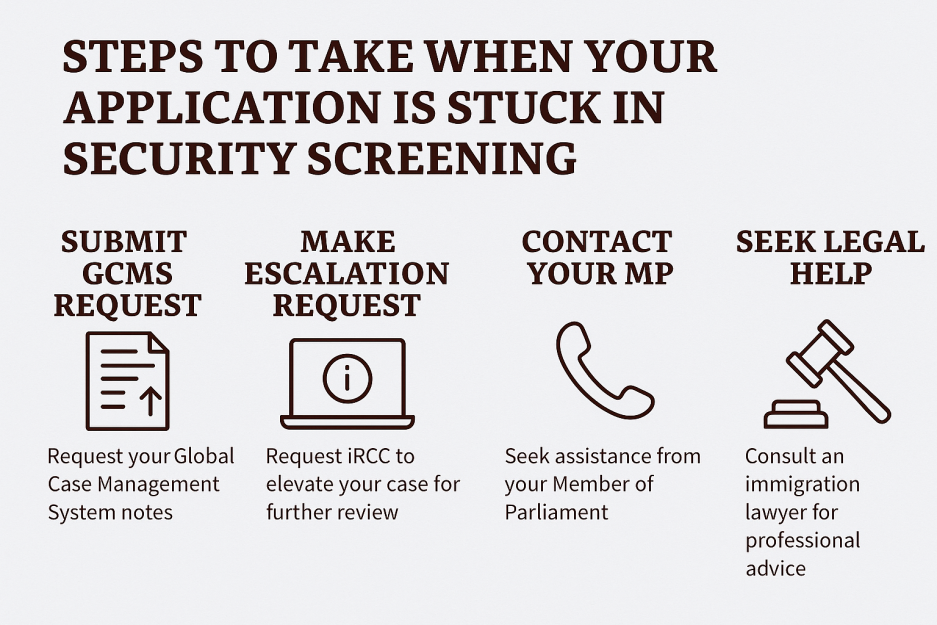
Your application is stuck in security screening — now what?

If your Canadian immigration application has been stuck in the security screening stage for months—or even years—you are not alone. While most applicants complete this process within the standard timeline, some experience significant delays without clear explanations. This can be frustrating, especially when all other steps of the application appear complete.

Security screening is a mandatory part of the background verification process for most permanent residence and some temporary residence applications. It is conducted by IRCC in cooperation with partner agencies such as the Canada Border Services Agency (CBSA) and the Canadian Security Intelligence Service (CSIS). The purpose is to ensure that applicants do not pose a threat to Canada’s national security and are not inadmissible under section 34, 35, or 37 of the Immigration and Refugee Protection Act (IRPA).

Unfortunately, the process lacks transparency. There is no online status update, and applicants are rarely informed when security screening begins, how long it will take, or what is causing the delay. Moreover, access to information is limited due to confidentiality laws.

Steps to take if your security screening is taking too long

In the first place, security screening procedures may not always be made available to the public. This is due to the Access to Information Act – sections 15 & 16 which read in part as follows:

15 (1) The head of a government institution may refuse to disclose any record requested under this Part that contains information the disclosure of which could reasonably be expected to be injurious to the conduct of international affairs, the defence of Canada or any state allied or associated with Canada or the detection, prevention or suppression of subversive or hostile activities, including, without restricting the generality of the foregoing, any such information …

What follows is a long list of possible types of information pertaining to hostile and/or subversive acts against Canada and which the government does NOT have to disclose. Go here to see the full list of types of information under section 15 which the government is NOT required to make public.

16 (1) The head of a government institution may refuse to disclose any record requested under this Part that contains …

Again, section 16 – like section 15 – follows with a long list of types of information that the Government of Canada and it’s various agencies are NOT required to disclose. Go here to see a full list of the types of information the government under section 16 does NOT have to make public.

The end result is that an applicant undergoing a security screening may receive a Refusal Letter from IRCC that does NOT detail the reasons why the applicant has been deemed inadmissible to Canada and refused a visa and they will do so under sections 15 and 16 of the Access to Information Act.

The first step is to review your GCMS notes to determine whether your eligibility has been conclusively passed (see: When does security screening start?). If more than 110 days have passed since this stage was completed, there is a strong possibility that your application is undergoing comprehensive security screening, which may significantly extend processing time.

The next step is to identify which agency—CBSA alone or both CBSA and CSIS—is involved in your security screening. To find out when the security screening was initiated or whether an agency has completed its assessment, you should request notes from CBSA and/or CSIS. These records will help clarify the current status of your file, indicate whether security reports have been sent to IRCC, and determine if the delay lies with IRCC.

If your application has been stalled for an excessive period due to unresolved security screening, it is advisable to consult an immigration lawyer. They can assess whether your situation warrants filing a Humanitarian and Compassionate (H&C) application or pursuing legal relief through a Writ of Mandamus to compel a decision.

One possible step is to request your CSIS or CBSA notes to gain insight into the status of your security screening. This can be done independently or through a paid service. However, it’s important to understand that obtaining these notes will not expedite the processing of your application.

For example, CBSA notes can provide:

  • Confirmation of your application’s current status, including the type of security screening being conducted; and

  • The start and end dates of the security screening process, if available.

While useful for understanding where your file stands, these notes are primarily informational and do not influence the pace of decision-making.

In exceptional circumstances, it may be possible to request expedited security screening on the basis of Humanitarian and Compassionate (H&C) considerations.

Such requests are rarely granted and are evaluated strictly on a case-by-case basis. To be considered, the applicant must demonstrate compelling and well-documented hardship resulting from the delay in security screening, and why this delay significantly affects their best interests or those of a family member (especially a child).

Examples of supporting arguments may include:

  • Serious medical conditions requiring permanent residence status for access to life-sustaining treatment or continuity of care;

  • Significant negative impact on the psychological or emotional well-being of children or other dependents;

  • Imminent risk of family separation or breakdown of family unity;

  • Urgent needs tied to education, housing, or social services that cannot be met while in limbo.

To pursue this option, the following steps are generally required:

  1. Submit a formal H&C-based request for expedited processing in writing to IRCC, outlining the nature of the hardship and referencing relevant provisions under section 25(1) of the Immigration and Refugee Protection Act (IRPA).

  2. Include updated evidence supporting the hardship, such as medical records, psychological assessments, letters from healthcare professionals or educators, and proof of delay impacts.

  3. If applicable, reference case law or prior decisions where humanitarian grounds justified expedited action.

  4. Consider involving your MP (Member of Parliament), who may advocate on your behalf for urgent review or intervention.

While H&C-based expedited screening is not a formal policy option, it can be considered at the discretion of officers where delay causes disproportionate harm and the circumstances are truly compelling.

You can also file a Writ of Mandamus if you feel that your application is taking far too long due to a lengthy background check.

The term writ of mandamus, meaning “we command” in Latin, refers to a legal order issued by a superior court directing a lower court, government body, or public authority to perform a legal duty it is required to carry out. This remedy is used to enforce a public or statutory obligation when a responsible body has failed to act within a reasonable time, and the duty in question is not discretionary.

This is usually recommended when the application has taken over a year and seems to be stuck in a security screening.

A Mandamus is a judicial remedy in the form of an order from a superior court (in our case usually the Federal Court) to a government agency or subordinate court, corporation, or public agency to:

  • Do or refrain (“forbear” in legalese) from doing a specific act that that government agency, court, etc. is required to do under the law.

In the case of a lengthy security screening, when you file a writ of mandamus, you are requesting the IRCC to come to a decision on admissibility because:

  • The delay in question has been much longer than the normal process would require, and
  • The applicant and their legal counsel were NOT responsible for the delay, and
  • The IRCC or CBSA did NOT provide sufficient justification for the delay.

To prove the first requirementyou must reference typical waiting times for that type of application as given at IRCC’s website

To prove the second requirement, you must ensure (and then prove in court) that you and your representative (if you have one) have filed a complete application and provided the IRCC with all the required information – forms and supporting documents including photos etc. – in a timely manner.

A writ of mandamus cannot be used to compel an authority to act against existing laws or policies. Instead, it is designed to ensure that authorities fulfill their clear legal responsibilities.

To succeed in requesting a writ of mandamus, the applicant must show:

  1. There is a public legal duty to act.

  2. The duty is owed to the applicant.

  3. The applicant has a clear legal right to enforcement of that duty:

    • All required conditions have been met;

    • A request to act was made;

    • The authority had a reasonable time to respond; and

    • The authority refused or failed to act (including by delay).

  4. There is no alternative, adequate remedy.

  5. Granting the order would have practical value.

  6. No equitable reason exists for denying the remedy.

  7. The balance of convenience supports issuing the order.

These criteria were confirmed by the Federal Court of Appeal in Apotex Inc. v. Canada (Attorney General), 1993.

Mandamus and Immigration Delays

In the context of immigration, a mandamus application is typically filed in Federal Court when an application (e.g., for permanent residence) is delayed unreasonably, particularly during prolonged security screening. However, success depends on the facts of each case and legal analysis by an experienced lawyer.

For example, in Abdolkhaleghi v. Canada (MCI), the Court issued mandamus after a four-year delay in security screening, stating that a vague explanation such as “security screening is ongoing” is not sufficient. The Court emphasized that delays must be justified by case-specific complexity, not generic statements.

Conversely, in Golestaney v. Canada (MCI), the Court denied the mandamus request, explaining that this remedy is discretionary and should only be granted when there is no more suitable alternative and the legal duty is clearly established.

Instead of Conclusions:


A writ of mandamus can be a powerful tool to compel action from immigration authorities in cases of unreasonable delay. However, it is considered an extraordinary remedy and must meet strict legal standards. 

Needless to say, filing a writ of mandamus is something you should do with a trained professional and is never a guaranteed outcome.

And remember: A Writ of Mandamus request that proves successful will only compel IRCC to come to a decision on the admissibility of your application. It will not compel IRCC to grant you admissibility. That decision remains with IRCC.

If you wish to challenge a negative decision on admissibility see the next section.

Unfortunately, Sponsorship appeals – which must be done by the Sponsor and NOT the Applicant – are not allowed for persons found inadmissible to Canada due to:

  • Serious criminality
  • Organized criminality
  • Security grounds
  • Human and international rights violations (HIRV)
  • Misrepresentation.

You can try asking the Federal Court of Canada for judicial review of the IAD’s decision but given that appeals are forbidden for exactly the types of security concerns that result in background checks, your chances of success are not good.

Summing up, both the Access to Information Act and the IAD’s rules place security concerns above the normal legal process of appeal and reasonably full disclosure – all in the name of national security concerns. So, any attempt to seek justice through the courts will be a tough process and must be viewed with realistic expectations.

Needless to say, if you choose to contest in court or at the IAD, you should get professional counsel and/or advice.

Understanding how security screening works—and what options are available when it stalls—is essential for protecting your rights and planning your future. Delays in security screening can affect not only the timeline of your immigration process but also your ability to work, study, or reunite with family in Canada. Knowing which agencies are involved, how to interpret GCMS and ATIP notes, and when to seek legal recourse—such as a Humanitarian and Compassionate (H&C) application or a Writ of Mandamus—can make a critical difference in ensuring fair treatment and timely resolution of your case.

Latest Posts on Comprehensive Security Screening

Email Us

For any inquiries or assistance, feel free to reach out to us via email at [email protected]. We aim to respond within 24 hours.

Call Us

You can contact us directly at +1 (647) 464-4526. Our team is available to assist you from Monday to Friday, 9 AM to 6 PM EST.

Visit Us

We welcome you to visit our office located at 295-297 Cosburn Ave., Toronto, Canada, M4J 2M5. Please call ahead to schedule an appointment.