Temporary Residence

Trends 2025
  • Tighter student intake: Caps on study permits continue, with Provincial Attestation Letters (PALs) and stricter proof of funds and housing; PGWP rules emphasize eligible fields and in-person study.

  • Work pathways focus: Demand remains strong for LMIA-exempt routes (IMP, intra-company transfers, CUSMA/CETA) and expedited hiring via the Global Talent Stream for tech/health roles.

  • Higher scrutiny on LMIAs: Employers face tougher recruitment and wage benchmarks; compliance audits are more common.

  • Processing goes digital: More online filing, faster updates, and targeted priority triage; biometrics and e-docs are standard.

  • Visitor flexibility, with guardrails: Super Visa remains attractive (longer stays), but extensions/visitor records require clearer ties and funds.

  • Bridging to PR: Canadian work/study experience stays key—CEC, PNPs, and category-based Express Entry continue to reward Canadian experience and French.

Work in Canada: Canadian Work Permit

A work permit grants foreign nationals the legal right to live and work in Canada temporarily, earning income and gaining Canadian experience that can later support a permanent residence application. Each year, Canada issues about half a million work permits to global applicants, making it both a gateway to the Canadian job market and a strategic first step toward long-term immigration.

Study in Canada: Canadian Study Permit

A study permit gives foreign nationals the legal right to live in Canada temporarily while pursuing studies at a designated learning institution. It also allows eligible students to work part-time during their studies and full-time during scheduled breaks, helping them gain Canadian work experience. Each year, Canada welcomes hundreds of thousands of international students, making the study permit not only a pathway to quality education but also a strategic first step toward permanent residence through programs that value Canadian education and work experience.

Visitor Record: Visit & explore Canada under legal status

A visitor record grants foreign nationals the legal right to remain in Canada temporarily beyond the validity of their initial entry as a visitor. It does not allow the holder to work or study without separate authorization, but it ensures they maintain legal immigration status while in Canada. Visitor records are often used to extend stays for family visits, tourism, or other personal reasons, and in some cases can serve as a stepping stone toward another immigration pathway by allowing applicants time to prepare and apply for work permits, study permits, or permanent residence programs.

Understand the differences between Permit and Visa...

Visa

  • Definition: A visa (such as a Temporary Resident Visa – TRV) is an entry document placed in your passport by a Canadian visa office abroad.

  • Purpose: It shows that you meet the requirements to enter Canada.

  • Function: Allows you to travel to a Canadian Port of Entry (airport, land border, or seaport) and request entry.

  • Key Points:

    • A visa does not guarantee entry; a border services officer makes the final decision.

    • Once you are inside Canada, a visa does not control how long you can stay—your status document (permit or visitor record) determines that.

    • Common examples:

      • Visitor Visa (TRV)

      • Super Visa

      • Transit Visa


Permit

  • Definition: A permit is a status document issued by Immigration, Refugees and Citizenship Canada (IRCC) or by a border services officer at a Port of Entry.

  • Purpose: It authorizes you to engage in specific activities while in Canada (e.g., study or work) and defines how long you can stay.

  • Function:

    • A study permit authorizes you to study at a Designated Learning Institution (DLI).

    • A work permit authorizes you to work for a specific employer or under specific conditions.

    • A visitor record extends your stay as a visitor, student (without a study permit), or worker (without a work permit).

  • Key Points:

    • A permit is not an entry document—you still may need a visa or an Electronic Travel Authorization (eTA) to travel to Canada.

    • The permit is valid only while you remain in Canada; it expires when you leave unless you re-enter with proper entry documents.


Temporary Residence: Worker

A work permit is an official authorization that allows a foreign national to work legally while in Canada. Each year, Canada issues roughly half a million work permits to temporary foreign workers from around the world.

As one of the most sought-after destinations for global talent, Canada offers abundant employment opportunities. For many, obtaining a work permit is not only a chance to join the Canadian workforce but also a valuable first step toward permanent immigration.

Here you can find important information about work permits in Canada, including how they function, the rights they provide, and how they can be strategically used as a pathway to permanent immigration. A work permit not only allows you to live and work legally in Canada but also enables you to gain valuable Canadian work experience—an important factor in many immigration programs. By understanding the types of work permits available, eligibility requirements, and how this experience can be leveraged in applications for permanent residence, you can better plan your journey toward building a long-term future in Canada.

Who is eligible to work in Canada?

Most foreign nationals need a work permit to be legally employed in Canada, although certain exemptions exist.

In most cases, applicants must have a valid Canadian job offer supported by a Labour Market Impact Assessment (LMIA) before applying. However, there are exceptions where a work permit can be issued without an LMIA or even without a job offer—for example, recent graduates from a Designated Learning Institution (DLI) eligible for a Post-Graduation Work Permit, or the spouse of someone already holding a valid Canadian work or study permit.

To be eligible for a work permit, applicants must also:

  • Show they will leave Canada when their work authorization ends;

  • Prove they have enough funds to support themselves and their family in Canada and to return home;

  • Be free of any criminal or medical inadmissibility;

  • Intend to work only for an eligible employer;

  • Provide any documentation requested to confirm their eligibility to enter and work in Canada.


There are multiple pathways to obtain a Canadian work permit, each with its own requirements. Some permits require a job offer from a Canadian employer and a Labour Market Impact Assessment (LMIA), others require only a job offer without an LMIA, and some are available without either, often for individuals who already have a connection to Canada through prior studies, spousal status, or other qualifying circumstances.

Below are the main categories of work permits:

Work Permits Requiring a Labour Market Impact Assessment (LMIA):

  • Temporary Foreign Worker Program (TFWP)

  • Facilitated LMIA (Quebec)

  • Global Talent Stream

LMIA-Exempt but Requiring a Job Offer or Employment Contract:

  • International Mobility Program (IMP)

  • NAFTA/USMCA Work Permits

  • CETA Work Permits

  • Intra-Company Transfers

Open Work Permits (No Job Offer or LMIA Required):

  • Post-Graduation Work Permit (PGWP)

  • Spousal Sponsorship from Inside Canada

  • International Experience Canada (IEC) – Working Holiday Visa

  • Bridging Open Work Permit (BOWP)

  • Spouse or Common-Law Partner of an International Student or Worker

Immigration Tip: Canadian permanent residents do not need a work permit to work in Canada. Permanent resident status grants the legal right to live and work anywhere in the country. Those seeking long-term employment should also explore permanent immigration pathways for skilled and professional workers.

The process for obtaining a Canadian work permit depends on the type of permit being sought. For example, many international students automatically receive authorization to work part-time during their studies as part of their study permit conditions.

Most closed work permits require an official job offer from a Canadian employer, supported by a Labour Market Impact Assessment (LMIA). Even applicants who are LMIA-exempt or work permit–exempt must prepare specific documentation to ensure they are allowed entry to Canada and authorized to work.

There are two main types of Canadian work permits: closed (restricted) and open. A closed work permit is employer-specific, meaning the holder can only work for the designated employer at the approved location and position. If they wish to change jobs, they must apply for a new work permit before doing so.

Having a job offer in Canada does not automatically make you eligible for a work permit. For the offer to be valid for most work permit applications, it must meet specific requirements. In the majority of cases, this means the job offer must be:

  • Supported by a positive Labour Market Impact Assessment (LMIA), or

  • Exempt from the LMIA requirement under specific provisions.

It is also important to note that the province of Quebec follows its own process for assessing and approving the validity of job offers.

Your physical work permit specifies the conditions of your authorization to work in Canada. These conditions depend on the type of work permit issued and may include the kind of work you can do, the employer you can work for, the location where you can work, and the duration of your employment. All work permit holders are prohibited from working for any business where there is reason to believe there is a risk of sexual exploitation of workers.

Work permit holders are not permanent residents and must leave Canada once their authorized stay ends. However, if you are working in Canada and wish to transition to permanent residence, you may explore available immigration pathways by obtaining a professional assessment of your eligibility.

The documents required for a Canadian work permit vary depending on the type of permit and the applicant’s individual circumstances. As part of the application, you may be asked to provide:

  • Completed application forms

  • Proof of status in Canada (if applicable)

  • Proof of status for family members (if applicable)

  • Labour Market Impact Assessment (LMIA) (if required)

  • Written job offer from a Canadian employer (if applicable)

  • CV or résumé

  • Marriage certificate (if applicable)

  • Certificat d’acceptation du Québec (CAQ) (if applicable)

  • Proof that you meet the job requirements (e.g., qualifications, experience)

  • Valid copy of your passport

  • Copies of educational credentials

  • Medical exam results (if requested)

  • Evidence of financial ability to support yourself in Canada and return home

  • Proof of payment for required government fees

  • Recent passport-sized photographs

Receiving a work permit refusal can be extremely discouraging, and there are several reasons an application might be rejected. If the reason for refusal is not clearly explained, requesting GCMS (Global Case Management System) notes can provide insight into the officer’s concerns and help you prepare a stronger application if you choose to reapply.

Common reasons for refusal include:

  • The officer was not satisfied that you have the qualifications or ability to perform the job offered;

  • The officer was not convinced that you would leave Canada at the end of your authorized stay;

  • You did not meet the specific requirements of the work permit category under which you applied.

The process of activating a work permit depends on your location and application method.

If you applied from within Canada:
Once approved, IRCC will issue an approval letter. For online applications, this letter will appear in your account; for paper applications, it will be mailed to you. After receiving the approval letter, your physical work permit will be mailed to your address, already activated, allowing you to begin work immediately.

If you applied from outside Canada:
Approval comes with an instruction letter explaining how to collect your physical work permit at a Canadian port of entry (POE). This letter will appear in your online account if you applied electronically or be sent to your mailing address if you applied on paper. The work permit will be issued and activated upon arrival in Canada.

If you applied at a port of entry:
Certain applicants are eligible to apply directly at the Canadian border. You must bring all necessary documents proving your eligibility. If approved, the officer can print your work permit on the spot, enabling you to start work immediately.

Working in Canada offers numerous advantages. Canadian labour laws ensure safe working conditions and require employers to comply with regulations that protect the well-being of their employees. Wages are competitive, and by law, foreign workers must be paid the same as their Canadian counterparts for equivalent work.

Many Canadian work permits also allow the spouse and dependent children of the primary worker to accompany them to Canada, with spouses often eligible for open work permits and children able to attend school.

For those aiming to immigrate permanently, Canadian work experience can significantly enhance eligibility for several permanent residence programs, including:

  • Express Entry

  • Canadian Experience Class (CEC)

  • Federal Skilled Worker Program (FSW)

  • Federal Skilled Trades Program (FST)

  • Provincial Nominee Programs (PNPs)

  • Quebec Immigration Programs

  • Atlantic Immigration Pilot Program

Unless tied to a specific program (such as the CUAET Open Work Permit), most Canadian work permits are issued for 1–2 years, with some exceptions. A visa officer will not grant a work permit beyond the validity of the applicant’s passport or past the expiry date stated in the Labour Market Impact Assessment (LMIA), if one is required. Additionally, a work permit will not be issued for a period longer than the applicant’s intended stay in Canada, or beyond the time needed to fulfill the job offer. In some cases, the permit’s validity may be shorter, depending on the requirements of the specific program under which the application is made.

The Temporary Foreign Worker Program (TFWP) allows Canadian employers to hire foreign workers when qualified Canadian citizens or permanent residents are not available. It ensures that foreign workers employed under the program receive the rights and protections necessary for safe and fair employment in Canada.

Employers may hire through the TFWP under several streams:

  • High-Wage Workers

  • Low-Wage Workers

  • Global Talent Stream

  • Foreign Agricultural Workers

  • In-Home Caregivers

  • Foreign Academics

A defining feature of the TFWP is the requirement for a Labour Market Impact Assessment (LMIA). Before hiring a foreign national, employers must obtain a positive LMIA from Employment and Social Development Canada (ESDC), confirming that no Canadian citizen or permanent resident is available to fill the role. Once an LMIA is approved, the employer can extend a valid job offer, allowing the foreign national to apply for a Canadian work permit or, in some cases, permanent residence.

Some temporary worker categories are LMIA-exempt, falling under the International Mobility Program (IMP), which processes applications based on broader economic, cultural, or reciprocal benefits to Canada.

Labour Market Impact Assessment (LMIA)
An LMIA is an official document issued by ESDC that assesses the effect of hiring a foreign worker on the Canadian labour market. A positive LMIA confirms there is a labour shortage for the position, permitting the hire of a foreign worker. A negative LMIA means the position should be filled by a Canadian citizen or permanent resident.


Labour Market Impact Assessment (LMIA)

A Labour Market Impact Assessment (LMIA) is a document issued by Employment and Social Development Canada (ESDC) that determines the impact of hiring a foreign worker on Canada’s labour market. A positive LMIA confirms there is no Canadian citizen or permanent resident available for the position, allowing an employer to hire a foreign national. A negative LMIA means the role should be filled by a Canadian worker.

Only Canadian employers can apply for an LMIA—foreign nationals cannot. Most streams under the Temporary Foreign Worker Program (TFWP) require an LMIA, while some positions are LMIA-exempt through the International Mobility Program (IMP). Many permanent residence pathways, such as Express Entry, also award extra points for a job offer supported by a positive LMIA.

Employers can apply for an LMIA up to six months before the intended start date. Application requirements include a $1,000 processing fee, proof of business legitimacy, a transition plan, recruitment efforts, wage details, and workplace safety assurances. Low-wage positions have additional obligations, such as providing transportation and housing.

Once approved, a positive LMIA is valid for six months and allows the employer to proceed with hiring. In some cases, LMIAs may be processed in as little as 10 days for high-wage, short-term, or Express Entry–linked positions.

Median Hourly Wage Thresholds determine whether a job falls under the high-wage or low-wage LMIA stream, with different requirements for each province and territory.

While most hires under the TFWP require an LMIA, some work permits are exempt under trade agreements or special programs, such as:

  • Facilitated LMIA (Quebec) – Waives some recruitment requirements.

  • Global Talent Stream – Speeds up hiring for in-demand tech and specialized roles.

  • Intra-Company Transfers – Allows employees of multinational companies to transfer to a Canadian branch without an LMIA.

  • NAFTA/USMCA Work Permits – For certain U.S. and Mexican citizens.

  • CETA Work Permits – For certain EU citizens.


Facilitated LMIA (Quebec) – List of Occupations

Quebec has unique immigration rules and greater autonomy than other provinces, which allows it to streamline the hiring of foreign workers through the facilitated LMIA process. Unlike in other provinces, Quebec employers applying for a facilitated LMIA do not need to prove recruitment efforts to hire a Canadian citizen or permanent resident.

The process is similar to a regular LMIA but with key differences:

  • Language – Applications must be submitted in French (except for In-Home Caregiver positions).

  • No Job Advertising Proof – Employers are not required to show evidence of job postings or recruitment.

  • Eligible Occupations – Applications are only accepted for jobs on Quebec’s official List of Occupations in Demand, which varies by region.

  • Dual Approval – Applications must be submitted to and approved by both ESDC and Quebec’s Ministère de l’Immigration.

To qualify, the offered position must be on Quebec’s current List of Occupations for the employer’s region.


Canada Global Talent Stream (GTS)

The Global Talent Stream (GTS), part of the Temporary Foreign Worker Program (TFWP), was launched in 2017 to help Canadian employers hire highly skilled foreign talent quickly, boosting Canada’s competitiveness. The program offers expedited LMIA and work permit processing, often within two weeks.

How It Works
Employers must first obtain a positive LMIA—streamlined under GTS rules, with no need to prove Canadian recruitment efforts—then the foreign worker can apply for a closed work permit tied to that employer.

Categories

  • Category A – For unique, specialized talent referred by designated partners.

  • Category B – For roles on the Global Talent Occupations List, including various tech, engineering, and digital media positions.

Requirements

  • $1,000 LMIA processing fee (paid by employer)

  • Proof of business legitimacy

  • A Labour Market Benefits Plan showing job creation (Category A) or increased training and skills investment (Category B) for Canadians

  • In Quebec, a CAQ is also required, with expedited processing

Key Points

  • GTS work permits are not LMIA-exempt, but the process is simplified

  • Processing is significantly faster than standard LMIA streams

  • While GTS is for temporary work, Canadian experience gained can support future permanent residence applications

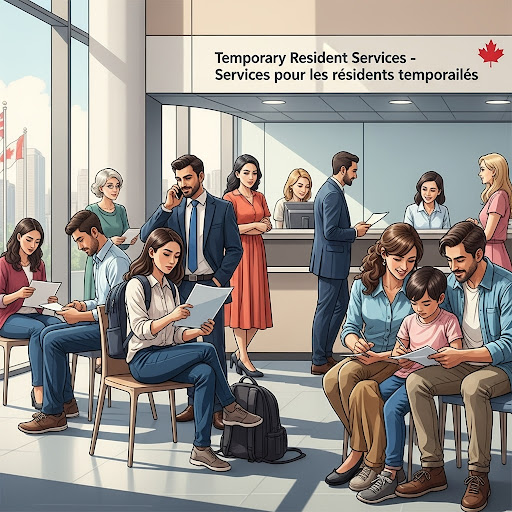
The International Mobility Program (IMP) allows Canadian employers to hire temporary foreign workers without first obtaining a Labour Market Impact Assessment (LMIA). These exemptions are granted when hiring a foreign worker brings broad economic, cultural, or competitive advantages for Canada or offers reciprocal benefits to Canadians working abroad.

Unlike the Temporary Foreign Worker Program (TFWP), where an LMIA is mandatory to prove no Canadian is available for the job, the IMP is designed for situations where the employment is clearly in Canada’s national interest or falls under specific international agreements.


Employer Requirements
Canadian employers hiring through the IMP must:

  1. Verify LMIA-exemption eligibility – Confirm the position or candidate qualifies under one of the exemption categories.

  2. Pay the $230 CAD employer compliance fee.

  3. Submit an official job offer via the IMP’s Employer Portal before the foreign worker applies for a work permit.

Only after these steps can the worker submit their own work permit application to Immigration, Refugees and Citizenship Canada (IRCC).


Main LMIA-Exempt Categories under IMP

  • International Agreements – Includes mobility provisions under trade agreements such as:

    • CUSMA (Canada–United States–Mexico Agreement)

    • CETA (Canada–EU Comprehensive Economic and Trade Agreement)

    • GATS (General Agreement on Trade in Services)

  • Canadian Interest Exemptions – Granted when the employment provides significant economic, cultural, or social benefit to Canada, or supports reciprocal employment for Canadians abroad.

  • Intra-Company Transferees – Employees of multinational corporations transferred to Canadian offices in executive, senior managerial, or specialized knowledge roles.

  • Other Exemptions – Including humanitarian and compassionate grounds, certain permanent residence applicants, and youth mobility participants under International Experience Canada (IEC).


Advantages of the IMP

  • Faster hiring since employers bypass the LMIA process.

  • Easier mobility for workers already connected to Canada via trade agreements, corporate networks, or reciprocal programs.

  • Pathway to permanent residence for many workers, as LMIA-exempt Canadian work experience can boost eligibility for immigration programs such as Express Entry, Canadian Experience Class, and Provincial Nominee Programs.

  • Eligibility for expedited processing under the Global Skills Strategy for some high-skilled roles (NOC TEER 0 or 1).

Most foreign nationals need a work permit to work in Canada legally. A work permit is an official authorization allowing a foreign national to engage in employment and receive compensation from a Canadian employer. However, Canada’s immigration regulations recognize certain roles and activities that do not require a work permit, provided that specific eligibility criteria are met.

This exemption framework exists primarily under the International Mobility Program (IMP) and is designed for situations where the work performed is temporary, limited in scope, and does not significantly enter the Canadian labour market.

It is important to note that being on the exemption list does not automatically guarantee eligibility — each category has strict, specific conditions that must be satisfied.


Types of Jobs in Canada That May Not Require a Work Permit

Below are examples of occupations and activities that may qualify for a work permit exemption, along with brief explanations of the conditions.

CategoryDescription & Conditions
Athlete or CoachMembers of foreign athletic teams (including coaches and essential staff) competing in Canada. Those joining Canadian teams require a work permit.
Aviation Accident/Incident InvestigatorAccredited investigators working under the Transportation Accident Investigation and Safety Board Act.
Business VisitorIndividuals conducting international business activities without entering the Canadian labour market (e.g., meetings, after-sales services, training). Must prove primary income and business ties are outside Canada.
Civil Aviation InspectorInspectors checking flight operations and cabin safety of international flights.
ClergyOrdained ministers, laypersons, or members of religious orders performing religious duties such as preaching, worship leadership, or spiritual counselling.
Convention OrganizerOrganizers of international conventions or meetings (not hands-on service providers).
Crew MemberTruck/bus drivers, airline, or shipping workers operating vehicles registered abroad for international transport.
Emergency Service ProviderWorkers providing urgent services to protect life or property during natural disasters or industrial accidents.
Examiner/EvaluatorAcademic experts or professors evaluating projects, theses, or research for Canadian institutions.
Expert Witness/InvestigatorSpecialists providing evidence before courts, tribunals, or regulatory bodies.
Family Member of Foreign RepresentativeAccredited spouses or children of foreign representatives, with a Global Affairs Canada counterfoil and letter of no objection.
Foreign Government Officer/RepresentativeDiplomats, UN representatives, or officials under exchange agreements. Longer postings (over 3 months) require formal letters.
Health Care StudentStudents in short-term clinical training (<4 months) with provincial regulatory approval where required.
Judge/RefereeOfficials at international amateur events (e.g., music festivals, animal shows).
Military PersonnelMembers of foreign armed forces entering under the Visiting Forces Act.
News Reporter or Media CrewForeign journalists, film crews, or correspondents whose work remains tied to non-Canadian employers.
Producer/Advertising CrewShort-term foreign-funded commercial shoots with actors, directors, technicians, or essential staff (usually ≤2 weeks).
Performing ArtistArtists and key staff performing temporarily without long-term Canadian contracts.
Public SpeakerGuest or commercial speakers at events ≤5 days in duration.
Short-Term Highly Skilled WorkerNOC TEER 0/A workers for ≤15 days (once every 6 months) or ≤30 days (once every 12 months).
Short-Term ResearcherResearchers at public degree-granting institutions for ≤120 days, not used within previous 12 months.
Student (Off-Campus)Full-time students may work up to 20 hrs/week during study periods and full-time during scheduled breaks without a separate permit.
Student (On-Campus)Full-time students can work at their educational institution without a separate work permit.

Business Visitors – Special Rules

A business visitor is not the same as a business person under free trade agreements. Business visitors do not require a work permit if they:

  • Stay in Canada for less than 6 months;

  • Do not enter the Canadian labour market;

  • Maintain their primary income source and business location outside Canada.

Eligible activities include:

  • Attending meetings, conferences, exhibitions;

  • Purchasing goods/services for a foreign company;

  • Providing after-sales services under an original sales or lease agreement;

  • Training employees of a Canadian branch of a foreign company.

Documentation often required:

  • Letter of invitation from the Canadian host;

  • Proof of foreign employment;

  • Copy of sales or service contract (for after-sales service cases).


Key Points to Remember

  • Temporary Resident Visa (TRV) or eTA may still be required for entry, depending on nationality.

  • Border officers decide on the duration of stay, typically up to 6 months.

  • Work permit exemption is activity-specific — if you perform duties outside the exempt scope, a work permit is required.

  • Even without a work permit, standard admissibility checks (criminality, health, documentation) still apply.

Temporary Residence: Student

A study permit is an official authorization that allows a foreign national to study legally at a designated learning institution (DLI) in Canada. Each year, Canada issues hundreds of thousands of study permits to international students from around the world.

As one of the most attractive destinations for education, Canada offers high-quality academic programs, diverse cultural experiences, and post-graduation opportunities. For many students, obtaining a study permit is not only a gateway to world-class education but also an important first step toward building a future in Canada, including potential pathways to permanent residency.

Here you can find important information about study permits in Canada, including how they work, the rights they provide, and how they can be strategically used as a pathway to permanent immigration. A study permit not only allows you to live and study legally in Canada but also gives you the opportunity to gain valuable Canadian education and, in many cases, work experience during or after your studies—both of which are important factors in several immigration programs. By understanding the types of study permits available, eligibility requirements, and how your Canadian education can be leveraged in applications for permanent residence, you can better plan your path toward building a long-term future in Canada.

Why should I study in Canada?

Canada’s global appeal to international students stems from several key factors.
First, the country’s reputation for safety and political stability makes it an attractive and reassuring choice for students and their families.
Second, its world-class education system, recognized for academic excellence, innovation, and diversity, draws learners from across the globe.
Third, Canada’s inclusive and tolerant society fosters a welcoming environment for people of all cultural and ethnic backgrounds.

Beyond academics, many international students see Canada as a place to build their future. Recent data shows that 72.5% plan to apply for a Post-Graduation Work Permit (PGWP), enabling them to gain valuable Canadian work experience. Furthermore, 60% intend to pursue permanent residency, reflecting the strong desire to remain in the country after their studies.

With its safe and welcoming atmosphere, high-quality education, and clear pathways to professional and immigration opportunities, Canada continues to strengthen its position as one of the top destinations for global students.

1. Select the Right Program:
Choosing the appropriate program is a critical step in your study permit application. You must clearly demonstrate why you wish to study in Canada and how this specific program aligns with your academic and professional goals. Program recommendations are made based on your educational background and work experience, ensuring the strongest possible case for a successful application.

2. Apply to a Designated Learning Institution (DLI):
Once you have selected a program, the next step is to prepare and submit your application to the school. To be eligible for a study permit, you must first obtain a Letter of Acceptance from a Canadian Designated Learning Institution (DLI).

3. Submit Your Study Permit Application:
After securing your Letter of Acceptance, you can proceed to apply for your study permit. This involves preparing and submitting a complete application package to Canadian immigration authorities, ensuring all requirements are met for the best chance of approval.

Required Documents for a Study Permit Application

When applying for a study permit, you will need to provide specific documents to support your application. Commonly requested items include:

1. Letter of Acceptance:
An official document issued by a Canadian school or university confirming your admission into a designated program of study.

2. Proof of Financial Support:
Evidence that you have sufficient funds to support yourself and any accompanying family members during your stay in Canada. This must cover tuition fees and living expenses (housing, food, transportation, etc.) for at least the first year of your studies.

3. Identity Documents:
Valid identification such as your passport, birth certificate, and, if applicable, your marriage certificate. These documents are required to verify your identity and legal status.

A Canadian study permit is an official document that authorizes you to study at an approved institution in Canada. You can only apply after receiving admission to a Designated Learning Institution (DLI).

The process of obtaining a study permit involves four main stages:


1. Check Your Eligibility
Before applying, ensure that you meet the eligibility requirements. You will need:

  • An official letter of acceptance from a DLI.

  • Proof of financial support showing you can cover tuition, living expenses, and return travel costs.

  • Supporting documents, which vary depending on your country of citizenship and residence.


2. Prepare Your Application
Once you confirm eligibility, gather all required documents for your country. If your application does not clearly show that you meet the requirements, an immigration officer may refuse it. To increase your chances of approval, consider having your application reviewed by a qualified immigration representative before submission.


3. Submit Your Study Permit Application
You may apply in one of two ways:

  • Online Application: Create an account on the Immigration, Refugees and Citizenship Canada (IRCC) website and upload scanned or electronic copies of your documents.

  • Paper-Based Application: Prepare hard copies of all required documents and mail them to the Visa Application Centre (VAC) responsible for your country.


4. Approval and Arrival in Canada
If your study permit application is approved, you will receive a Port of Entry (POE) Introduction Letter. You must present this letter to an immigration officer upon arrival in Canada to be issued your actual study permit at the port of entry.

A Provincial Attestation Letter (PAL) is an official document issued by the provincial government of your intended study destination in Canada. It serves as formal confirmation that the educational institution you have selected is recognized and authorized by that province’s regulatory authorities.

The PAL confirms that your chosen institution meets the academic and operational standards established by the province, ensuring its legitimacy and credibility.

For many international students, the PAL is a mandatory prerequisite when applying for a Canadian study permit. By presenting this letter to Immigration, Refugees and Citizenship Canada (IRCC), you demonstrate that you have been accepted to a provincially approved institution and are therefore eligible to pursue studies within that province.

A Canadian study permit comes with specific terms and conditions that must be followed to maintain your legal status and fully benefit from your study experience. Failure to comply may affect not only your current status but also your eligibility for future immigration programs.

Key conditions include:

  • Enrollment at a Designated Learning Institution (DLI): You must remain enrolled in a DLI throughout your studies.

  • Study load requirements: You must be enrolled as a full-time student, or at least as a part-time student if studying in Quebec.

  • Limits on leaves of absence: You must not take an unauthorized leave of more than 150 consecutive days from your program.

Respecting these conditions ensures that you maintain your legal study status in Canada, gain the full value of your educational experience, and enhance your chances of qualifying for a Post-Graduation Work Permit (PGWP) after graduation.

Studying in Canada continues to be one of the most affordable options among top global education destinations, with tuition fees and living costs generally lower than in Australia, the United States, and the United Kingdom.

In 2025, Canadian tuition fees for international students remain competitive. While exact costs vary by program, institution, and province, recent data shows:

  • Average undergraduate tuition (international students): $28,000–$32,000 CAD per year

  • Average graduate tuition: $20,000–$28,000 CAD per year

  • In comparison, tuition at U.S. universities often exceeds $45,000 USD per year, with Australia and the U.K. also averaging significantly higher costs.

2025 Tuition & Living Cost Comparison (USD)

CountryAverage Annual Tuition & Cost of Living
Canada$30,500
United Kingdom$36,500
United States$37,200
Australia$43,000

Cost of Living
Living expenses in Canada vary widely depending on location. Larger metropolitan areas like Toronto and Vancouver have higher housing and transportation costs, while smaller cities and towns can be 10–30% more affordable.

Housing Costs (Monthly, CAD)

  • Toronto (University of Toronto estimate): $1,100–$3,000

  • Montreal (Université de Montréal estimate): $550

  • Saint John’s, Newfoundland: ~$350 per room in a shared apartment

Food & Transportation Costs (Monthly, CAD)

  • Toronto: Transportation $156 | Groceries $300–$600 | Lunch menu ~$31

  • Montreal: Transportation $100 | Groceries $300–$550 | Lunch menu ~$25

  • Saint John’s: Transportation $80 | Groceries ~$480 | Lunch menu ~$23

Healthcare
All international students must have health insurance while in Canada. Some provinces (e.g., British Columbia, Alberta, Saskatchewan, Newfoundland and Labrador) include international students in their public healthcare system, while others require private coverage, often arranged through the educational institution and included in tuition or student fees.

With affordable tuition, manageable living costs, and the opportunity to work during and after studies, Canada remains an attractive choice for international students in 2025 — not only for education but also for building a long-term future.

Canada offers a wide range of scholarships to support international students pursuing studies at colleges and universities across the country. These awards can help reduce tuition costs and, in some cases, living expenses.

Key Points

  • Scholarship availability depends on your field of study, level of education, and country of origin.

  • Funding can come from Canadian universities, provincial governments, federal programs, and international partnerships.

  • Scholarships may be merit-based, need-based, or tied to specific research projects.

Types of Scholarships

  • University Entrance Scholarships – awarded automatically upon admission to many Canadian institutions.

  • Merit-based Awards – for outstanding academic performance or leadership achievements.

  • Research Grants – for graduate students conducting advanced research.

  • Country-Specific Scholarships – offered under bilateral agreements or government-funded exchange programs.

Where to Search
You can explore available opportunities through Canada’s official scholarship database, which allows you to filter awards by program level, field of study, and country of citizenship.

In 2025, competition remains high, so students are encouraged to begin their scholarship search well before applying for a study permit and to prepare strong application materials, including academic transcripts, reference letters, and proof of achievements.

Canada is home to a diverse range of post-secondary institutions, each with unique strengths, locations, and opportunities for international students. Below are five of the most recognized universities in Canada, offering world-class education and vibrant student experiences.


1. University of Toronto (UofT)
Renowned globally for its academic excellence and research leadership, UofT attracts over 20,000 international students from around the world. Located in the heart of Toronto—the world’s most diverse city—it offers unparalleled networking, cultural experiences, and career opportunities. The university’s extensive campus life, clubs, and events make it a dynamic choice for those seeking both academic prestige and urban vibrancy.

2. University of British Columbia (UBC)
UBC is recognized as North America’s most international university, with 30% of its students coming from 156 countries. Situated in Vancouver, British Columbia, UBC combines city living with easy access to nature—from beaches and forests to mountains. The university is a top destination for students seeking strong academics in a breathtaking natural setting.

3. McGill University
With a global reputation for excellence, McGill welcomes over 12,000 international students each year. Located in Montreal, Quebec, McGill offers an English-language education in a predominantly French-speaking province, giving students the best of both linguistic worlds. Montreal is consistently ranked among the best cities for students, known for its low cost of living, cultural diversity, and thriving arts scene.

4. Université de Montréal (UdeM)
UdeM is one of Canada’s highest-ranked French-language universities, attracting 9,500 international students annually. Also located in Montreal, UdeM is an ideal choice for students looking to study in French while enjoying the benefits of living in a dynamic, student-friendly city.

5. McMaster University
Ranked among the world’s top 100 universities, McMaster is based in Hamilton, Ontario—just an hour from Toronto. Known for its innovation in research and problem-based learning, McMaster is located in a city experiencing rapid growth in the technology sector, offering excellent work opportunities for students during and after their studies.

One of the major advantages of studying in Canada is the opportunity for international students to work while completing their studies, helping to offset tuition and living expenses.

International students with a valid study permit may work part-time (up to 20 hours per week) during regular academic sessions. During scheduled breaks—such as summer or winter holidays—they may work full-time.

In most cases, a separate work permit is not required for on-campus or off-campus employment. Your study permit will clearly indicate if you are authorized to work off campus.

If your academic program includes a mandatory work placement or internship, you may be permitted to work more than 20 hours per week during the semester. This will be stated in your Letter of Acceptance, and upon approval, you will receive both a study permit and a work permit—the latter allowing you to work as part of your program requirements.

Would you like me to also create a 2025 update that reflects IRCC’s latest temporary public policy on off-campus work hours for eligible students? That could make this section more current.

International students who are married or have children can request to bring their family members with them while they study in Canada.

When reviewing a study permit application that includes accompanying family members, Canadian visa officers will assess the entire family’s circumstances. It is important to understand that adding family members may influence the final decision, as the officer must be satisfied that all applicants meet eligibility requirements and will comply with the conditions of their stay.

If approved as a family unit:

  • Your spouse or common-law partner may be eligible for an open work permit, allowing them to work full-time for almost any employer in Canada.

  • Your dependent children may attend school in Canada without needing their own study permit and, in most cases, can study tuition-free at the primary and secondary levels.

Bringing your family can provide greater stability during your studies, but it is essential to demonstrate sufficient financial resources to support all family members throughout your stay.

The Student Direct Stream (SDS) is a Canadian government initiative designed to fast-track study permit applications for eligible international students from select countries.

This program offers a faster and more efficient processing timeline for study permit applications, helping students plan their studies and arrival in Canada with greater certainty.

To qualify for the SDS, applicants must meet specific eligibility requirements, including:

  • Enrollment in a Designated Learning Institution (DLI) in Canada.

  • Proof of language proficiency (English or French) meeting the minimum required scores.

  • Demonstration of sufficient financial resources to cover tuition fees and living expenses for the duration of their studies.

  • Upfront submission of certain key documents, such as the Guaranteed Investment Certificate (GIC) and proof of payment of the first year’s tuition.

By meeting these requirements, eligible students benefit from expedited processing, which can significantly reduce the waiting time compared to regular study permit applications.

Canada offers clear and accessible pathways for international students who wish to remain in the country permanently after graduation.

One of the most important options is the Post-Graduation Work Permit (PGWP), which allows eligible graduates to work in Canada for up to three years after completing their program. This Canadian work experience is highly valuable, as one year of skilled work can make graduates eligible to apply for permanent residency through programs such as the Canadian Experience Class (CEC) under Express Entry, or various Provincial Nominee Programs (PNPs).

To qualify for a PGWP, you must:

  • Prove that you have complied with all conditions of your study permit.

  • Show that studying was your primary activity during your time in Canada.

  • Have completed an eligible program at a Designated Learning Institution (DLI).

In most cases, the PGWP is issued for a period equal to the length of your program, up to a maximum of three years. This valuable opportunity not only allows graduates to gain Canadian work experience but also significantly improves their chances of transitioning to permanent resident status.

Select what you need...

Visa

Permit : Work or Study

Temporary Residence: Visitor

A Temporary Resident Visa (TRV) is an official authorization that allows a foreign national to enter Canada for a limited period, typically for tourism, visiting family or friends, or conducting short-term business. A Visitor Record, on the other hand, is a document issued by Immigration, Refugees and Citizenship Canada (IRCC) that extends or changes a person’s legal stay in Canada beyond the initial period granted at the port of entry.

Each year, Canada issues millions of TRVs to visitors from around the world and processes thousands of Visitor Record applications for those already in Canada.

As one of the most welcoming and diverse destinations, Canada offers not only breathtaking landscapes and rich cultural experiences but also opportunities to spend quality time with loved ones or explore future educational and immigration possibilities. For many visitors, obtaining a TRV or Visitor Record is not only a way to enjoy a temporary stay but also an important step in building connections in Canada and potentially exploring pathways to long-term or permanent residence in the future.

Here you can find essential information about Temporary Resident Visas (TRVs) and Visitor Records in Canada, including how they work, the rights they provide, and how they can be strategically used in planning future immigration pathways.

A TRV allows you to legally enter Canada for a temporary stay, while a Visitor Record authorizes you to remain in Canada beyond your initial entry period or to change the conditions of your stay. Both documents can be important tools for individuals seeking to extend their time in Canada—whether to visit family, explore educational or work opportunities, or prepare for a transition to another status.

By understanding the types of entry and stay authorizations available, the eligibility requirements, and how time spent in Canada under a TRV or Visitor Record may support future applications (such as study permits, work permits, or permanent residence), you can make more informed decisions and strategically plan your path toward building a long-term future in Canada.

Do you need a visa to come to Canada?

If you are planning to travel to Canada for tourism or leisure, your first step is to determine whether you require a Visitor Visa (Temporary Resident Visa) or an Electronic Travel Authorization (eTA). This requirement depends on factors such as your nationality, the type of travel document you hold, and your method of travel to Canada.

Visa-Exempt Travellers – eTA Required
Citizens of countries with which Canada has visa-exemption agreements can visit for up to six months without obtaining a Visitor Visa. However, if arriving by air, they must secure an Electronic Travel Authorization (eTA) before departure. The eTA is a quick online process designed to pre-screen travellers for entry.

Non-Visa-Exempt Travellers – Visitor Visa Required
If your country does not have a visa-exemption arrangement with Canada, you must apply for and obtain a Temporary Resident Visa (TRV) before boarding your flight or arriving at a Canadian Port of Entry. This visa serves as proof that you meet the requirements to visit Canada and helps facilitate a smooth entry process upon arrival.

To obtain a Temporary Resident Visa (TRV) for Canada, you must meet several core eligibility requirements. These include:

  • Valid Travel Document – You must hold a current and acceptable passport or equivalent travel document.

  • Admissibility to Canada – You must not pose a security risk and must have no criminal or immigration-related convictions that would make you inadmissible.

  • Proof of Temporary Intent – You must convince the immigration officer that you will leave Canada at the end of your authorized stay.

  • Financial Capacity – You must demonstrate that you have sufficient funds to support yourself and any accompanying family members during your stay, as well as to return to your home country.

  • No Unauthorized Work or Study – You must not intend to work or study in Canada unless you have been granted the proper authorization.

Meeting these requirements is essential for a successful TRV application and to ensure smooth entry into Canada.

When applying for a Visitor Visa (Temporary Resident Visa – TRV) to Canada, you must complete the required application forms and gather supporting documents. The exact list of documents depends on your personal circumstances and the country-specific requirements applicable to you. Below is a common, non-exhaustive list of what may be required:

  • Valid Passport – Must be valid for the entire duration of your intended stay.

  • Completed Application Forms – Properly filled, signed, and validated.

  • Proof of Financial Support – Such as recent bank statements, pay stubs, employment letters, or other evidence of sufficient income or savings.

  • Photographs – Meeting the official IRCC photo specifications.

  • Letter of Invitation – If visiting family or friends, include a signed letter from your host.

  • Travel Itinerary – A detailed plan of your visit, including round-trip tickets, accommodation bookings, and any planned activities.

  • Proof of Ties to Your Home Country – Evidence of employment, property ownership, family obligations, or other commitments demonstrating your intent to return. The supporting evidence should be tailored to your personal situation, ideally with guidance from an immigration professional to reduce the risk of refusal.

  • Purpose of Travel – A well-drafted Letter of Intent explaining the reason for your visit, your financial and family situation, and your ties to your home country. This is an important opportunity to convince the officer that your stay will be temporary and you will leave Canada at the end of your authorized period.

  • Medical Examination – Required in certain cases, depending on your country of residence and intended length of stay.

  • Biometrics – Fingerprints and a photograph may be required after submitting your application.

  • Application Processing Fees – Payment of the applicable government fees must be made before your application is processed.

A complete, well-documented TRV application increases your chances of approval and helps ensure a smooth entry into Canada.

When you first enter Canada as a visitor, you do so with one of the following entry documents:

  • A Visitor Visa (Temporary Resident Visa – TRV)

  • An Electronic Travel Authorization (eTA)

  • A valid passport or other travel document

If you wish to extend your stay in Canada beyond the initially authorized period, you must apply for a Visitor Record.

It is important to note that a Visitor Record is not a visa.

A Visitor Record:

  • Authorizes you to remain in Canada longer as:

    • a visitor,

    • a worker authorized to work in Canada without a work permit, or

    • a student authorized to study in Canada without a study permit.

  • Specifies a new expiry date – the date by which you must leave Canada.

When to Apply for a Visitor Record:
You must submit your application before your current status expires. If you are unsure of your expiry date, verify the duration of your authorized stay in Canada to ensure you apply on time.

A Visitor Record is a document that authorizes you to remain in Canada for a longer period than initially permitted. However, it does not guarantee re-entry if you leave the country.

If you plan to travel outside of Canada or the United States during your stay, you must have a valid entry document—such as a Visitor Visa (Temporary Resident Visa – TRV) or an Electronic Travel Authorization (eTA)—in order to return to Canada.

The type of entry document you require will depend on your nationality and the applicable entry requirements. Without a valid entry document, you may be denied boarding or refused entry upon your return.

A Visitor Record is intended for individuals who wish to:

  • Extend their stay in Canada as:

    • A visitor

    • A worker authorized to work without a work permit

    • A student authorized to study without a study permit

  • Change their temporary resident status from:

    • A study permit holder to a visitor

    • A work permit holder to a visitor

It does not matter whether you initially entered Canada with a Visitor Visa (Temporary Resident Visa), an Electronic Travel Authorization (eTA), or another entry document. If you wish to remain in Canada beyond your current authorized stay in any of the categories above, you must apply for and obtain a Visitor Record.

If you wish to extend your stay as a visitor in Canada or change your status (for example, from an international student or worker to a visitor), you should submit your application at least 30 days before your current status expires.

Your status expiry date will depend on the document or entry conditions you received:

  • Passport stamp – The expiry date is the one indicated on the stamp. (Note: This is different from the date shown on your Visitor Visa.)

  • No passport stamp – If no stamp was given upon entry, your status will expire 6 months from the date you entered Canada.

  • Study permit – The expiry date is indicated on your permit.

  • Work permit – The expiry date is indicated on your permit.

  • Visitor record – If you have already extended your stay, your visitor record will indicate the new expiry date.

If you want to extend your stay in Canada as a visitor, a worker authorized to work without a work permit, or a student authorized to study without a study permit, you must submit an application for a visitor record.

If you plan to travel outside Canada or the United States, remember that you must meet all entry requirements to return, which may include holding a valid Visitor Visa or Electronic Travel Authorization (eTA).


Why Apply Online

Applying online is the fastest and most efficient option. When you apply online:

  • Your application is received instantly, which can speed up processing.

  • You avoid courier costs and mailing delays.

  • The system helps ensure your application is complete before submission.

  • You can quickly upload additional documents if requested.

  • You receive real-time updates on your application status in your account.

If you have already applied on paper, there is no need to resubmit online.


Step-by-Step Application Process

Step 1 – Make sure you have the required tools:

  • A scanner or camera to create electronic copies of your documents.

  • A valid credit or debit card to pay the applicable fees.

Step 2 – Read the instruction guide:
Even if applying online, review the official instruction guide. It explains how to complete each section of the form accurately. (Note: Venezuelan passport holders may have additional requirements.)

Step 3 – Prepare your online questionnaire answers:
Before uploading your forms, you will answer preliminary questions that generate a personalized document checklist. For a visitor record application:

  • For “What would you like to do in Canada?” – select “Visit.”

  • For “What is your current country/territory of residence?” – select “Canada.”

Step 4 – Create or sign in to your IRCC online account:
Your account will allow you to:

  • Pay your application fees.

  • Submit your application electronically.

  • Track the status of your file and receive updates.

Visitor Visa (Temporary Resident Visa) and Visitor Record

A Visitor Visa (also called a Temporary Resident Visa – TRV) is an official document required by citizens of visa-required countries to travel to and enter Canada for short-term stays, typically up to 6 months.

  • The visa is placed in your passport.

  • It confirms that you meet the requirements to enter Canada.

  • It shows the latest date you must arrive in Canada.

  • This date is not the length of time you are allowed to stay—it only specifies when you must enter Canada.

  • If you are applying for a study permit or work permit for the first time, you will automatically receive a visitor visa if your application is approved.


A Visitor Record is different from a visitor visa. It is a stand-alone document (not placed in your passport) that may be issued to:

  • Extend your stay in Canada; or

  • Restrict the duration of your stay, as determined by a border services officer.

A visitor record can be issued either:

  • When you arrive at a Canadian port of entry and inform the officer you wish to stay longer than 6 months; or

  • After your application to extend your stay or restore your status is approved by Immigration, Refugees and Citizenship Canada (IRCC).

Key points about a visitor record:

  • It includes a specific expiry date—the date you must leave Canada.

  • You must apply at least 30 days before your current authorized stay expires.

  • It applies to visitors, workers authorized to work without a work permit, and students authorized to study without a study permit.

Visitor Record Applications for Status Extension or Change in Canada

Visitors already in Canada must apply for a visitor record before their current status expires. To allow enough time for processing, it is strongly recommended to submit the application at least 30 days before the expiry date.

Failing to apply before the expiration of status will result in becoming out of status, which can lead to:

  • The requirement to leave Canada; and

  • Possible complications with future entry.


Temporary Resident (Visitor or Super Visa) → Visitor Record
  • Super Visa holders with a 5-year stay authorization may apply for a visitor record of up to an additional 2 years.

  • Regular visitors authorized to stay for 6 months can also apply for a visitor record.

  • The length of the extension is at the discretion of the immigration officer.


Work Permit → Visitor Record
  • Foreign nationals whose work permit is expired or nearing expiration and who cannot extend it or apply for permanent residency may request a visitor record to remain in Canada temporarily.

  • This option allows them to stay in Canada while seeking a new job offer or exploring alternative immigration pathways.


International Student → Visitor Record
  • International students who withdraw from studies, change programs, or take a leave from studies must be aware of section 222(1) of the Immigration and Refugee Protection Regulations (IRPR).

  • Under IRPR s.222(1), a study permit becomes invalid if there is a gap of more than 90 days after:

    • (a) The date studies are completed;

    • (b) The permit is cancelled; or

    • (c) The permit expires.

  • Students in this situation can maintain legal status by:

    • Applying for a Visitor Record, or

    • Changing their status to a temporary worker from within Canada (if eligible).

Latest Posts on Temporary Residence Status

Email Us

For any inquiries or assistance, feel free to reach out to us via email at [email protected]. We aim to respond within 24 hours.

Call Us

You can contact us directly at +1 (647) 464-4526. Our team is available to assist you from Monday to Friday, 9 AM to 6 PM EST.

Visit Us

We welcome you to visit our office located at 295-297 Cosburn Ave., Toronto, Canada, M4J 2M5. Please call ahead to schedule an appointment.