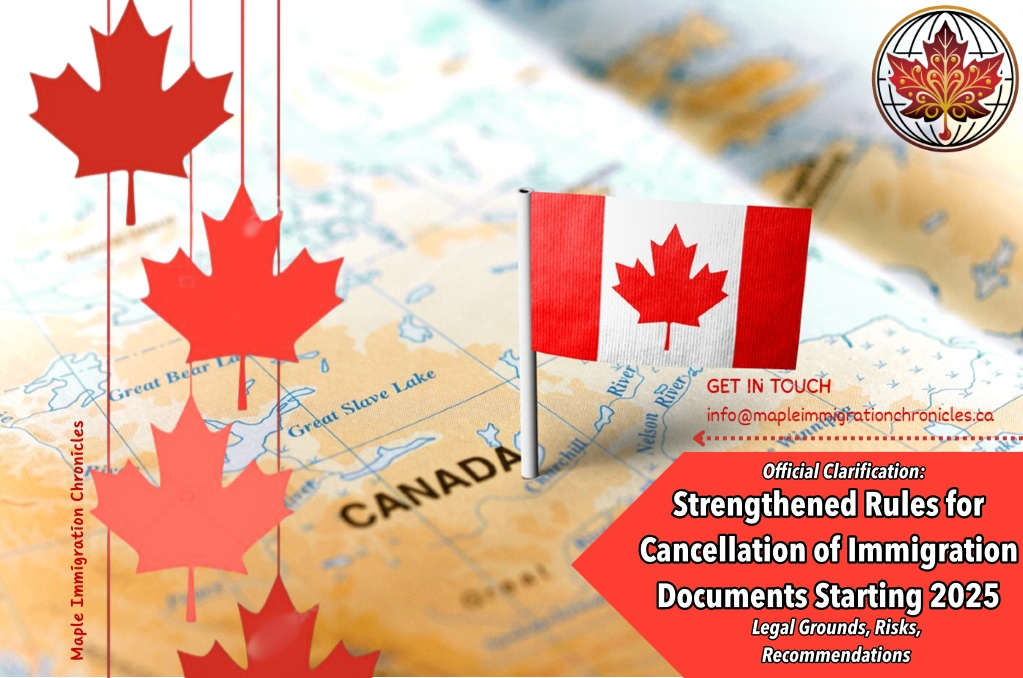
Beginning in 2025, the Government of Canada has implemented stricter control measures regarding the validity and use of temporary immigration documents. According to the updated policies of Immigration, Refugees and Citizenship Canada (IRCC) and the Canada Border Services Agency (CBSA), federal authorities have expanded their powers to cancel permits for entry and stay in Canada when individuals fail to meet established legal criteria or violate immigration regulations.
These measures aim to enhance border security, prevent misuse of the immigration system, and ensure the overall integrity of Canadian immigration processes.
Types of Documents Subject to Cancellation Under the New Rules
The updated policy applies to the following categories of immigration documents, which may be revoked under specific circumstances:
- Electronic Travel Authorization (eTA) — Mandatory for citizens of visa-exempt countries entering Canada by air. In 2024 alone, over 7.5 million eTAs were issued, and Canadian authorities have announced stricter verification procedures to ensure the credibility of applicants.
- Temporary Resident Visa (TRV) — Required for citizens of countries that are subject to visa requirements for entry into Canada. In 2023, more than 2.3 million TRVs were issued, with a notable increase in cancellations due to detected inconsistencies or misrepresentations in submitted applications.
Primary Legal Grounds for Document Cancellation
Under Canadian law, a travel permit or temporary residency document may be revoked in the following circumstances:
- Inadmissibility to Canada — Individuals may be deemed inadmissible based on security concerns, involvement in human rights violations, criminal activity, breaches of immigration law, or health conditions that pose risks to Canadian society.
- Misrepresentation or Submission of False Documents — Providing inaccurate information, omitting relevant facts, or submitting fraudulent documents constitutes grounds for immediate cancellation of the authorization, regardless of whether the individual has already entered Canada.
- Criminal Convictions or Offences After Approval — If an individual is convicted of a crime or commits an offence after the issuance of their visa or eTA, this may lead to automatic cancellation of their entry permit, even if they are already present in Canada.
- Change of Personal Circumstances or Status — Loss of student or worker status, change in family situation, loss of sponsorship, or deviation from the declared purpose of stay may affect the validity of immigration documents and result in their cancellation.
Recommendations to Avoid Legal Complications
To minimize the risk of having your immigration documents revoked, individuals are advised to:
- Regularly verify the validity and accuracy of all immigration documents — Renew permits in a timely manner and ensure that all documentation reflects your current status and complies with Canadian regulations.
- Promptly report any significant changes in your personal or legal status to IRCC — Changes in marital status, employment, educational enrollment, place of residence, or other relevant circumstances must be officially disclosed to avoid potential breaches of immigration rules.
- Provide truthful and verifiable information in all applications and communications — Submitting accurate, transparent, and complete documentation is essential. Any attempt to conceal information or falsify documents can lead to immediate revocation of permits, long-term bans on re-entry to Canada, and, in some cases, legal consequences.
Conclusion
The updated regulatory framework in effect from 2025 reflects Canada’s ongoing commitment to strengthening migration controls, safeguarding national security, and preserving the integrity of the country’s immigration system.
Applicants, temporary residents, and individuals holding valid Canadian travel or residency documents must strictly comply with immigration legislation, ensure transparency in all communications, and promptly inform the authorities of any changes that could impact their legal status.
Failure to meet these obligations carries serious consequences, including immediate cancellation of immigration documents, bans on future entry to Canada, and, in certain situations, the imposition of further legal sanctions.